Advertisement










In this episode of Prop Personalities, we sit down with Hars...
Luxury real estate is one of the most talked-about segments ...
Welcome to Prop Personalities by Prop News Time - a podcast ...
Airports play a much bigger role than just enabling travel -...
Why does the same hotel brand operate multiple properties in...
The Mumbai Metropolitan Region Development Authority (MMRDA) recently hosted a senior delegation from Andhra Pradesh comprising Vice-Chairpersons of 18 Urban Development Authorities as part of a capacity-building programme focused on urban governance and infrastructure planning. The visit aimed to study MMRDA's regional development framework, including its financial structuring, land management systems, and transport-led growth model. Discussions highlighted data-driven planning, PPP frameworks, and integrated urban development across the Mumbai Metropolitan Region. The delegation examined large-scale infrastructure execution and governance practices, acknowledging MMRDA's structured approach to sustainable metropolitan growth and its growing relevance as a model for other states.
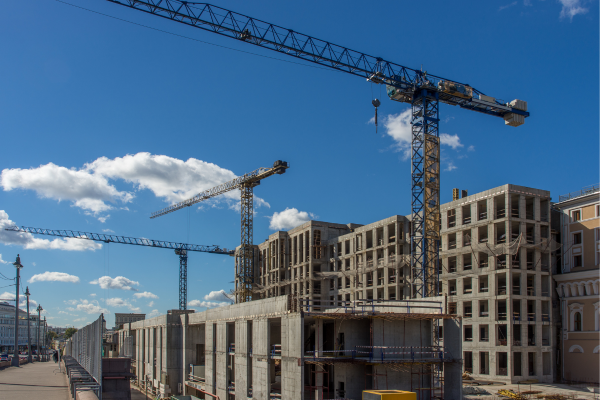
The Mumbai Metropolitan Region Development Authority (MMRDA) hosted a senior delegation from the Government of Andhra Pradesh on Thursday in Mumbai, comprising IAS officers serving as Vice-Chairpersons of 18 newly formed Urban Development Authorities. The visit formed part of a structured exposure programme designed to help officials understand metropolitan-scale planning, institutional systems, and infrastructure execution frameworks adopted across the Mumbai Metropolitan Region. Advertisement


The initiative is linked to a broader capacity-building exercise led by the Department of Municipal Administration and Urban Development of Andhra Pradesh for its Urban Development Authorities. The programme focuses on improving understanding of urban governance systems, project financing methods, land administration practices, and large-scale infrastructure delivery mechanisms.
During the interaction, Dr. Sanjay Mukherjee, IAS, Metropolitan Commissioner of MMRDA, explained the core elements of the authority's development framework. He highlighted the importance of strong land records, effective application of Development Control Regulations (DCR), urban finance capability, asset mapping, and data-driven decision-making systems. He also outlined the use of discounted cash flow-based approaches for project structuring, along with structured land monetisation methods, revenue-sharing arrangements, and public-private partnership models to support financially sustainable infrastructure development.
MMRDA also presented its experience in integrated regional planning across the Mumbai Metropolitan Region, which spans over 6,000 sq. km. The authority shared details of its transport-led development model, including an extensive metro network and more than 200 km of planned and ongoing tunnel infrastructure, positioning the region as one of the major urban transformation zones in the country.
The discussions further focused on coordinated land use planning and transport integration, strengthening first- and last-mile connectivity, and improving urban productivity through viable financial and planning models. Officials also reviewed how infrastructure planning is aligned with long-term economic growth and sustainability goals.
The delegation examined MMRDA's broader institutional approach, noting how it integrates planning systems, financing structures, and execution frameworks. The model is increasingly being studied by other states as part of a wider shift towards system-driven urban development approaches rather than isolated project execution.
MMRDA's growing engagement with national institutions and external agencies was also highlighted during the interaction, reflecting increased interest in its planning and execution framework. Its alignment with national urban development priorities and policy direction has further strengthened its position in ongoing discussions around future city development models in India.
Dr. Sanjay Mukherjee also conveyed that MMRDA's framework has evolved into a structured system combining land management, financial planning, and infrastructure delivery through data-oriented processes. He stated that the authority's experience demonstrates how large-scale urban transformation can be achieved through disciplined planning, innovative financial tools, and strong governance systems, while also contributing to broader knowledge sharing across states and institutions.

5th Jun, 2025

25th May, 2023

11th May, 2023

27th Apr, 2023
Advertisement





 Facebook
 Whatsapp
