Advertisement










Private equity has played a significant role in shaping Indi...
In today’s real estate landscape, fitness is often treated...
In this episode of Prop Personalities, we sit down with Hars...
Luxury real estate is one of the most talked-about segments ...
Welcome to Prop Personalities by Prop News Time - a podcast ...
China's property market, after a prolonged downturn since 2021, is showing early signs of stabilisation following a sharp correction of around 40-50% in home prices. The slowdown was driven by regulatory tightening aimed at reducing leverage in the sector, which helped cool a long-standing housing bubble. Despite earlier fears of systemic financial stress, the economy has continued to grow at around 5%, supported by a shift toward higher-quality growth. Emerging strength in technology, manufacturing, and energy sectors is gradually offsetting weakness in construction and real estate-linked industries.
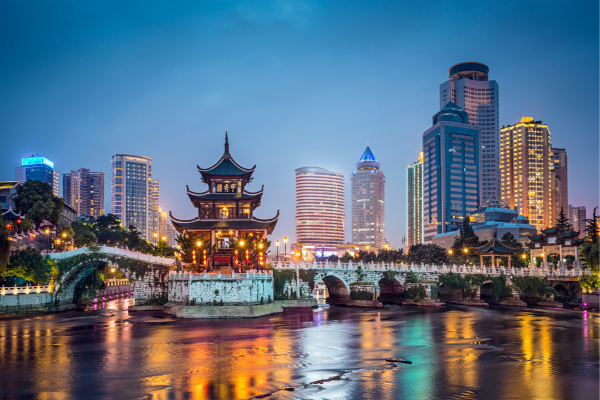
China's property sector, after several years of sustained decline, is now showing early indications of bottoming out as price pressures begin to ease in key urban markets. Secondary housing prices in cities such as Shanghai have started to stabilise, while the overall pace of decline in home values has reduced compared to the sharper contraction observed earlier in the downturn cycle. Advertisement


The correction in the real estate market, which began around 2021, resulted in a cumulative price drop of approximately 40-50%. This adjustment followed regulatory tightening introduced in 2020 through leverage-control measures designed to reduce excessive borrowing in the sector and address long-standing housing imbalances.
Despite the scale of the decline, the broader financial system has remained relatively stable, contrary to earlier concerns that the downturn could trigger severe economic stress similar to past global property crises. Even with continued weakness in construction and related industries, the wider economy has maintained steady expansion of around 5% in real terms.
Over time, policymakers have shifted focus away from rapid expansion and toward improving the quality of economic growth. This transition has reduced reliance on property-led activity and increased emphasis on high-value sectors such as advanced manufacturing, artificial intelligence, robotics, and clean energy technologies. Industrial upgrading programmes have also contributed to strengthening domestic capabilities in global value chains.
China's manufacturing ecosystem has increasingly become more competitive globally, supported by faster product development cycles and cost-efficient innovation strategies. Industry practices that combine rapid adaptation with selective technological advancement have enabled domestic firms to close gaps with global peers in sectors such as electric vehicles and robotics. Companies are also adopting cost-optimisation models that allow near-parity technological output at significantly lower production costs, improving export competitiveness.
External demand has continued to play an important role, with exporters benefiting from stronger margins in overseas markets compared to domestic sales. However, domestic competition remains intense, compressing profitability within the local market even as international expansion helps offset some of the pressure. Trade frictions with major economies have reshaped export routes, encouraging diversification into Asia, Europe, and emerging markets.
Source Reuters

5th Jun, 2025

25th May, 2023

11th May, 2023

27th Apr, 2023
Advertisement





 Facebook
 Whatsapp
