Advertisement










In this episode of Prop Personalities, we sit down with Hars...
Luxury real estate is one of the most talked-about segments ...
Welcome to Prop Personalities by Prop News Time - a podcast ...
Airports play a much bigger role than just enabling travel -...
Why does the same hotel brand operate multiple properties in...
The Ministry of Road Transport and Highways (MoRTH) has introduced a revised fee framework for overloaded trucks on national highways, linking penalties to the percentage of excess load carried. The updated rules, notified under the National Highways Fee (Determination of Rates and Collection) Fourth Amendment Rules, 2026, will come into effect from mid-April. Under the new structure, no penalty will apply for up to 10% excess load, while fees will be charged at twice the base rate for overloading between 10% and 40%, and four times the base rate beyond 40%. Overloading will be assessed using certified weighment systems at toll plazas, with exemptions in locations lacking such infrastructure. All penalties will be collected digitally through FASTag, aligning with broader efforts to standardise toll operations.
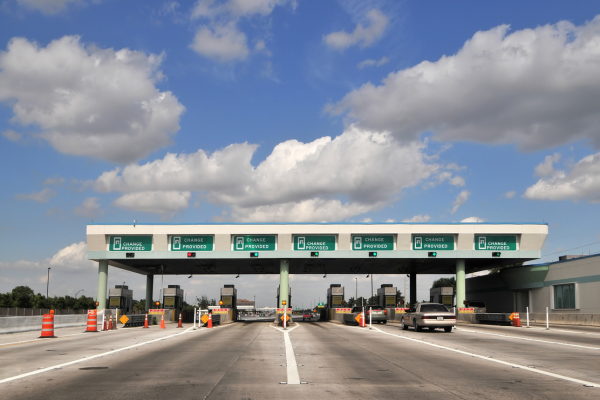
The Ministry of Road Transport and Highways has notified revised rules for levying fees on overloaded trucks on national highways in recent days, introducing a graded penalty structure based on the extent of excess load carried, with the updated framework set to come into effect from mid-April. Advertisement


The changes have been introduced through the National Highways Fee (Determination of Rates and Collection) Fourth Amendment Rules, 2026, with the objective of strengthening enforcement mechanisms, rationalising fee collection, and ensuring compliance with prescribed load limits across the highway network.
Under the revised framework, a threshold-based structure has been established for determining penalties. Vehicles carrying up to 10% excess load beyond the permissible Gross Vehicle Weight (GVW) will not be subject to any overloading fee. For loads exceeding 10% and up to 40%, the fee will be charged at twice the applicable base toll rate. In cases where overloading exceeds 40%, the penalty will increase to four times the base rate.
The ministry indicated that the revised structure aims to encourage adherence to load regulations while addressing concerns related to road safety and the deterioration of highway infrastructure caused by excessive axle loads. Overloaded vehicles are known to contribute to accelerated wear and tear of road surfaces, increasing maintenance requirements and operational costs.
To ensure standardised enforcement, overloading will be determined using certified weighment systems installed at toll plazas. These systems will measure vehicle weight at designated checkpoints, enabling accurate assessment of excess load and corresponding fee calculation.
The notification also provides for an exemption in cases where weighment facilities are not available at toll plazas. In such instances, no overloading fee will be levied, reflecting the ministry's approach to link enforcement strictly to verified measurement mechanisms.
All overloading charges under the revised rules will be collected through the FASTag system, in line with the government's push towards digital toll collection and reduced manual intervention at toll points. This is expected to streamline fee collection processes and minimise disputes related to cash transactions.
The amendment forms part of broader efforts to standardise toll operations and strengthen regulatory compliance across India's national highway network. By introducing a structured penalty mechanism linked to the degree of overloading, the ministry aims to create a more predictable and transparent enforcement environment for commercial vehicle operators.
The revised rules are expected to influence logistics operations, particularly for freight carriers, as compliance with load norms becomes more closely linked to operational costs on national highways.
Source - PTI

5th Jun, 2025

25th May, 2023

11th May, 2023

27th Apr, 2023
Advertisement





 Facebook
 Whatsapp
