Advertisement










In this episode of Prop Personalities, we sit down with Hars...
Luxury real estate is one of the most talked-about segments ...
Welcome to Prop Personalities by Prop News Time - a podcast ...
Airports play a much bigger role than just enabling travel -...
Why does the same hotel brand operate multiple properties in...
Maharashtra Metro Rail Corporation Limited (Maha Metro) has submitted a revised Detailed Project Report (DPR) for the Bhakti Shakti Chakan metro corridor, increasing the project cost to INR 12,937 crore from an earlier estimate of INR 10,383 crore. The revised plan, reported in the past week, extends the corridor length to approximately 47.2 km and increases the number of stations from 31 to 34. Key modifications include alignment changes across industrial zones such as Bhosari MIDC and Landewadi, along with a proposed 17 km integrated double-decker structure in coordination with the National Highways Authority of India (NHAI). The proposal has been submitted to the Pimpri Chinchwad Municipal Corporation (PCMC) for review and will require state-level approval before progressing towards implementation.
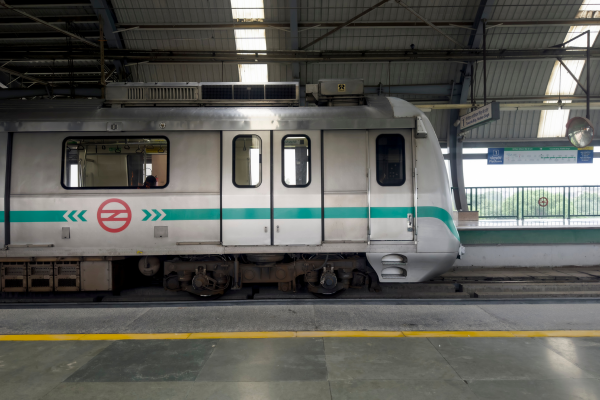
Maharashtra Metro Rail Corporation Limited (Maha Metro) submitted a revised Detailed Project Report (DPR) for the Bhakti Shakti Chakan metro corridor in the past week, proposing an expanded alignment, additional stations, and a revised project cost of INR 12,937 crore, with the plan currently under review by the Pimpri Chinchwad Municipal Corporation (PCMC) before being forwarded for state approval. Advertisement


The revised DPR increases the corridor length from the earlier planned 42.2 km to approximately 47.2 km, while the number of stations has been raised from 31 to 34. The cost escalation from INR 10,383 crore reflects the expanded scope of the project, including route extensions and infrastructure additions aimed at improving accessibility across key residential and industrial zones.
Significant alignment changes have been proposed in areas such as Bhosari MIDC, Landewadi and Bhosarigaon to enhance commuter access and ensure that the corridor serves high-density employment clusters. The metro line is designed to connect residential areas within Pimpri-Chinchwad with the Chakan industrial belt, a major manufacturing hub that currently relies heavily on road-based transport.
A notable feature of the revised proposal is the inclusion of a 17 km integrated double-decker corridor between Bhosari and Chakan, to be developed in coordination with the National Highways Authority of India (NHAI). This structure is expected to combine metro and road infrastructure, with the DPR also recommending the demolition and reconstruction of the existing flyover at Bhosari to accommodate the new design.
The revised plan also incorporates provisions for future network expansion. These include potential extensions from Bhakti Shakti Chowk towards Talawade MIDC and Kharabwadi, as well as connectivity to the proposed Wakad Katraj metro corridor at Bhujbal Chowk. Such provisions are intended to integrate the corridor within a broader urban transport network planned for the Pune metropolitan region.
From a planning perspective, the corridor forms part of the proposed Phase II expansion of the Pune Metro network, which aims to improve connectivity between residential clusters and industrial zones. The Bhakti Shakti Chakan stretch is considered a key link in addressing congestion along the Pimpri-Chinchwad Chakan belt, where daily commuting is currently dependent on congested road networks.
The DPR is presently under consideration by PCMC, which is expected to provide inputs and recommendations before the proposal is submitted to the Maharashtra government for final approval. Upon receiving the necessary clearances, the project will move towards subsequent stages including funding arrangements, land acquisition, and tendering.
The revision of the DPR reflects ongoing efforts to align metro infrastructure planning with evolving urban and industrial growth patterns in the Pune region, particularly in areas experiencing increased mobility demand.

5th Jun, 2025

25th May, 2023

11th May, 2023

27th Apr, 2023
Advertisement





 Facebook
 Whatsapp
