Advertisement










When should a housing society in Mumbai start considering re...
From GST on JDAs to SEBI’s REIT reclassification and the S...
Stay ahead in the world of real estate with our daily podcas...
Stay ahead in the world of real estate with our daily podcas...
A traffic bottleneck at the Breach Candy exit of Mumbai's Coastal Road has triggered a citizen-led campaign demanding additional exit infrastructure to ease congestion in South Mumbai. The issue has emerged in the past week as residents highlighted that while the arterial road has reduced travel time significantly along the main corridor, the absence of a planned exit at Nepeansea Road has resulted in severe delays at the final stretch. Commuters report that a 300-metre segment near the exit can take up to 20-25 minutes during peak hours. The campaign, titled Unlock the Exit, is advocating for the reinstatement of a previously proposed exit, citing technical feasibility and the need for improved last-mile connectivity within dense urban neighbourhoods.
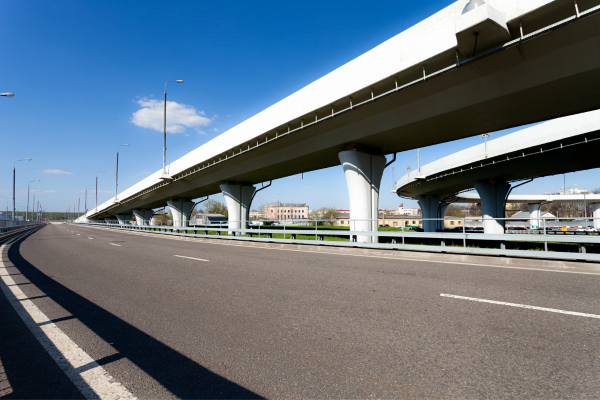
Residents of South Mumbai have initiated a citizen-led campaign seeking the addition of a new exit along the Mumbai Coastal Road, citing severe congestion at the Breach Candy interchange despite improved travel times along the main corridor. The demand has gained traction in the past week, with commuters pointing to delays experienced in the final stretch of their journey due to the absence of a planned exit at Nepeansea Road. Advertisement


The issue centres around a 300-metre stretch beyond the Breach Candy exit, where traffic movement slows considerably during peak hours. Commuters have indicated that this segment alone can take between 20 and 25 minutes to traverse, accounting for a significant portion of total travel time despite otherwise smooth transit along the Coastal Road.
The Mumbai Coastal Road, developed as a high-speed north south corridor along the city's western coastline, was designed to reduce travel time between South Mumbai and the western suburbs. While the project has achieved this objective across most of its alignment, the lack of adequate exit infrastructure at key nodes has created pressure points at interchange locations.
Residents involved in the campaign have stated that the Detailed Project Report (DPR) for the project had originally proposed an exit at Nepeansea Road, which was later excluded from the final design. They argue that the omission has led to traffic being funnelled through a limited number of exits, particularly at Amarsons Garden, thereby creating congestion in surrounding internal roads.
The campaign, referred to as Unlock the Exit, is advocating for the creation of a new access point along the northbound arm of the Coastal Road. Proponents have indicated that a technically viable solution exists, involving utilisation of land under the Maharashtra State Road Development Corporation (MSRDC), which could allow for both vehicular and pedestrian connectivity without affecting existing promenade or open space plans.
Local residents have also raised concerns regarding spillover traffic into residential streets such as Bomanji Petit Road, where existing infrastructure is already strained by school traffic and on-street parking. The absence of a direct exit has led to rerouting through internal roads, increasing congestion and affecting neighbourhood mobility.
The development highlights broader challenges in urban infrastructure planning, particularly in dense areas such as South Mumbai where land availability is limited and traffic distribution requires precise integration of entry and exit points. While large-scale road infrastructure can improve corridor-level travel efficiency, localised bottlenecks can offset these gains if last-mile connectivity is not adequately addressed.
Authorities have not yet announced a formal response to the demand, and any modification to the existing infrastructure would require technical evaluation, planning approvals, and coordination across multiple agencies. The outcome of the citizen-led initiative may influence future interventions aimed at optimising traffic flow along the Coastal Road and its adjoining urban network.

5th Jun, 2025

25th May, 2023

11th May, 2023

27th Apr, 2023
Advertisement








 Facebook
 Whatsapp
