Advertisement










When should a housing society in Mumbai start considering re...
From GST on JDAs to SEBI’s REIT reclassification and the S...
Stay ahead in the world of real estate with our daily podcas...
Stay ahead in the world of real estate with our daily podcas...
South Western Railway (SWR) has introduced modern Linke Hofmann Busch (LHB) coaches on five short-distance train services, replacing older conventional rakes to improve passenger comfort and safety. The rollout, implemented in the past week, covers three Mysuru-bound trains, one service to Dharwad, and an intercity train to Talguppa. The upgraded coaches are designed for speeds of up to 160-180 kmph and include features such as charging points, tray tables, modular switches, and improved window systems. However, the transition has reduced the total coach count from 21 to 19, raising concerns over capacity. Passenger feedback has also pointed to limited seat recline in second-sitting coaches, highlighting trade-offs in the modernisation effort.
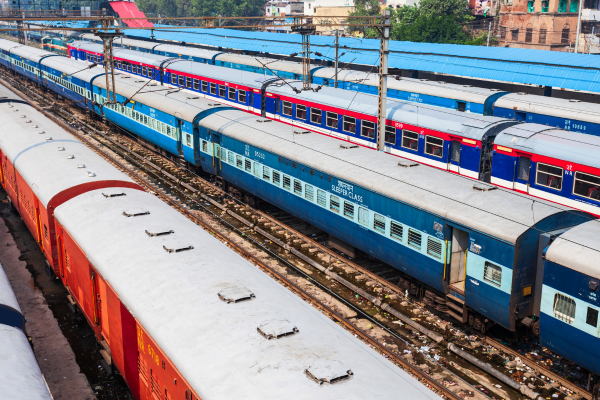
South Western Railway (SWR) has deployed modern Linke Hofmann Busch (LHB) coaches across five short-distance train services in the past week, replacing older conventional coaches to enhance passenger safety and onboard amenities. The upgrade covers three trains operating towards Mysuru, one service to Dharwad, and an intercity train connecting to Talguppa, marking a phased transition towards newer rolling stock on regional routes. Advertisement


The LHB coaches, which are manufactured using stainless steel and designed for higher speeds of up to 160-180 kmph, offer improved safety features and ride quality compared to earlier designs. These coaches are equipped with upgraded passenger amenities, including mobile charging points, foldable tray tables, modular cabin switches, and redesigned window systems featuring sliding shutters and blinds.
Railway officials indicated that the introduction of LHB rakes forms part of Indian Railways broader modernisation programme aimed at improving travel experience and operational efficiency across key routes. The enhanced crashworthiness of LHB coaches and their ability to operate at higher speeds are expected to contribute to safer and more reliable services, particularly on intercity routes with high passenger volumes.
The revised coach composition includes 19 coaches per train, compared to 21 in the earlier configuration. The current arrangement comprises 11 general coaches, five reserved second-sitting coaches, and one air-conditioned chair car. While the new configuration introduces upgraded features, the reduction in total coach count has raised concerns regarding passenger capacity, particularly during peak travel periods.
Passenger feedback has also highlighted design-related issues in the second-sitting category, where seats have limited recline. Commuters have indicated that while the overall travel environment has improved, the seating configuration may affect comfort on longer journeys within this class.
The transition to LHB coaches reflects a continued shift by Indian Railways towards standardising modern rolling stock across its network. These coaches were initially introduced on premium services and have gradually been extended to other categories of trains as part of fleet modernisation efforts. Their adoption is also aligned with broader initiatives to improve safety standards and reduce maintenance requirements associated with older coach designs.
The rollout on South Western Railway routes indicates a gradual upgrade of regional services, where demand for improved comfort and reliability continues to increase. While the introduction of modern coaches enhances onboard facilities, the balance between capacity and comfort remains a key consideration in the transition process, particularly on routes with high commuter traffic.

5th Jun, 2025

25th May, 2023

11th May, 2023

27th Apr, 2023
Advertisement








 Facebook
 Whatsapp
