Advertisement










In this episode of Prop Personalities, we sit down with Hars...
Luxury real estate is one of the most talked-about segments ...
Welcome to Prop Personalities by Prop News Time - a podcast ...
Airports play a much bigger role than just enabling travel -...
Why does the same hotel brand operate multiple properties in...
The Karnataka government is planning to install electric vehicle (EV) charging stations at intervals of 60-70 km along state highways, in a move aimed at strengthening intercity charging infrastructure and encouraging EV adoption. The initiative, outlined in the past week, will be implemented by Bangalore Electricity Supply Company in collaboration with Karnataka Road Development Corporation Limited across a 3,000-km highway network. Charging points are proposed at toll plazas, bus bays, truck lay-bys and select operational facilities. Initial site assessments have identified a majority of locations as viable, with fast-charging capability expected at several stations. The plan seeks to address range anxiety among EV users and improve long-distance travel feasibility, while supporting the state's broader push towards clean mobility.
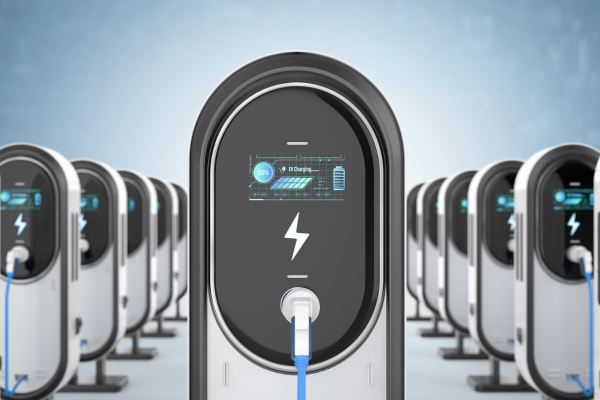
The Karnataka government is planning to establish electric vehicle (EV) charging stations at intervals of 60-70 km along state highways, with the proposal outlined in the past week as part of efforts to strengthen intercity charging infrastructure and facilitate long-distance EV travel across the state. Advertisement


The initiative will be implemented by Bangalore Electricity Supply Company in collaboration with Karnataka Road Development Corporation Limited, covering a road network of approximately 3,000 km under KRDCL's jurisdiction. The project is aimed at creating a continuous charging corridor along major state highways to support increasing EV usage.
Under the plan, charging infrastructure will be installed at existing highway facilities such as toll plazas, bus bays, truck lay-bys and designated operational locations. Officials indicated that these points have been selected based on their regular spacing along highways, ensuring that users encounter a charging facility every 60-70 km.
Preliminary joint inspections carried out by the two agencies have identified a majority of surveyed sites as feasible for deployment. Out of 42 toll plazas assessed, 30 locations have been found suitable for installing EV charging stations, with provisions for fast-charging systems capable of serving multiple vehicles simultaneously.
The proposed network is expected to include facilities capable of charging at least six vehicles at a time at certain locations, reflecting a focus on capacity and turnaround efficiency. Authorities indicated that the infrastructure would be designed to operate without disrupting traffic flow on highways, given the operational constraints of high-speed corridors.
A formal agreement between the implementing agencies is yet to be finalised. Officials stated that the proposed arrangement includes a revenue-sharing mechanism under which the road development authority would receive INR 1 per kWh of electricity consumed over a 10-year period.
The initiative comes amid a broader push to strengthen EV infrastructure in Karnataka, which already has one of the highest densities of public charging stations in the country. The current plan is intended to extend coverage beyond urban centres into highway networks, addressing a key limitation in EV adoption long-distance travel reliability.
Officials indicated that the absence of charging infrastructure on highways has been a concern among potential EV users, particularly for intercity travel. The proposed rollout is therefore aimed at improving accessibility and confidence among users by ensuring predictable availability of charging points across key routes.
In parallel, additional EV charging stations are being planned under central schemes, including installations along the Bengaluru Belagavi corridor, indicating a multi-layered approach to expanding charging infrastructure across both state and national highway networks.

5th Jun, 2025

25th May, 2023

11th May, 2023

27th Apr, 2023
Advertisement





 Facebook
 Whatsapp
