Advertisement






When should a housing society in Mumbai start considering re...
From GST on JDAs to SEBI’s REIT reclassification and the S...
Stay ahead in the world of real estate with our daily podcas...
Stay ahead in the world of real estate with our daily podcas...
Indian Railways has announced plans to construct a new underground railway line through the Siliguri corridor in West Bengal, a narrow land bridge that connects mainland India with its North-eastern states. The project, spanning about 35.76 km between Dumdangi and Bagdogra, will incorporate an extensive underground alignment particularly between Tinmile Hat and Rangapani to provide secure, uninterrupted rail connectivity along this sensitive route. The corridor's proximity to international borders with Nepal, Bhutan and Bangladesh, combined with its susceptibility to natural disruptions and congestion, has underscored the strategic importance of the development. Officials stated that the underground design will support continuous movement of passengers, freight, defence personnel and emergency supplies, with advanced electrification, signalling and tunnelling technologies planned. The initiative aligns with broader efforts to strengthen transport infrastructure and optimise access to the North-eastern region.
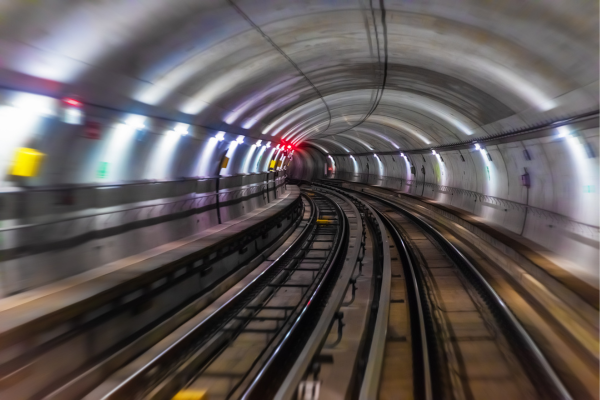
Indian Railways has unveiled a plan to construct a new underground railway line through the strategically critical Siliguri corridor in West Bengal, in a bid to enhance connectivity between the Indian mainland and the North-eastern states. The approval is part of a larger strategy to reinforce transport links and provide a resilient and uninterrupted rail route in this geographically sensitive region. Advertisement


The proposed underground stretch, extending roughly 35.76 km between Dumdangi and Bagdogra, will be laid primarily as a subterranean alignment to mitigate vulnerabilities related to natural disruptions, congestion or geopolitical pressures. A key section of around 33.40 km between Dumdangi and Rangapani is designed to lie below ground, ensuring a secure and non-visible rail corridor. The initiative falls under the Katihar Division of Northeast Frontier Railway and will cover parts of Darjeeling and Uttar Dinajpur districts in West Bengal, as well as Kishanganj district in Bihar.
Officials said the corridor's narrow width approximately 22 km at its slimmest point and its proximity to international borders with Nepal, Bhutan and Bangladesh make it a strategic linchpin for national integration and regional resilience. The underground design is expected to facilitate uninterrupted movement of civilian passengers, freight and essential defence personnel, as well as the timely transportation of emergency relief supplies during exigencies. It will also support enhanced logistics integration, given its proximity to the Bagdogra Air Force Station and the Bengdubi Army Cantonment.
The plan will incorporate modern rail technologies including 225 kV AC electrification, automatic signalling systems and advanced communications infrastructure. Tunnel construction is expected to utilise methods such as Tunnel Boring Machines (TBM) and the New Austrian Tunnelling Method to ensure efficient execution and structural safety.
Railway Minister Ashwini Vaishnaw and senior officials have framed the underground alignment as a proactive measure to secure uninterrupted rail access to the North-eastern states amid both logistical and security concerns. The development is viewed as a key step in strengthening India's transport framework and reducing dependence on existing surface routes that are susceptible to disruption in this strategic corridor.

5th Jun, 2025

25th May, 2023

11th May, 2023

27th Apr, 2023
Advertisement








 Facebook
 Whatsapp
