Advertisement










Private equity has played a significant role in shaping Indi...
In today’s real estate landscape, fitness is often treated...
In this episode of Prop Personalities, we sit down with Hars...
Luxury real estate is one of the most talked-about segments ...
Welcome to Prop Personalities by Prop News Time - a podcast ...
Kerala has signed agreements with IOCL, CONCOR, and CWC to execute a Rs 2,000 crore logistics master plan at Vizhinjam International Seaport, aiming to transform it into a key maritime and economic hub. The investment is divided among bunkering facilities, rail-linked infrastructure, and a multimodal logistics park. The project ensures public sector oversight while operating on a PPP model, preventing monopolisation in cargo handling and ensuring fair pricing. The plan promises major infrastructure upgrades without imposing financial burden on the state exchequer.
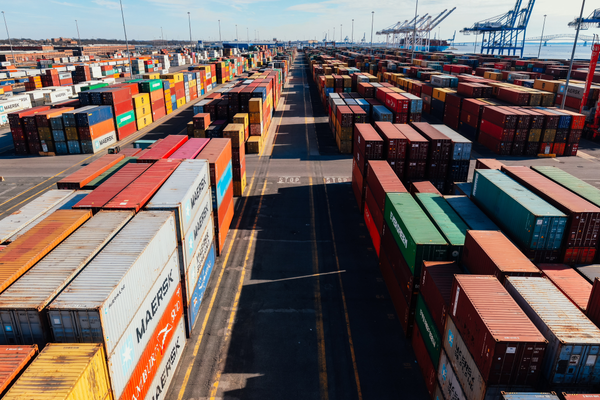
The Kerala government has entered agreements with three central public sector companies to implement a Rs 2,000 crore logistics master plan at the Vizhinjam International Seaport, aiming to strengthen the state's maritime infrastructure. The memoranda of understanding were signed in the presence of Chief Minister Pinarayi Vijayan at the Legislative Assembly Building, according to a release from the Chief Minister's Office. Advertisement


This initiative is designed to transform Vizhinjam into a comprehensive economic hub while keeping critical port infrastructure under public sector control, even as operations follow a Public-Private Partnership (PPP) model. The collaboration includes the state-run Vizhinjam International Seaport Limited (VISL) along with Indian Oil Corporation Ltd (IOCL), Container Corporation of India (CONCOR), and Central Warehousing Corporation (CWC).
The partnership seeks to prevent monopolisation of cargo handling, maintain fair pricing for traders, and protect national maritime interests. The total investment of Rs 2,000 crore is allocated across three key areas. IOCL will invest approximately Rs 700 crore to establish large-scale bunkering facilities to fuel mother ships at Vizhinjam, positioning the port as a major energy hub in the Indian Ocean region. CONCOR plans to invest around Rs 600 crore in rail-linked infrastructure, including inland container depots and container freight stations, enabling faster cargo movement nationwide. Meanwhile, CWC will deploy nearly Rs 700 crore to develop a multimodal logistics park spanning close to 50 acres, equipped with cold storage and export-focused units, with the government stating there will be no financial burden on the state exchequer.
The signing ceremony saw the participation of Minister for Ports V N Vasavan, Ports Secretary Dr A Kowsigan IAS, and VISL MD Dr Divya S Iyer IAS, along with senior officials from the central PSUs.
Source PTI
FAQ
1. What is the goal of the Vizhinjam Port logistics plan?
The Rs 2,000 crore project aims to transform Vizhinjam International Seaport into a major maritime and economic hub. It focuses on improving port infrastructure, enhancing cargo handling efficiency, integrating multimodal logistics, and creating a streamlined system for domestic and international trade, while keeping key operations under public sector control.
2. Which organisations are involved in the project?
The Kerala government is partnering with three central public sector undertakings IOCL, CONCOR, and CWC along with Vizhinjam International Seaport Limited. Each partner is responsible for sector-specific initiatives, and the collaboration is implemented under a Public-Private Partnership (PPP) model to ensure efficiency, transparency, and public oversight.
3. How is the investment distributed among the partners?
IOCL is investing Rs 700 crore to establish large-scale bunkering facilities for refuelling mother ships, positioning Vizhinjam as an energy hub. CONCOR will contribute Rs 600 crore to set up rail-linked infrastructure, including inland container depots and container freight stations, for faster cargo movement nationwide. CWC will invest Rs 700 crore to develop a 50-acre multimodal logistics park with cold storage and export-oriented units, supporting trade and warehousing operations.
4. Will the state government bear any financial burden?
No. The project is fully funded by the central PSUs within the PPP framework. The Kerala government will provide administrative support and regulatory oversight, but the financial responsibility lies with the implementing PSUs, ensuring no direct expenditure or strain on the state exchequer.
5. How does the PPP model function in this project?
The Public-Private Partnership ensures that operations and investments are handled efficiently by the PSUs while strategic port infrastructure remains under public sector supervision. This model prevents monopolisation of cargo handling, ensures fair pricing for traders, maintains transparency, and safeguards national maritime interests, combining private efficiency with public accountability.
6. What is the expected long-term impact of the project?
The project is expected to position Vizhinjam as a key port in the Indian Ocean region, improve cargo handling and logistics efficiency, and attract more trade and investment. It will enhance Kerala's economic growth, strengthen regional and international maritime connectivity, and provide modern infrastructure to support a growing volume of domestic and global commerce.

5th Jun, 2025

25th May, 2023

11th May, 2023

27th Apr, 2023
Advertisement





 Facebook
 Whatsapp
