Advertisement










Private equity has played a significant role in shaping Indi...
In today’s real estate landscape, fitness is often treated...
In this episode of Prop Personalities, we sit down with Hars...
Luxury real estate is one of the most talked-about segments ...
Welcome to Prop Personalities by Prop News Time - a podcast ...
Adani Ports and Special Economic Zone Ltd (APSEZ), through Adani Gangavaram Port Ltd, has signed a Memorandum of Understanding with NMDC Ltd and Brazil-based Vale SA to develop an integrated iron ore blending facility and a Special Economic Zone at Gangavaram Port. The agreement was formalised during the India Brazil Business Forum in the national capital. The proposed project will create a value-addition ecosystem for iron ore, improve export efficiency, and enable the port to handle large Valemax vessels, increasing its overall cargo handling capacity to around 75 million tonnes.
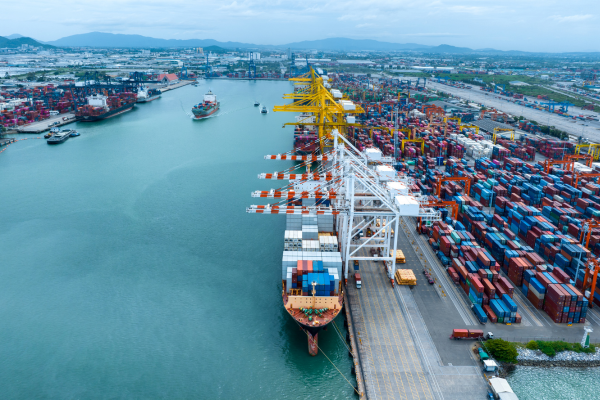
Adani Ports and Special Economic Zone Ltd (APSEZ), through its subsidiary Adani Gangavaram Port Ltd, has entered into a strategic Memorandum of Understanding with NMDC Ltd and Brazil's Vale SA to develop an integrated iron ore blending facility along with a dedicated Special Economic Zone (SEZ) at Gangavaram Port in Andhra Pradesh. Advertisement


The agreement was signed during the India Brazil Business Forum held in the national capital in the presence of senior representatives from both countries. The partnership brings together India's largest private port operator, the country's largest iron ore producer NMDC, and global mining major Vale, which is among the world's leading iron ore exporters.
Under the MoU, the three entities will jointly develop, operate and manage an SEZ-based iron ore blending and value-addition ecosystem. The project aims to strengthen the iron ore export supply chain by enabling blending of different grades of ore to meet specific customer requirements in global markets. This is expected to improve cargo realisation and enhance trade efficiency from India's east coast.
The planned facility will also include mechanised infrastructure for berthing and cargo handling. It is designed to handle Very Large Ore Carriers, including Valemax vessels with capacities of up to 400,000 tonnes. This will allow direct handling of large shipments, reducing logistics costs and turnaround time.
With the addition of the blending hub, Gangavaram Port's cargo handling capacity is expected to increase to about 75 million tonnes. The port already has deep draft capabilities and modern mechanised systems, making it suitable for large bulk cargo operations. The development will further position it as a key export gateway for iron ore and related commodities.
APSEZ currently operates 15 ports and terminals across India and handles a significant share of the country's cargo volumes. Over the past few years, the company has focused on expanding capacity, improving mechanisation and integrating value-added services at its ports. The proposed blending and SEZ project aligns with this broader strategy of creating integrated logistics and export ecosystems rather than functioning only as a cargo handling facility.
For NMDC, the collaboration supports efforts to enhance export opportunities and optimise its product mix. For Vale, the project provides a strategic base on India's east coast to serve customers in Asia more efficiently through blending and distribution.
Source PTI
FAQ
1. What is the new agreement signed at Gangavaram Port?
Adani Ports and Special Economic Zone Ltd (APSEZ), through its subsidiary Adani Gangavaram Port Ltd, has signed a Memorandum of Understanding with NMDC Ltd and Brazil-based Vale SA. The MoU aims to establish an integrated iron ore blending facility along with a Special Economic Zone (SEZ) at Gangavaram Port to strengthen export capabilities and value addition.
2. Where and when was the agreement formalised?
The agreement was signed during the India Brazil Business Forum held in the national capital. The event brought together senior representatives from India and Brazil, highlighting growing trade cooperation between the two countries, particularly in the mining and infrastructure sectors.
3. What is the objective of the iron ore blending facility?
The project aims to create a value-addition ecosystem by blending different grades of iron ore to meet specific requirements of global customers. This process improves product customisation, enhances cargo realisation, and strengthens India's iron ore export competitiveness. It is also expected to streamline supply chains and improve operational efficiency at the port.
4. What infrastructure upgrades are planned at the port?
The facility will include mechanised berthing and cargo-handling systems designed to accommodate Very Large Ore Carriers, including Valemax vessels of up to 400,000 tonnes capacity. This capability will reduce logistics costs, minimise turnaround time, and improve handling efficiency for large export consignments.
5. How will this project impact Gangavaram Port's capacity?
With the addition of the blending hub and SEZ ecosystem, Gangavaram Port's overall cargo handling capacity is expected to increase to approximately 75 million tonnes. The port already has deep draft capabilities, and this expansion will further strengthen its position as a key bulk cargo and iron ore export gateway on India's east coast.
6. What does this partnership mean for the companies involved?
For APSEZ, the project aligns with its strategy of developing integrated logistics and value-added ecosystems rather than functioning solely as a cargo handler. For NMDC, it enhances export opportunities and optimises product mix. For Vale, the facility offers a strategic base in India to better serve Asian markets through blending, storage, and distribution operations.

5th Jun, 2025

25th May, 2023

11th May, 2023

27th Apr, 2023
Advertisement





 Facebook
 Whatsapp
