Advertisement






When should a housing society in Mumbai start considering re...
From GST on JDAs to SEBI’s REIT reclassification and the S...
Stay ahead in the world of real estate with our daily podcas...
Stay ahead in the world of real estate with our daily podcas...
India's office leasing market in 2025 saw robust growth, led by global companies leasing 58 per cent of office spaces across seven major cities. Gross leasing rose to 83.3 million square feet, driven largely by the expansion of Global Capability Centres, which occupied over 31 million square feet. Domestic firms accounted for 42 per cent of demand. Bengaluru remained the top destination for foreign investment, while coworking and managed office spaces gained traction. Experts noted that India's skilled talent pool, premium Grade A spaces, and cost advantages continue to attract international firms.
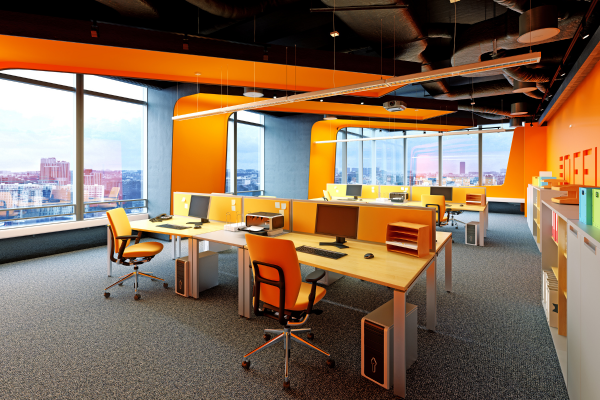
Global companies continued to play a key role in driving office space demand in India during 2025, leasing nearly 60 per cent of office spaces across seven major cities as they expanded their operations, according to real estate consultant JLL India. Advertisement


Data from JLL India shows that gross office space leasing rose by 8 per cent last year, reaching 83.3 million square feet across Mumbai, Bengaluru, Delhi-NCR, Pune, Hyderabad, Chennai, and Kolkata, up from 77.2 million square feet in the previous year. Out of this total, global firms leased 48.6 million square feet, accounting for 58 per cent of overall office demand. JLL noted that this trend reinforced India's status as a strategic business hub, particularly in a period marked by global uncertainties.
The availability of skilled English-speaking talent and access to premium office spaces at competitive rentals were cited as major factors attracting foreign investment. A significant portion of the leased space, 31.4 million square feet, was dedicated to Global Capability Centres (GCCs). Domestic companies absorbed 34.7 million square feet, representing 42 per cent of the total demand for workspaces.
Rahul Arora, Head of Office Leasing & Retail Services at JLL, highlighted that GCCs established themselves as the dominant force in India's office leasing market last year, with Bengaluru emerging as the most preferred city for foreign firms seeking business expansion.
Coworking centre operators also remained active, reflecting growing demand for managed office solutions. JLL clarified that gross leasing figures include all lease transactions, including confirmed pre-commitments, but exclude term renewals.
Shesh Rao Paplikar, Founder and CEO of BHIVE Workspace, observed that GCCs now seek workplace ecosystems that meet global sustainability standards, talent expectations, and operational agility. Similarly, Aashit Verma, Founder of Hanto Workspace, indicated that the rise in flexible workspace leasing underscores India's economic growth, driven by a deep talent pool, high-quality Grade A office spaces, and strategic cost advantages.
Source PTI
FAQ
Q1. How did India's office leasing market perform in 2025?
India's office leasing market saw robust growth in 2025, with gross leasing across seven major cities rising 8 per cent to 83.3 million square feet, up from 77.2 million square feet in 2024. The growth was driven primarily by the expansion of Global Capability Centres (GCCs) and strong demand for premium office spaces from both international and domestic firms.
Q2. What share of leasing was driven by global companies?
Global firms accounted for 58 per cent of total office leasing, occupying 48.6 million square feet. Their demand was mainly for premium Grade A spaces and GCC operations. Domestic companies contributed 42 per cent, leasing 34.7 million square feet. The trend underscores India's attractiveness as a strategic hub for multinational businesses.
Q3. Which cities attracted the most foreign investment?
Bengaluru remained the top destination for foreign firms, particularly those establishing or expanding GCCs. Mumbai, Delhi-NCR, Pune, Hyderabad, Chennai, and Kolkata also saw significant leasing activity, with major international companies seeking modern, flexible workspaces that cater to talent and operational needs.
Q4. What role did Global Capability Centres play?
GCCs emerged as the dominant force in India's office leasing market, accounting for 31.4 million square feet of leased space. They are increasingly looking for workplaces that meet global sustainability standards, offer operational flexibility, and support large-scale talent management, making India an ideal location for such operations.
Q5. How are coworking and managed offices performing?
Coworking and managed office spaces gained traction as companies both domestic and international seek flexible and scalable workspaces. Operators are responding to rising demand by offering modern office ecosystems that emphasize sustainability, collaboration, and agility.
Q6. What factors are attracting international firms to India?
India's skilled and English-speaking talent pool, availability of premium Grade A office spaces at competitive rentals, cost advantages, and strong business ecosystem continue to attract multinational corporations. The combination of high-quality infrastructure and operational efficiency makes India a preferred hub for global operations.
Q7. What does this indicate about India's economic positioning?
The strong interest from global companies highlights India's emergence as a strategic business hub. The expansion of GCCs and adoption of flexible workspaces reflect the country's growing economic resilience, availability of talent, and infrastructure readiness to support international business operations.
Q8. What is the outlook for office leasing in India?
Experts expect continued growth in premium office leasing, particularly from multinational corporations expanding their GCCs, and a rising demand for flexible coworking solutions. With India's cost advantages and deep talent pool, the office market is positioned to remain attractive for both domestic and international companies.

5th Jun, 2025

25th May, 2023

11th May, 2023

27th Apr, 2023
Advertisement








 Facebook
 Whatsapp
