When should a housing society in Mumbai start considering re...
From GST on JDAs to SEBI’s REIT reclassification and the S...
Stay ahead in the world of real estate with our daily podcas...
Habitat 67, located in Montreal, Canada, is a groundbreaking architectural masterpiece that redefined urban living. Designed by Moshe Safdie as his master’s thesis for McGill University, the project debuted at Expo 67, the World’s Fair held in Montreal in 1967. Combining innovation, modernism, and functionality, Habitat 67 is one of the most recognized and celebrated examples of Brutalist architecture. The building is composed of 354 prefabricated concrete units stacked in an interlocking, modular formation to create 148 apartments of varying sizes and layouts. Each unit was designed to maximize natural light, airflow, and privacy while providing garden terraces for every residence. The structure’s dynamic arrangement resembles a complex three-dimensional puzzle or cascading building blocks, offering a unique aesthetic that is both futuristic and organic. Key Features: Individual gardens and terraces: Unlike typical high-rise buildings, every apartment in Habitat 67 in ...
Read moreThe ''Walt Disney Concert Hall'', located in ''Los Angeles, California'', is a dazzling architectural icon and one of the most acoustically sophisticated concert halls in the world. Designed by renowned architect ''Frank Gehry'' and completed in ''2003'', the building’s sculptural form and gleaming stainless-steel façade make it one of the most recognizable landmarks in modern architecture. Gehry’s design, characterized by sweeping, curved surfaces and an undulating exterior, evokes a sense of movement and fluidity, reminiscent of a ship’s sails or musical notes frozen in midair. The building’s flowing forms reflect the energy of Los Angeles and the dynamic spirit of the performing arts. The stainless-steel panels, carefully polished to avoid glare, catch the sunlight and create a captivating play of light and shadow throughout the day. The ''interior of the Walt Disney Concert Hall'' is just as breathtaking as its exterior. The ''main auditorium'', with its vineyard-sty ...
Read moreThe Phaeno Science Center, located in Wolfsburg, Germany, is a futuristic architectural masterpiece that invites visitors of all ages to explore the wonders of science through interactive exhibits. Designed by the visionary architect Zaha Hadid and completed in 2005, this dynamic structure reflects her signature style of bold geometry and fluid, unconventional forms. The building’s most striking feature is its floating, angular shape, which appears to hover above the ground on a series of slanted concrete cones. This unique design creates an open, urban plaza underneath, allowing pedestrians to move freely while integrating the center seamlessly into the cityscape. The structure’s façade, made of exposed concrete with irregular openings, gives it a raw, futuristic aesthetic, reminiscent of a spaceship or a geological formation. Inside, the Phaeno Science Center houses more than 350 hands-on exhibits, designed to stimulate curiosity and encourage experimentation. Visitors can ...
Read moreThe Esplanade – Theatres on the Bay, located in the heart of "Singapore", is a dazzling architectural icon that stands as the city’s premier performing arts center. With its distinctive, futuristic design, the Esplanade has become affectionately known as "The Durian" due to its spiky, shell-like exterior that resembles the famous tropical fruit. Opened in "2002", the complex reflects Singapore’s blend of modernity, creativity, and cultural heritage. Designed by architecture firms "DP Architects (Singapore)" and "Michael Wilford & Partners (UK)", the Esplanade spans over six hectares along the scenic Marina Bay. Its design focuses on functionality and acoustic excellence while making a bold artistic statement. The most recognizable feature is the two massive glass domes covered with more than "7,000 aluminum sunshades" arranged in triangular patterns. These shades not only create the signature spiked appearance but also serve a practical purpose — they reduce solar glare whil ...
Read moreMetropol Parasol, located in "Seville, Spain", is a breathtaking example of contemporary architecture that blends tradition with modernity in one of the city's historic plazas. Often referred to as "Las Setas" (The Mushrooms) by locals due to its distinctive shape, this massive wooden structure has redefined the Plaza de la Encarnación, transforming it into a vibrant hub of culture, commerce, and leisure. Designed by German architect ""Jürgen Mayer H."", Metropol Parasol was completed in "2011". The project aimed to rejuvenate the historic square while incorporating modern elements that respect the city's rich architectural heritage. The result is a monumental structure made primarily of "birch wood", reinforced with glue and a polyurethane coating, making it one of the largest timber constructions in the world. The design features "six large parasols", which are interconnected to form a canopy-like structure that soars over the plaza. Its curving, organic shapes are inspired b ...
Read moreAula Medica, located at the Karolinska Institutet in Stockholm, Sweden, is a stunning architectural gem that serves as a premier conference and lecture hall. Known for its dynamic design and state-of-the-art functionality, this modern marvel symbolizes innovation and forward-thinking — values that align perfectly with the mission of one of the world’s leading medical universities. Designed by renowned architect "Gert Wingårdh", Aula Medica opened its doors in 2013. The building's most striking feature is its angular glass façade, which combines irregular shapes and sharp angles to create a captivating interplay of light and shadow. The design evokes movement and energy, making the structure both futuristic and visually engaging from all perspectives. The building's reflective glass panels allow it to integrate seamlessly with the surrounding environment, changing its appearance with the shifting light and weather. Inside, Aula Medica offers a vast, tiered auditorium with se ...
Read moreThe Salk Institute for Biological Studies, located in La Jolla, California, is far from your typical research facility. Designed by the visionary architect Louis Kahn, this institution is renowned for its minimalist yet powerful design that perfectly blends with its natural surroundings. Completed in 1965, the Salk Institute stands as a masterpiece of modern architecture and a hub of scientific innovation. The design of the Salk Institute is characterized by its use of raw concrete, teak wood, and travertine marble. Kahn’s architectural vision was to create a space that fosters creativity and collaboration among scientists. The Institute consists of two mirror-image buildings separated by a wide travertine courtyard, which is aligned with a narrow channel of water that flows towards the Pacific Ocean, creating a breathtaking visual connection between the built environment and nature. Each building houses six laboratory modules, designed to be flexible and open to encourage inte ...
Read morePalau de les Arts Reina Sofia, located in Valencia, Spain, is far from your average opera house. This architectural masterpiece, part of the larger City of Arts and Sciences complex, is a shining example of futuristic design and cultural ambition. Completed in 2005, the Palau de les Arts Reina Sofia has quickly become an iconic symbol of Valencia, celebrated for its innovative architecture and its role as a hub for the performing arts. Designed by the renowned Spanish architect Santiago Calatrava, the opera house features a dramatic and organic form that resembles a giant ship or a blooming flower. The building's sweeping curves and soaring lines create a sense of movement and fluidity, making it a standout piece in Valencia's urban landscape. The exterior is clad in white concrete and covered with trencadís mosaic tiles, a nod to traditional Valencian craftsmanship that gives the structure a shimmering, textured surface. The Palau de les Arts Reina Sofia spans over 40,000 squar ...
Read moreThe National Library of Belarus, located in the capital city of Minsk, is far from your typical library. Often referred to as the "Diamond of Knowledge," this architectural gem is a striking example of modern design and a hub of cultural and intellectual activity. Completed in 2006, the library has quickly become an iconic symbol of Belarus, celebrated for both its innovative architecture and its extensive collection of literary treasures. Designed by Belarusian architects Mihail Vinogradov and Viktor Kramarenko, the library's unique rhombicuboctahedron shape—a geometric form consisting of 18 squares and 8 triangles—sets it apart from any other building. This distinctive shape not only gives the library a futuristic appearance but also symbolizes the multifaceted nature of knowledge and learning. The structure is clad in glass and aluminum panels, which reflect light in a dazzling array of colors, making the building shine like a diamond by day and night. The library's impres ...
Read moreThe Egg, officially known as the National Centre for the Performing Arts (NCPA), is not your average concert hall. Located in the heart of Beijing, China, this futuristic architectural marvel has become an iconic symbol of modern design and cultural expression since its completion in 2007. Designed by the renowned French architect Paul Andreu, The Egg's unique, ellipsoid shape and reflective exterior make it a standout feature in Beijing’s urban landscape. Constructed at a cost of approximately USD 400 million, The Egg is encased in a titanium and glass shell that shimmers under the sunlight and creates a mesmerizing reflection on the surrounding artificial lake. This floating effect is not only visually striking but also symbolizes the harmony between modern architecture and natural elements. The building's exterior consists of over 18,000 titanium panels and nearly 12,000 glass panels, forming a seamless, smooth surface that is both robust and elegant. Inside, The Egg is just ...
Read moreCapital Gate, also known as the "Leaning Tower of Abu Dhabi," isn't your average skyscraper. It holds the title of the world’s furthest-leaning man-made tower, a true architectural marvel in the capital of the United Arab Emirates. Completed in 2010 for approximately USD 231 million, this stunning structure boasts a unique design courtesy of the renowned architectural firm RMJM. They crafted the tower with an 18-degree westward lean, an engineering feat that surpasses even the famous Leaning Tower of Pisa by four times. This extraordinary lean is no accident but a result of innovative design and engineering. The tower's pre-cambered core was engineered to offset the gravitational forces caused by its lean, ensuring stability and safety. The diagonal grid of the diagrid system provides structural efficiency and contributes to the tower's distinctive silhouette. This design not only ensures the building’s integrity but also creates spacious, column-free interiors that enhance the ae ...
Read moreThe Lotus Tower, located in Colombo, Sri Lanka, is far from an ordinary telecommunications tower. Standing as the tallest structure in Sri Lanka, it is a modern architectural marvel that blends advanced technology with a striking design inspired by the country’s cultural heritage. Officially opened in 2019, the Lotus Tower serves not only as a telecommunications hub but also as a symbol of Sri Lanka's development and progress. The design of the Lotus Tower is inspired by the lotus flower, which holds deep significance in Sri Lankan culture, symbolizing purity, beauty, and spiritual growth. The tower's main body takes the form of a stylized lotus bud, with the petals unfurling towards the sky. This design gives the tower a unique and organic shape, setting it apart from other structures in the city. The tower is clad in a combination of glass and metal, allowing it to shimmer in the sunlight and change its appearance throughout the day. Standing at a height of 350 meters (1,150 fe ...
Read moreThe Eden Project, located in Cornwall, England, is far from an ordinary botanical garden. This iconic environmental complex is a testament to sustainable design and innovation, serving as both a tourist attraction and a global hub for environmental education and conservation. Opened in 2001, the Eden Project has become one of the UK's most visited and unique landmarks. The Eden Project is primarily known for its vast series of geodesic domes, known as Biomes, which house different ecosystems from around the world. The domes are made from hexagonal and pentagonal glass panels, creating a honeycomb-like structure that is both visually striking and highly functional. The design was created by architect Sir Nicholas Grimshaw and has been celebrated for its combination of cutting-edge technology and environmentally conscious principles. Inside the Biomes, visitors can explore diverse habitats ranging from tropical rainforests to Mediterranean climates. The Tropical Biome is the larges ...
Read moreGalaxy SOHO, located in Beijing, China, is far from an ordinary commercial complex. Designed by the acclaimed architect Zaha Hadid, this stunning architectural marvel epitomizes contemporary design and innovation. Completed in 2012, Galaxy SOHO is a landmark development that seamlessly blends cutting-edge architecture with functional spaces for work, leisure, and commerce. The design of Galaxy SOHO is characterized by its fluid, organic forms that create a striking visual impact. The complex consists of four main domed structures connected by a series of bridges and platforms, forming a continuous, flowing landscape. These smooth, curvilinear shapes are a signature of Zaha Hadid’s style, inspired by natural forms and the movement of the wind and water. The buildings' exterior is clad in white aluminum and glass, enhancing the sense of fluidity and lightness. Inside, Galaxy SOHO offers a mix of office spaces, retail outlets, and entertainment facilities spread over 330,000 squar ...
Read moreThe National Library of Latvia, also known as the Castle of Light, is far from an ordinary library. Located in Riga, Latvia, this impressive architectural landmark stands as a symbol of knowledge, culture, and national identity. Designed by renowned Latvian-American architect Gunnar Birkerts, the library was officially opened in 2014, marking the culmination of a project that had been in the works for several decades. The design of the National Library of Latvia is characterized by its striking, futuristic form that rises dramatically from the banks of the Daugava River. The building’s silhouette is inspired by Latvian folklore, particularly the glass mountain, a symbol of enlightenment and the pursuit of knowledge. This inspiration is evident in the building’s sharp, angular lines and the extensive use of glass, which creates a sense of transparency and openness. Inside, the library spans 13 floors, offering a variety of spaces dedicated to reading, research, and cultural even ...
Read moreThe Niemeyer Center, also known as the Centro Niemeyer, is far from an ordinary cultural complex. Located in Avilés, Asturias, Spain, this stunning architectural masterpiece is a testament to the visionary creativity of Brazilian architect Oscar Niemeyer. Completed in 2011, the Niemeyer Center is the only work of Niemeyer in Spain and one of his last major projects before his passing. The Niemeyer Center’s design is characterized by its bold, futuristic forms and sweeping curves, which are hallmarks of Niemeyer’s architectural style. The complex consists of five distinct structures, each serving different cultural functions and collectively creating a dynamic space for art, performance, and public gatherings. The centerpiece of the complex, the Dome, is a large, white, hemispherical structure that serves as an exhibition hall. Its smooth, flowing lines create a striking visual impact, while the interior offers a flexible space for various art exhibitions, installations, and ...
Read moreThe Sydney Opera House, situated on Bennelong Point in Sydney, Australia, is far from an ordinary building. This iconic structure, renowned for its distinctive sail-like design, is one of the most famous and photographed landmarks in the world, symbolizing Australia's rich cultural heritage and architectural ingenuity. Designed by Danish architect Jørn Utzon, the Sydney Opera House was completed in 1973 after 14 years of construction. Utzon’s visionary design was selected from an international competition that drew 233 entries from 32 countries. His concept of overlapping shell-like structures was both revolutionary and challenging, pushing the boundaries of engineering and architecture. The Sydney Opera House comprises multiple performance venues, including the Concert Hall, the Joan Sutherland Theatre, the Drama Theatre, the Playhouse, and the Studio. These venues host a diverse range of events, from opera and ballet to theater, concerts, and contemporary performances. The C ...
Read moreRaffles City Chongqing, located in the heart of Chongqing, China, is far from an ordinary architectural development. This stunning megastructure, designed by the internationally acclaimed architect Moshe Safdie, is one of the most ambitious and visually striking mixed-use complexes in the world. Completed in 2019, Raffles City Chongqing stands as a testament to modern engineering and urban design. The complex features eight skyscrapers, including six at 250 meters and two at 350 meters, connected by a dramatic horizontal skybridge known as The Crystal. The entire development spans over 1.12 million square meters, making it one of the largest in the world. The most distinctive feature of Raffles City Chongqing is The Crystal, a 300-meter-long skybridge that stretches across four of the towers at a height of 250 meters. The Crystal houses a wide array of amenities, including gardens, swimming pools, observation decks, restaurants, and a gallery, offering breathtaking views of the co ...
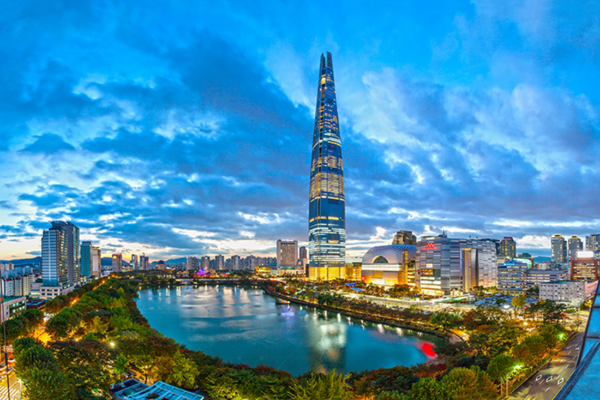
Read moreLotte World Tower in Seoul, South Korea, is far from an ordinary skyscraper. This towering structure, standing at 555 meters (1,819 feet) with 123 stories, is one of the tallest buildings in the world and a symbol of South Korea's rapid modernization and architectural innovation. Completed in 2016 after six years of construction, Lotte World Tower was designed by the international architecture firm Kohn Pedersen Fox (KPF). The design of the tower is inspired by traditional Korean art forms, such as ceramics, porcelain, and calligraphy, resulting in an elegant, tapered form that seamlessly blends modern aesthetics with cultural heritage. Lotte World Tower is not just a marvel of engineering; it is also a multifunctional hub. The tower houses a mix of retail spaces, offices, residences, a luxury hotel, and observation decks, making it a self-contained vertical city. The lower levels feature the Lotte World Mall, a vast shopping complex with high-end stores, restaurants, and enterta ...
Read moreThe Busan Cinema Center in Busan, South Korea, is far from an ordinary building. This architectural marvel serves as the official venue for the Busan International Film Festival (BIFF), one of Asia’s most prestigious film festivals, and stands as a symbol of the city's burgeoning cultural scene. Designed by the renowned Austrian architecture firm Coop Himmelb(l)au, the Busan Cinema Center opened in 2011. The design is characterized by its futuristic and dynamic architecture, featuring striking cantilevered structures and expansive open spaces. The most iconic element of the center is the ""Big Roof,"" a massive cantilevered roof that extends 85 meters (279 feet) from the building, making it the longest cantilevered roof in the world. This impressive structure provides shelter for the outdoor plaza and serves as an architectural landmark. The Big Roof is covered with thousands of LED lights, creating a stunning display that illuminates the night sky with vibrant colors and patte ...
Read moreBig Ben, officially known as the Great Bell of the clock at the Palace of Westminster in London, is far from an ordinary clock. This iconic structure, often mistaken as the name of the clock tower itself, is one of the most recognized symbols of the United Kingdom and a testament to Victorian engineering and architecture. The clock tower, which is part of the Palace of Westminster, is officially named the Elizabeth Tower, renamed in 2012 to honor Queen Elizabeth II's Diamond Jubilee. However, it is commonly referred to as Big Ben, a name that originally referred to the Great Bell inside the tower. The tower was completed in 1859, following the reconstruction of the Palace of Westminster after it was destroyed by fire in 1834. Standing at 96 meters (316 feet) tall, the Elizabeth Tower features a distinctive Gothic Revival style designed by architect Augustus Pugin. The tower’s facade is adorned with ornate details, including pinnacles, spires, and clock faces on all four sides. Ea ...
Read moreThe Tower of Pisa, more commonly known as the Leaning Tower of Pisa, is far from an ordinary bell tower. This iconic structure, renowned for its unintended tilt, is one of the most recognized and visited landmarks in the world, symbolizing architectural beauty and human ingenuity. Located in the Italian city of Pisa, the tower is part of the city's cathedral complex, known as the Piazza dei Miracoli (Square of Miracles), which also includes the cathedral (Duomo), the baptistery, and the cemetery (Camposanto). The tower was originally designed as a freestanding bell tower for the cathedral, intended to stand vertically like any other bell tower. Construction of the Leaning Tower began in 1173 and continued for nearly 200 years due to interruptions caused by wars, debt, and engineering challenges. The architect of the original design is a subject of historical debate, with some crediting Bonanno Pisano and others Diotisalvi. The tower began to tilt during construction, caused by an ...
Read moreThe White House, located at 1600 Pennsylvania Avenue NW in Washington, D.C., is far from an ordinary residence. This iconic building serves as both the home and the office of the President of the United States, symbolizing American leadership and democracy. Designed by Irish-born architect James Hoban and completed in 1800, the White House has been the official residence of every U.S. president since John Adams. The neoclassical architecture, inspired by Leinster House in Dublin and classical Greek and Roman structures, features a distinctive portico with towering columns, a symbol of strength and stability. The White House comprises 132 rooms, 35 bathrooms, and six levels, offering a blend of residential, ceremonial, and administrative spaces. Among its most famous rooms are the Oval Office, where the president conducts business and meets with advisors and foreign dignitaries; the East Room, used for large gatherings and events; and the Situation Room, where critical national se ...
Read moreThe Taj Lake Palace in Udaipur, India, is far from an ordinary hotel. This stunning white marble palace, floating gracefully on the serene waters of Lake Pichola, is one of the most romantic and enchanting landmarks in India, offering an unforgettable glimpse into a regal past. Originally built in 1746 as a summer retreat for Maharana Jagat Singh II of the Mewar Dynasty, the Taj Lake Palace was designed by the maharana's royal architect, who combined Rajput, Mughal, and European architectural styles to create a palace that is both luxurious and unique. The palace sits on a 4-acre island, surrounded by the calm waters of Lake Pichola, with panoramic views of the Aravalli Mountains and the city of Udaipur. The Taj Lake Palace's architecture is characterized by its intricate carvings, delicate arches, and grand courtyards. Its stunning white marble facade, which appears to shimmer against the lake’s surface, creates a dreamlike atmosphere, especially at sunrise and sunset. The pal ...
Read moreSt. Paul's Cathedral in London is far from an ordinary church. This iconic English Baroque masterpiece, designed by Sir Christopher Wren, has been the heart of the Church of England and a symbol of resilience, particularly during London’s darkest hours in history. The current St. Paul’s Cathedral, completed in 1710, was built to replace an earlier church that was destroyed in the Great Fire of London in 1666. Wren’s design was revolutionary, combining classical elements with innovative structural engineering. The cathedral’s most striking feature is its vast dome, which at the time of its construction was the largest in the world. Rising 365 feet above the ground, it remains an architectural marvel and one of the most recognized landmarks in London. The exterior of St. Paul’s is equally impressive, with its grand portico and imposing columns, reflecting Wren's vision of a classical temple that would be a beacon of faith and national pride. The cathedral is built in the ...
Read moreThe Reichstag Building in Berlin, Germany, is far from an ordinary government structure. This iconic edifice, a symbol of German history and democracy, has witnessed some of the most significant events in the country’s political evolution. Originally completed in 1894, the Reichstag was designed by architect Paul Wallot in a Neo-Renaissance style, and it served as the meeting place for the Reichstag (German parliament) during the German Empire. The building’s grand facade, with its ornate columns and imposing dome, reflected the power and ambitions of the empire. However, the Reichstag’s history is marked by turbulent periods, including the infamous 1933 fire that led to the Nazi regime’s rise to power and the subsequent closure of the parliament for many years. During World War II, the Reichstag was heavily damaged, and after the war, the building was left in ruins. For decades, it sat in the no-man’s-land between East and West Berlin, a powerful symbol of division durin ...
Read moreThe Frauenkirche (Church of Our Lady) in Dresden, Germany, is far from an ordinary church. This stunning Baroque masterpiece, with its impressive dome and elegant design, stands as both a symbol of the city’s resilience and a testament to the grandeur of 18th-century architecture. Originally constructed between 1726 and 1743 by architect George Bähr, the Frauenkirche was built to honor the Virgin Mary and to serve as a Lutheran place of worship. Its striking exterior is characterized by a massive, sweeping dome that towers above the city, often described as one of the most beautiful Baroque domes in Europe. The church’s facade is adorned with intricate stone carvings and features a harmonious blend of curves and straight lines, a hallmark of Baroque style. The interior of the Frauenkirche is equally awe-inspiring. The vast, open space is filled with exquisite details, including beautiful frescoes, ornate altars, and delicate stucco work. The church’s main altar and pulpit ...
Read moreThe Sistine Chapel, located in Vatican City, is far from an ordinary place of worship. This iconic chapel, renowned for its breathtaking art and architecture, is one of the most famous cultural and religious landmarks in the world. Commissioned by Pope Sixtus IV in 1473 and completed in 1481, the chapel is named after him. It serves as both a religious sanctuary and a place of great historical significance, particularly as the site of the papal conclave, where a new pope is elected. However, it is perhaps best known for the extraordinary frescoes that adorn its ceilings and walls. The Sistine Chapel’s most famous feature is undoubtedly the ceiling, painted by Michelangelo between 1508 and 1512. Originally tasked with painting twelve apostles, Michelangelo eventually took creative liberty and transformed the entire ceiling into a vast biblical narrative. The centerpiece of this masterpiece is the iconic "Creation of Adam," where God and Adam reach out to each other in a moment o ...
Read moreThe Space Needle is an iconic observation tower located in Seattle, Washington, standing at 605 feet (184 meters) tall. Constructed for the 1962 World’s Fair, it symbolizes the city's aspirations during the Space Age and has become a defining feature of the Seattle skyline. Designed by architect John Graham, Jr., and businessman Edward E. Carlson, the tower features a unique saucer-shaped top house that offers 360-degree views of the surrounding landscape, including downtown Seattle, Mount Rainier, and Puget Sound. Visitors can reach the observation deck, located 520 feet (160 meters) above ground, via elevators that ascend at a speed of 800 feet per minute, taking only 41 seconds to complete the journey. The Space Needle is not only a marvel of engineering but also a cultural landmark. It was built to withstand winds of up to 200 miles per hour and seismic activity equivalent to a 9.0 magnitude earthquake, showcasing its robust design. Since its opening, the Space Needle has welc ...
Read moreThe Catedral Metropolitana Nossa Senhora Aparecida, also known as the Cathedral of Brasília, is far from an ordinary church. This striking modernist cathedral, located in Brasília, the capital of Brazil, stands as a masterpiece of contemporary architecture and a symbol of Brazilian innovation. Designed by the renowned Brazilian architect Oscar Niemeyer and completed in 1970, the cathedral is celebrated for its unique and futuristic design. Unlike traditional cathedrals, which typically feature towering spires and Gothic elements, the Cathedral of Brasília is characterized by its hyperboloid structure, which resembles a crown or a crown of thorns. The design consists of 16 concrete columns, each weighing 90 tons, arranged in a circular pattern and connected by stained glass windows that create a stunning play of light and color within the interior. The entrance to the cathedral is an underground passage that leads visitors into the heart of the structure. This descent into the ca ...
Read moreThe Centre Pompidou, located in the heart of Paris, France, is far from an ordinary cultural institution. This avant-garde building, known for its revolutionary architectural design, houses the National Museum of Modern Art, the Public Information Library, and the Institute for Research and Coordination in Acoustics/Music (IRCAM). Completed in 1977, the Centre Pompidou was designed by architects Renzo Piano and Richard Rogers, whose bold vision challenged conventional architectural norms. The building’s most striking feature is its inside-out design, where structural and mechanical elements are exposed on the exterior. This approach, with brightly colored pipes and ducts, creates a visually dynamic facade that has become an iconic symbol of modern architecture. The exterior color scheme is both functional and symbolic: blue for air-conditioning, green for plumbing, yellow for electrical systems, and red for elevators. This color-coded system not only enhances the building’s a ...
Read moreVilla Savoye, located in Poissy, France, is far from an ordinary house. This iconic modernist villa, designed by the renowned architect Le Corbusier, stands as a pioneering example of 20th-century architecture and embodies the principles of the International Style. Completed in 1931, Villa Savoye was commissioned as a country retreat for the Savoye family. Le Corbusier's design reflects his "Five Points of Architecture," which he articulated as the basis for a new architectural aesthetic. These principles include the use of pilotis (supporting columns) to elevate the building off the ground, a flat roof terrace, an open floor plan, horizontal windows, and a free facade design. The villa's clean, white facade and geometric form exemplify the minimalist elegance of modernist design. The use of reinforced concrete allowed for the creation of open, airy spaces and extensive glazing, which maximizes natural light and provides panoramic views of the surrounding landscape. The horizontal ...
Read more