When should a housing society in Mumbai start considering re...
From GST on JDAs to SEBI’s REIT reclassification and the S...
Stay ahead in the world of real estate with our daily podcas...
The Catedral Metropolitana Nossa Senhora Aparecida, also known as the Cathedral of Brasília, is far from an ordinary church. This striking modernist cathedral, located in Brasília, the capital of Brazil, stands as a masterpiece of contemporary architecture and a symbol of Brazilian innovation. Designed by the renowned Brazilian architect Oscar Niemeyer and completed in 1970, the cathedral is celebrated for its unique and futuristic design. Unlike traditional cathedrals, which typically feature towering spires and Gothic elements, the Cathedral of Brasília is characterized by its hyperboloid structure, which resembles a crown or a crown of thorns. The design consists of 16 concrete columns, each weighing 90 tons, arranged in a circular pattern and connected by stained glass windows that create a stunning play of light and color within the interior. The entrance to the cathedral is an underground passage that leads visitors into the heart of the structure. This descent into the cath ...
Read moreThe Centre Pompidou, located in the heart of Paris, France, is far from an ordinary cultural institution. This avant-garde building, known for its revolutionary architectural design, houses the National Museum of Modern Art, the Public Information Library, and the Institute for Research and Coordination in Acoustics/Music (IRCAM). Completed in 1977, the Centre Pompidou was designed by architects Renzo Piano and Richard Rogers, whose bold vision challenged conventional architectural norms. The building’s most striking feature is its inside-out design, where structural and mechanical elements are exposed on the exterior. This approach, with brightly colored pipes and ducts, creates a visually dynamic facade that has become an iconic symbol of modern architecture. The exterior color scheme is both functional and symbolic: blue for air-conditioning, green for plumbing, yellow for electrical systems, and red for elevators. This color-coded system not only enhances the building’s aesth ...
Read moreVilla Savoye, located in Poissy, France, is far from an ordinary house. This iconic modernist villa, designed by the renowned architect Le Corbusier, stands as a pioneering example of 20th-century architecture and embodies the principles of the International Style. Completed in 1931, Villa Savoye was commissioned as a country retreat for the Savoye family. Le Corbusier's design reflects his ""Five Points of Architecture,"" which he articulated as the basis for a new architectural aesthetic. These principles include the use of pilotis (supporting columns) to elevate the building off the ground, a flat roof terrace, an open floor plan, horizontal windows, and a free facade design. The villa's clean, white facade and geometric form exemplify the minimalist elegance of modernist design. The use of reinforced concrete allowed for the creation of open, airy spaces and extensive glazing, which maximizes natural light and provides panoramic views of the surrounding landscape. The horizontal ...
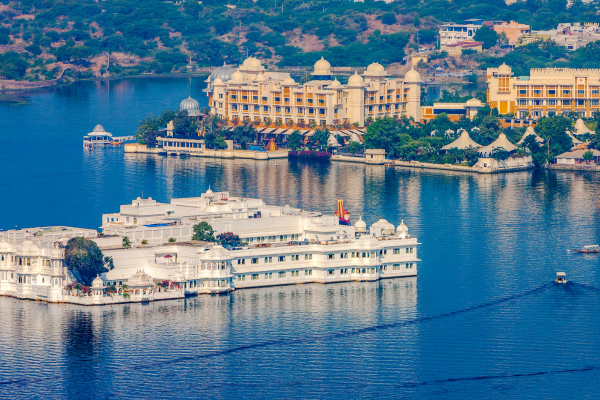
Read moreLake Palace, located in Udaipur, India, is a stunning example of Rajput architecture and royal opulence. Built in 1746 by Maharana Jagat Singh II, this magnificent palace is situated on the serene waters of Lake Pichola, giving it an ethereal, floating appearance. Originally known as Jag Niwas, the palace was designed as a summer retreat for the royal family of Mewar. Constructed using locally sourced white marble, the Lake Palace features an intricate blend of Mughal and Rajput architectural styles. Its courtyards are adorned with beautiful gardens, pillared terraces, and fountains, creating a tranquil oasis in the heart of the lake. The palace's interiors are equally breathtaking, with richly decorated rooms featuring ornate carvings, colorful frescoes, and exquisite inlay work. The palace has been transformed into a luxury hotel, offering guests a unique and regal experience. Visitors can arrive at the palace by boat, adding to the sense of exclusivity and romance. The hotel's sui ...
Read moreKinkaku-ji Temple, situated in Kyoto, Japan, is celebrated for its exquisite Golden Pavilion, a testament to the elegance of Japanese Zen architecture. Originally constructed in 1397 as a retirement villa for Ashikaga Yoshimitsu, a shogun, the pavilion was later converted into a Zen Buddhist temple upon his death. The upper two floors of the pavilion are adorned with shimmering gold leaf, which reflects gracefully on the still waters of Kyoko-chi Pond, creating a breathtaking scene especially during sunset. Surrounded by meticulously manicured gardens landscaped in the Muromachi period style, Kinkaku-ji offers a tranquil escape for visitors. The gardens feature winding paths, picturesque bridges, and carefully placed rocks and trees that enhance the temple's serene atmosphere. Tea houses dot the landscape, inviting contemplation and reflection amidst nature's beauty. Kinkaku-ji Temple, designated as a UNESCO World Heritage Site, continues to captivate with its timeless beauty and spir ...
Read moreHimeji Castle, also known as the White Heron Castle, is a majestic and well-preserved feudal castle located in Himeji, Hyogo Prefecture, Japan. Built on a hilltop, the castle's white exterior, achieved through a traditional Japanese plastering technique called ""shikkui,"" gives it the appearance of a white heron in flight. The castle complex comprises a network of 83 buildings, including multiple defense systems, making it the largest surviving castle in Japan. It is a UNESCO World Heritage Site and a symbol of Japan's rich cultural heritage. The castle's design features advanced defensive systems and ingenious protection devices dating back to the early 17th century. It is a masterpiece of wooden construction, combining function with aesthetic appeal through its elegant appearance and the subtlety of the relationships between the building masses and the multiple roof layers Fun Fact: Himeji Castle has never been attacked or demolished throughout its long history, unlike many other ...
Read moreHampton Court Palace is a majestic Tudor palace located on the River Thames, just outside London. This iconic royal residence has been the setting for numerous significant events throughout history, showcasing its grandeur and beauty. The palace features stunning architecture, beautiful gardens, and impressive works of art, making it one of the most famous and fascinating royal buildings in England. With its rich history dating back to the 16th century, Hampton Court Palace has been a testament to the power and opulence of the British monarchy.. Fun Fact: Hampton Court Palace was originally built by Cardinal Thomas Wolsey in 1515, but it was later seized by King Henry VIII in 1528. The palace has been a royal residence ever since, hosting many notable events and entertaining famous guests like William Shakespeare, who even performed his plays there during the Christmas season of 1603. ...
Read moreLa Sagrada Familia, located in Barcelona, Spain, is one of the most extraordinary basilicas in the world and a masterpiece of modernist architecture. Designed by the renowned architect Antoni Gaudí, its construction began in 1882 and continues to this day, embodying Gaudí's unique vision and innovative architectural style. The basilica's design is a blend of Gothic and Art Nouveau forms, featuring towering spires, intricate facades, and a forest-like interior filled with natural light. Gaudí's vision was to create a structure that mimics the natural world, with columns resembling trees and a ceiling that looks like a canopy of leaves. The Nativity and Passion facades depict scenes from the life of Christ with astonishing detail and symbolism. Despite its incomplete state, La Sagrada Familia has become a symbol of Barcelona and attracts millions of visitors each year. Its construction is funded entirely by donations and visitor entry fees, and the work is projected to be completed ...
Read moreKensington Palace, located in London's Kensington Gardens, stands as a symbol of British royal history and architectural elegance. Built in 1605, the palace has undergone expansions and renovations, evolving into a grand structure with a distinctive red-brick façade adorned with Palladian elements. Throughout its history, Kensington Palace has been home to numerous members of the British royal family, including Queen Victoria during her formative years. Its State Apartments are renowned for their opulent interiors, featuring elaborate ceilings, fine artworks, and period furnishings that provide insight into royal lifestyles spanning centuries. Surrounded by expansive gardens, including formal layouts and serene lakes, Kensington Palace offers both a glimpse into regal life and a peaceful oasis in central London. Today, it remains a residence for members of the royal family and hosts various museums and exhibitions, making it a cultural hub for visitors interested in British royalty ...
Read moreKarnak Temple, located in Luxor, Egypt, is one of the most impressive ancient Egyptian sites. This sprawling complex of temples, sanctuaries, sphinxes, columns, and pylons was built over a period of more than 1,000 years, primarily between the Twelfth and Twentieth Dynasties. It is dedicated to the god Amun and features the world-famous Great Hypostyle Hall, which boasts 134 colossal columns. The temple complex is a testament to the architectural and engineering prowess of the ancient Egyptians, showcasing their religious beliefs and devotion to their deities. Fun Fact: The Great Hypostyle Hall at Karnak Temple is particularly famous for its 69-foot columns, which were completed by Ramses II. Debate continues about whether these columns were created by Amenhotep III or Seti I, but their grandeur and intricate carvings make them a breathtaking sight ...
Read moreThe Kailasa Temple, located in the Ellora Caves, Maharashtra, India, is a remarkable cave temple carved out of a single rock. This megalithic structure is considered one of the largest single monolithic excavations in the world and is dedicated to Lord Shiva. The temple's architecture is notable for its vertical excavation, where the carvings started from the top and moved downwards. The temple's intricate sculptures and architectural elements are a testament to the skill and craftsmanship of the ancient artisans who built it. The temple's exterior is adorned with intricate carvings and sculptures depicting various mythological scenes and figures. The entrance is flanked by two massive pillars, and the main chamber features a large statue of Lord Shiva. The temple's interior is equally impressive, with intricate carvings and sculptures on the walls and ceiling. The temple's architecture is a blend of Indian and Buddhist styles, reflecting the cultural and religious diversity of the re ...
Read moreThe Jetavanaramaya Stupa is an ancient Buddhist reliquary monument located in the UNESCO World Heritage city of Anuradhapura, Sri Lanka. Built by King Mahasena of Anuradhapura in the 3rd century CE, it was initially the tallest stupa in the world, standing at 122 meters (400 feet). Although its original height has been reduced to 71 meters (233 feet) due to erosion, it remains one of the most significant and impressive architectural achievements in Sri Lankan history. The stupa is believed to enshrine a part of the belt worn by Gautama Buddha and is sacred to both Theravada and Mahayana Buddhists. Fun Fact: The Jetavanaramaya Stupa was built using bricks that could withstand a load of 166 kg, which was a significant engineering feat considering the technology available at the time. The construction of the stupa required the labor and intelligence of hundreds of skilled workers, who took about 5 years to complete the massive structure ...
Read moreThe Great Wall of China, near Beijing, isn't just an ordinary wall—it's an ancient marvel stretching over 13,000 miles. Built over centuries, beginning as early as the 7th century BC, it was designed to protect Chinese states from invasions and raids. The Great Wall we recognize today primarily dates back to the Ming Dynasty (1368-1644), showcasing impressive engineering and construction techniques. The wall's design varies, featuring sections made from stone, brick, tamped earth, and wood. It includes watchtowers, barracks, and fortresses, demonstrating its strategic military purpose. Winding through mountains, deserts, and plains, it offers breathtaking views and a tangible connection to China's rich history. Despite its formidable appearance, the Great Wall is not a continuous line but a series of walls and fortifications. It's often likened to a dragon, symbolizing strength and resilience, snaking across the landscape. Visitors can explore well-preserved sections near Beijing, ...
Read moreThe Great Pyramid of Giza in Cairo, Egypt, is an awe-inspiring monument and one of the most remarkable feats of ancient engineering. As the only surviving wonder of the Seven Wonders of the Ancient World, it has fascinated people for thousands of years. Built over 4,500 years ago during the reign of Pharaoh Khufu, this colossal pyramid was constructed using approximately 2.3 million blocks of limestone and granite. Originally standing at 146.6 meters (481 feet), the Great Pyramid was the tallest man-made structure in the world for over 3,800 years. Its precise alignment with the cardinal points and its intricate internal chambers showcase the advanced skills of its builders. The pyramid was once covered in smooth white limestone, reflecting the sun's rays and making it shine brilliantly in the desert. Today, it remains a major tourist attraction and a central focus for Egyptologists. Visitors can explore the pyramid's interior, including the King's Chamber, Queen's Chamber, and the G ...
Read moreThe Grand Palace in Bangkok, Thailand, isn't just a palace; it's a breathtaking symbol of Thai history and culture. Serving as the official residence of the Kings of Siam (and later Thailand) from 1782 until 1925, the Grand Palace is a complex of stunning buildings at the heart of the capital. Built during the reign of King Rama I, this architectural masterpiece showcases intricate Thai craftsmanship and design. Covering an area of 218,400 square meters, the Grand Palace is divided into several courtyards and buildings, each with its unique purpose and charm. The Wat Phra Kaew, or the Temple of the Emerald Buddha, is the most sacred Buddhist temple in Thailand and a highlight of the palace complex. The Emerald Buddha, carved from a single block of jade, is revered as the protector of the country. Even though it is no longer the royal residence, the Grand Palace remains a significant cultural and spiritual site. Visitors from around the world come to admire its ornate structures, gold ...
Read moreThe Golden Temple, also known as Harmandir Sahib, is not just any temple; it's a spiritual beacon and a symbol of peace and equality. Located in the heart of Amritsar, Punjab, this stunning Sikh gurdwara attracts millions of visitors and devotees each year. Constructed in the 16th century by Guru Arjan, the Golden Temple is adorned with a glistening gold exterior and surrounded by the sacred Amrit Sarovar (Pool of Nectar). The temple's design blends Islamic and Hindu architectural styles, creating a serene and majestic structure that reflects beautifully on the water. Though centuries old, the Golden Temple remains the pride of Amritsar and a symbol of unity and hospitality. Visitors can partake in the Langar, a community kitchen that serves free meals to thousands of people daily, regardless of their background. The temple's dome, covered in 750 kilograms of pure gold, adds to its splendor. A true architectural marvel, the Golden Temple represents the eternal spiritual significance ...
Read moreFrederiksborg Castle, located in Hillerød near Copenhagen, Denmark, is a magnificent Renaissance palace built in the early 17th century by King Christian IV. Nestled amidst picturesque gardens and situated on three small islands in the middle of a lake, the castle's setting is nothing short of enchanting. Architecturally, Frederiksborg Castle showcases a blend of Dutch Renaissance and Baroque styles, characterized by its red brick facade, copper roofs, and elegantly adorned towers. Inside, visitors are treated to opulent interiors featuring ornate ceilings, richly decorated rooms, and a remarkable collection of portraits, historical paintings, and decorative arts that chronicle Denmark's royal and cultural history. Throughout its history, Frederiksborg Castle has undergone significant renovations and restorations, notably following a devastating fire in 1859 that destroyed much of the interior. The meticulous restoration efforts have preserved its grandeur and made it a beacon of De ...
Read moreThe Forbidden City, located in Beijing, China, stands as a monumental symbol of imperial power and Chinese history. Built during the Ming dynasty in the early 15th century, this vast palace complex served as the political and ceremonial center of Chinese government for over 500 years. Enclosed within high walls and moats, it spans an area of 180 acres and consists of nearly 1,000 buildings, making it the largest ancient palace complex in the world. Architecturally, the Forbidden City embodies traditional Chinese palatial design with its symmetrical layout, grand halls, intricate pavilions, and meticulously landscaped gardens. The halls and courtyards are adorned with vibrant reds and yellows, symbolic of prosperity and power in Chinese culture, while the roofs are decorated with ornate dragon motifs, signifying imperial authority. The Forbidden City was off-limits to the public for centuries, accessible only to the emperor, his family, and court officials. Today, it is a UNESCO World ...
Read moreEltz Castle, nestled in Wierschem, Germany, is a rare gem of medieval architecture and history. Built in the 12th century, this picturesque fortress has never been destroyed or significantly damaged, preserving its original appearance through the ages. Perched atop a rocky hill amidst dense forests overlooking the Moselle River, Eltz Castle exudes an enchanting aura that captivates visitors with its timeless charm. One of the most fascinating aspects of Eltz Castle is its unique ownership history. Unlike many castles that passed through various hands over the centuries, Eltz Castle has remained in the possession of the same family for over 850 years. This continuity has allowed the castle to retain its authentic medieval character and architectural integrity, making it a rare example of a well-preserved medieval castle in Germany. Architecturally, Eltz Castle is a blend of Romanesque, Baroque, and Gothic styles, reflecting the tastes and influences of different epochs and noble famil ...
Read moreThe Duomo di Milano, or Milan Cathedral, is an architectural marvel that stands as the heart of Milan, Italy. This grand Gothic cathedral took over six centuries to complete, beginning its construction in 1386 and finally finishing in 1965. It is the largest church in Italy and 5th largest in the world, renowned for its imposing façade adorned with countless spires, statues, and intricate details in pink-veined white marble. Visitors to the Duomo are captivated by its sheer size and ornate beauty. The exterior is adorned with over 3,400 statues, and other decorative elements. The highlight of the cathedral's exterior is the majestic spire topped by the Madonnina, a golden statue of the Virgin Mary, which has become an iconic symbol of Milan. Inside, the Duomo's vast interior impresses with its soaring ceilings, intricate stained glass windows, and numerous chapels adorned with impressive artworks and sculptures. The cathedral can accommodate up to 40,000 worshippers, highlighting i ...
Read moreThe Duomo, officially known as the Cathedral of Santa Maria del Fiore, is an iconic symbol of Florence, Italy, and a masterpiece of Renaissance architecture. Constructed over centuries, beginning in 1296 and completed in 1436, its distinctive dome, designed by Filippo Brunelleschi, remains the largest brick dome ever constructed. Clad in white, green, and pink marble, the cathedral's facade showcases intricate Gothic details and sculptures. The interior of the Duomo is equally impressive, featuring stunning frescoes, stained glass windows, and artworks by renowned artists such as Vasari and Zuccari. Climbing to the top of the dome offers panoramic views of Florence, rewarding visitors with a breathtaking vista of the city's historic center.Today, the Duomo stands as a UNESCO World Heritage Site and continues to attract millions of visitors annually, drawn by its architectural beauty, historical significance, and spiritual resonance in the heart of Florence. Fun Fact: The construction ...
Read moreThe Doge's Palace in Venice, Italy is a stunning example of Venetian Gothic architecture located in St. Mark's Square. Built in the 14th century, it served as the residence of the Venetian ruler, known as the Doge, and housed the city's government for centuries. The palace features a mix of architectural styles, with the older parts showcasing Byzantine influences and the newer sections reflecting the Renaissance period. Its iconic facade, adorned with pink marble and intricate carvings, appears to change color throughout the day due to the shifting light. The palace is now a museum that offers visitors a glimpse into the city's rich history through its stunning interiors, including the lavishly decorated halls, the Golden Staircase, and the famous Bridge of Sighs. Fun Fact: The Doge's Palace is famous for its unique architectural feature: the color of its facade changes depending on the time of day due to the light. The palace's pinkish hue, achieved through the use of pink marble, i ...
Read moreDe Haar Castle, located in Haarzuilens, Utrecht, Netherlands, is the largest castle in the country and one of the most historically significant. The castle has a rich history dating back to 1391 when it was given to the De Haar family as a fiefdom. It has been owned by several families, including the Van Zuylen family, who renovated it extensively in the late 19th century. The castle features 200 rooms and 30 bathrooms, with many modern amenities like electrical lighting and central heating installed during the restoration. The interior is adorned with richly ornamented wood carvings, and the castle grounds include a beautiful park and gardens designed by Hendrik Copijn. Fun Fact : De Haar Castle is home to a unique Japanese carrier coach, one of only two in the world, which belonged to the wife of a Japanese shōgun. This coach is a centerpiece in the castle's interior and is a major attraction for visitors. ...
Read moreConwy Castle is a magnificent medieval fortress located in the picturesque town of Conwy, Wales. Built between 1283 and 1287 by King Edward I of England, this UNESCO World Heritage Site features eight massive stone towers and two barbicans (fortified gateways) that once guarded the castle's entrance.The castle's strategic location, perched atop a rocky outcrop above the River Conwy, made it an impregnable stronghold during the Welsh Wars of Independence. Despite its imposing appearance, Conwy Castle was completed in just four years, a remarkable feat of engineering and construction. Fun Fact : Conwy Castle has served as a backdrop for several film and television productions, including ""Robin Hood: Prince of Thieves"" and ""Game of Thrones"". Visitors can walk along the castle's well-preserved walls and enjoy breathtaking views of the surrounding countryside, including the Conwy Estuary and the Snowdonia mountain range. ...
Read moreThe Colosseum, an iconic symbol of Rome, stands as a testament to the engineering prowess and architectural grandeur of the ancient Roman Empire. This imposing amphitheater, completed in 80 AD, is a masterpiece of ancient design, blending functionality and aesthetics in a way that has captivated visitors for centuries. The Colosseum's design was inspired by the need for a massive entertainment venue, resulting in an elliptical structure that could hold up to 50,000 spectators. The building features a complex system of underground tunnels, cages, and pulleys that allowed for the staging of elaborate gladiatorial contests, animal hunts, and public spectacles. Fun Fact: The Colosseum's underground tunnels and chambers, known as the hypogeum, were used to house gladiators, animals, and prisoners before they were brought up into the arena through trap doors. This complex system allowed for the staging of elaborate and often brutal spectacles that were a hallmark of ancient Roman entertain ...
Read moreCity Palace in Jaipur, India, is a magnificent architectural marvel reflecting the rich heritage and culture of the Rajput dynasty. Built between 1729 and 1732 by Maharaja Sawai Jai Singh II, it is a blend of Rajput, Mughal, and European styles. The palace complex comprises various structures, including Chandra Mahal, Mubarak Mahal, Diwan-i-Aam, and Diwan-i-Khas, showcasing intricate carvings, grand pillars, and latticework. Chandra Mahal, a seven-story palace, is a highlight with its elaborate decorations and panoramic views of Jaipur city. Mubarak Mahal, the reception hall, displays a collection of royal costumes and textiles, reflecting the opulence of the royal family. Fun Fact : The City Palace houses two sterling silver jars recognized by the Guinness Book of World Records as the world's largest sterling silver vessels. These unique artifacts add to the palace's grandeur and historical significance, making it a must-visit destination. ...
Read moreThe Citadel of Aleppo is a massive medieval fortified palace located in the center of the old city of Aleppo, Syria. It sits atop a natural hill and is considered one of the oldest and largest castles in the world, with origins dating back to at least the 3rd millennium BCE. The citadel has been occupied by many civilizations over the centuries, including the Greeks, Armenians, Romans, Byzantines, Ayyubids, Mamluks and Ottomans. The majority of the citadel's current structure originates from the Ayyubid period in the 12th-13th centuries CE. It features impressive architecture like the monumental entrance complex with its bent ramp and machicolations for pouring hot liquids on attackers. The citadel also contains religious structures like the Great Mosque of Aleppo, built in 1213-14 CE. Fun fact: The patriarch Abraham is said to have milked his sheep on the citadel hill in ancient times! ...
Read moreThe Church of the Transfiguration, located on Kizhi Island in Russia, is an iconic example of Russian wooden architecture. Built in the 18th century, this multi-domed church stands 37 meters tall and features 22 cupolas of decreasing sizes, creating a unique silhouette. The church is constructed without nails, using traditional Russian carpentry techniques. Its central volume consists of three decreasing ranges of measurements, with a large central dome and a smaller dome above it. The church is adorned with boards and has a watertight iron lining on its domes. It is considered one of the most famous and intricate examples of Russian wooden architecture and is a UNESCO World Heritage Site. Fun Fact: The Church of the Transfiguration is often compared to St. Basil's Cathedral in Moscow's Red Square due to its striking architecture. However, unlike St. Basil's, the Church of the Transfiguration was built without nails, showcasing the exceptional carpentry skills of the Russian people. ...
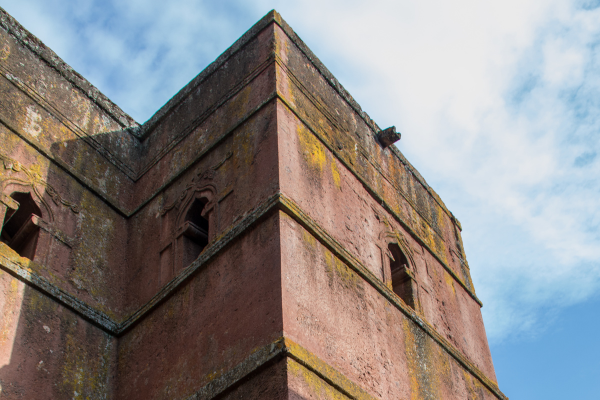
Read moreThe Church of St. George, located in Lalibela, Ethiopia, is one of the eleven rock-hewn monolithic churches in the region. It is carved out of volcanic tuff and is believed to have been constructed during the reign of King Gebre Mesqel Lalibela of the Zagwe dynasty in the late 12th or early 13th century. The church is known for its unique architecture, with a simple yet beautiful cruciform structure approximately 12 meters high. It features three west-facing doorways, nine lower-level windows, and twelve upper-level windows, with some windows adorned with carved semi-palette cross motifs. The church is part of the UNESCO World Heritage Site ""Rock-Hewn Churches, Lalibela"" and is considered one of the best known and last built of the eleven churches in the area. Fun Fact: The Church of St. George is often referred to as the ""Eighth Wonder of the World"" due to its remarkable architecture and historical significance. ...
Read moreThe Church of the Holy Sepulchre in Jerusalem, Israel, is a revered site with deep historical and religious significance. Constructed in the 4th century CE, it is revered as the location of Jesus Christ's crucifixion, burial, and resurrection, drawing Christian pilgrims from around the world.This ancient church's architecture is a testament to the diverse influences it has encountered over the centuries. Its exterior features imposing stone walls and intricate façades, while the interior is adorned with elaborate mosaics, frescoes, and magnificent marble columns.A notable highlight of the Church of the Holy Sepulchre is the Edicule, a small chapel that enshrines the tomb believed to be Jesus Christ's final resting place. This chapel has undergone multiple renovations, with the latest restoration completed in 2017, ensuring its preservation for future generations. A fun fact - The Church of the Holy Sepulchre is shared by six Christian denominations - Greek Orthodox, Roman Catholic, ...
Read moreThe Temple of Kukulcan, also known as El Castillo, is the most famous and iconic structure at the ancient Maya city of Chichen Itza in Yucatan, Mexico. This step pyramid stands 79 feet tall and consists of a series of nine square terraces, each approximately 2.57 meters high, with a temple upon the summit. The four sides of the pyramid have protruding stairways that rise at an angle of 45°. The talud walls of each terrace slant at an angle of between 72° and 74°. At the base of the balustrades of the northeastern staircase are carved heads of a serpent. The pyramid was built by the Toltecs on top of an earlier temple constructed by the Mayans. One of the most remarkable features of the Kukulcan Pyramid is its alignment with the sun during the spring and fall equinoxes. As the sun sets, a shadow in the shape of a serpent appears on the northern staircase, gradually descending the pyramid until it joins a stone snake's head at the base. This phenomenon is a testament to the Mayans' d ...
Read moreThe Château de Chambord, nestled in the picturesque Loire Valley of France, is a true masterpiece of Renaissance architecture and French grandeur. Commissioned by King Francis I in the 16th century, this iconic château is renowned for its stunning blend of French medieval and classical Italian Renaissance styles. With its distinctive French Renaissance facade, elaborate towers, and intricate stone carvings, Chambord is a testament to the architectural genius of the era. The château's double-helix staircase, rumored to be designed by Leonardo da Vinci himself, is a marvel of engineering and remains a highlight for visitors. Surrounded by a vast hunting park and scenic landscape, the Château de Chambord offers a glimpse into the lavish lifestyle of French royalty. Its expansive interiors feature ornate chambers, royal apartments, and a richly decorated chapel, showcasing the opulence and sophistication of the Renaissance court. Today, the Château de Chambord stands as a UNESCO Wo ...
Read more