Advertisement










Private equity has played a significant role in shaping Indi...
In today’s real estate landscape, fitness is often treated...
In this episode of Prop Personalities, we sit down with Hars...
Luxury real estate is one of the most talked-about segments ...
Welcome to Prop Personalities by Prop News Time - a podcast ...
A pioneering construction and demolition waste recovery plant has begun operations in Rajarhat, Kolkata. The facility, a significant stride towards sustainable waste management, will transform non-biodegradable construction waste into reusable "aggregates" for road paving. Instead of landfill disposal, waste from smaller housing projects will be transported to the Rajarhat plant. The initiative, which could serve as a model for other cities facing waste management challenges, underscores the shift towards a circular economy, where waste is seen as a valuable resource to be reused and recycled.
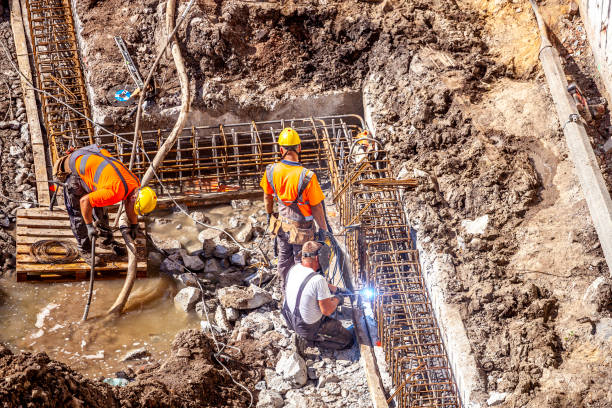
A ground-breaking construction and demolition waste recovery plant in Rajarhat, Kolkata, launched its operations last week, providing a novel solution for the city's escalating construction waste challenges. The facility aims to transform construction waste into reusable "aggregates," which can be incorporated into concrete for road paving.
Advertisement


Construction waste typically comprises non-biodegradable materials such as concrete blocks from pile caps and shattered tiles. These recycled aggregates can be utilized in various construction applications, including driveway paving.
The Kolkata Municipal Corporation's (KMC) solid waste management department granted a 5-acre plot to a private entity to establish this innovative mechanical plant for construction waste recovery. This initiative marks a significant stride towards sustainable waste management in the bustling metropolis.
A KMC official explained that the civic body will collect waste from smaller housing projects and, rather than disposing of them in landfills, transport them to the Rajarhat crushing unit. For larger construction projects, which generate 20 tonnes or more waste daily, a separate plant will need to be established on the construction site.
The decision to locate the plant in Rajarhat came after the Housing Infrastructure Development Corporation (HIDCO) allocated a 5-acre plot to the civic body. KMC sources revealed that an agreement had been signed with a private firm to set up and operate the construction waste recovery plant for a decade.
The KMC hopes to address the city’s construction waste problem with this project as the city witnesses an exponential rise in construction activities. If the model proves successful, the civic body will consider establishing similar plants in other locations. Sources say the civic body has already begun searching for suitable land plots for this purpose.
In a city where construction activities are burgeoning, the introduction of the waste recovery plant is a vital step towards sustainable urban growth. Traditional waste management practices have been largely unsustainable, contributing to the depletion of natural resources and environmental degradation. The new plant heralds a new era of responsible waste management, turning the problem of waste into a resource for infrastructure development.
By converting construction waste into reusable materials, the plant not only helps to reduce the amount of waste going into landfills but also contributes to the conservation of natural resources that would otherwise be used to produce new construction materials. Moreover, it is a significant step towards a circular economy, where waste is not just disposed of, but is seen as a valuable resource that can be reused and recycled.
The initiative also sets an example for other rapidly growing cities across India and the world, demonstrating that sustainable urban development is not only possible but also economically viable. It underscores the importance of adopting innovative and sustainable waste management strategies in the face of rapid urbanization.
In conclusion, the inauguration of the construction and demolition waste recovery plant in Rajarhat marks a critical milestone in Kolkata's journey towards sustainable urban development. By transforming construction waste into reusable materials, the plant represents a major step forward in responsible waste management and the conservation of natural resources. Its success could pave the way for similar initiatives across the city and beyond, contributing significantly to the global efforts towards a circular economy and sustainable urban growth.

5th Jun, 2025

25th May, 2023

11th May, 2023

27th Apr, 2023
Advertisement





 Facebook
 Whatsapp
