Advertisement








When should a housing society in Mumbai start considering re...
From GST on JDAs to SEBI’s REIT reclassification and the S...
Stay ahead in the world of real estate with our daily podcas...
Stay ahead in the world of real estate with our daily podcas...
A recent report by real estate firm Knight Frank India found that the number of 'ghost malls' with over 40% vacancy has risen in the country as consumers shift to larger shopping centres and online purchases. Smaller malls averaging 100,000 sq ft are particularly at risk, with 132 on track to become ghost malls as vacancies increased to 36.2% in 2023. This comes despite the total retail space in major cities growing 238% YoY. The rise in vacant malls represents a loss of INR 6,700 crore in construction value and could negatively impact local economies and small retailers. Such a scenario offers institutional investors the chance to explore avenues for repurposing or revitalizing their retail portfolios, while developers can seize opportunities to monetize these assets through repurposing or redevelopment efforts.
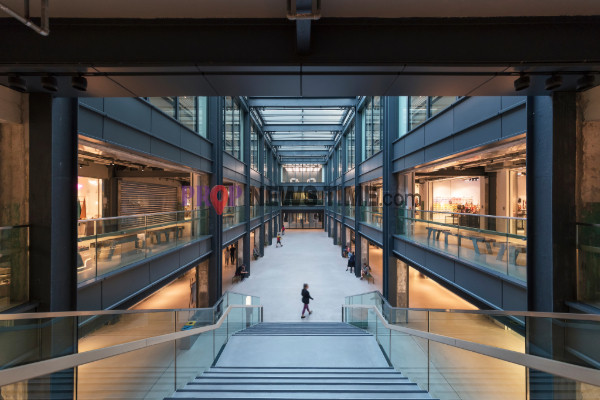
India's small malls are increasingly turning into ghost malls as consumers move towards online purchases and bigger shopping centres for a better experience, as per real estate consultancy firm Knight Frank India's latest report titled "Think India Think Retail 2024 - Shopping Centre and High Street Dynamics Across 29 Cities". Advertisement


Mall properties with a vacancy rate of more than 40% have been termed ghost malls. Ghost malls often fail to attract customers' and retailers' interest due to various factors like poor location, outdated design, multiple owners, and deteriorating infrastructure.
While the total leasable area of shopping centres in major Indian markets grew 238% year-over-year in 2023, the number of ghost malls rose to 64 from 57 in 2022. The approximately 13.3 million square feet of vacant retail space in these ghost malls represents a loss of INR 6,700 crore in construction value.
Industry experts say this high vacancy indicates weak demand and could lead to job losses and economic problems, especially for small retailers and service providers. Unable to match the convenience and variety offered by large malls, many small mall owners are caught in a downward spiral of declining revenue.
Private consumption, which makes up 60% of India's GDP, grew only 3.5% in the last quarter of 2023 while the overall economy expanded 8.4%.
Among smaller malls averaging 100,000 square feet, 132 are on the verge of becoming ghost malls - with vacancy rising to 36.2% in 2023 from 33.5% a year prior. However, vacancy remained low at around 5% for larger malls over 500,000 square feet and at 15.5% among middle-level shopping malls.
In the top eight cities, including Delhi, Mumbai and Bengaluru, the total number of shopping malls declined to 263 in 2023, with eight new retail centres added but 16 shut down. In tier 1 cities, the reduction in the total number of shopping malls can be attributed to closures outpacing new additions over the past year.
The National Capital Region saw the highest rise in vacant 'ghost malls', measuring 5.3 million square feet - a 58% increase year-over-year. Mumbai and Bengaluru also saw significant rises in ghost mall space of 86% and 46% respectively. Hyderabad was the only city to record a decline in ghost malls, seeing a 19% reduction to 0.9 million square feet in 2023. Kolkata saw the sharpest rise at 237% albeit from a lower base.
Shopping centres in distress grapple with ongoing hurdles, compounded by fresh additions worsening their already elevated vacancy rates. This surge has led to a rise in the count of shopping centres labelled as Ghost Shopping Centre stock. Underperforming shopping malls either faced redevelopment with residential or commercial projects, or were permanently closed down or auctioned off. Such a scenario offers institutional investors the chance to explore avenues for repurposing or revitalizing their retail portfolios, while developers can seize opportunities to monetize these assets through repurposing or redevelopment efforts.
India has a total shopping centre stock of 125.1 mn sq ft. The top 8 Indian cities constitute 75% of the total GLA, measuring 94.3 mn sq ft across 263 shopping centres while Tier 2 cities constitute 30.8 mn sq ft.
Of the top 8 cities, NCR (31.3 mn sq ft), Mumbai (16.3 mn sq ft) and Bengaluru (15.6 mn sq ft) were the top three cities in the pecking order of GLA available in the shopping centres. Amongst tier II geographies, Lucknow, Kochi and Jaipur featured as key players in terms of GLA available in shopping centres.
Overall shopping centre vacancy, across leading eight cities in India, has improved from 16.6% in 2022 to 15.7% in 2023, noting an 87-basis point reduction. The overall shopping centre vacancy includes Ghost Shopping Centres. However, upon exclusion of Ghost Shopping Centres from the stock in the leading 8 cities, the shopping centre health in India improves dramatically from 7.4% in 2023 due to the excellent performance of Grade A assets and reasonable occupancy in Grade B assets.
The study surveyed 340 shopping centres and 58 high streets across 29 cities. Knight Frank estimates the revenue potential of these assets shall reach INR 1,400 crore during the financial year 2024-25.
Of the 340 operational shopping centres in 2023, Grade A stock with a gross leasing area of 58.2 million square feet comprised 82 assets. This stock, with high occupancy, a strong tenant mix, good positioning and an active mall management, contributed 47% of the overall shopping centre space across the country during the year. Grade C stock, on the other hand, accounted for the smallest share at 22% or 27.2 msf of leasable space.
In terms of shopping centre density, Bengaluru stood out with a notable figure of 1,147 square feet/ 1,000 people. This indicates a well-developed retail landscape catering to a sizable urban population.
Amongst categories, apparel led the chart in shopping centres accounting for 33% of store presence, followed by food and beverages (16%). Entertainment, home and lifestyle, and department stores occupied a 3% share each.
In summary, the struggles of smaller malls underscore the growing dominance of larger retail centres in India. While large malls over 500,000 sq ft maintained strong occupancy of around 5%, smaller properties are struggling to compete. Unless finding new ways to attract customers through updated offerings and experiences, many small malls risk permanent closure. The growth of ghost malls poses challenges for local communities while also presenting opportunities for redevelopment.

5th Jun, 2025

25th May, 2023

11th May, 2023

27th Apr, 2023
Advertisement








 Facebook
 Whatsapp
