Advertisement










When should a housing society in Mumbai start considering re...
From GST on JDAs to SEBI’s REIT reclassification and the S...
Stay ahead in the world of real estate with our daily podcas...
Stay ahead in the world of real estate with our daily podcas...
Gujarat's real estate market saw a slowdown in new project launches during FY 2023-24, with 1,721 registrations, down 7.7% from the previous year. Factors like rising land, construction, and labor costs, coupled with ongoing projects, contributed to the decline. Investor interest shifted towards other avenues like the stock market, impacting demand. However, office space demand surged as businesses normalized. Vadodara faces land scarcity, while Rajkot experiences mid-segment property slowdown. Ahmedabad sees a rise in redevelopment projects. Despite challenges, Gujarat's real estate outlook remains positive, driven by infrastructure development and employment growth. The affordable housing segment also declined, attributed to project completions and changing buyer preferences. Overall, developers are optimistic amid economic growth and evolving market dynamics.
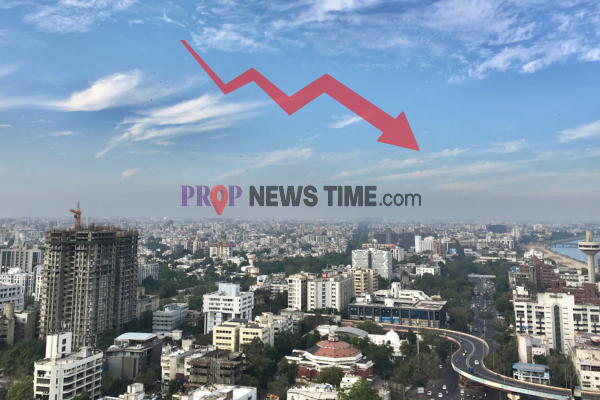
Gujarat's real estate market witnessed a slowdown in new project launches during the last financial year (2023-24). According to the Gujarat Real Estate Regulatory Authority (GujRERA), there were 1,721 new project registrations, marking a 7.7% decline compared to the 1,866 projects registered in the previous year. This decline was seen across all categories, including residential, commercial, and mixed-use projects, in major cities like Ahmedabad, Vadodara, and Rajkot. Advertisement


Several factors contributed to the slowdown in new project launches. Developers cited rising land costs, construction costs, and labor costs as challenges. Land prices have reportedly increased by more than 20% depending on the location, putting a strain on project finances. Additionally, many projects launched after the pandemic (estimated to be around 1,866) are still under construction, limiting resources for new ventures. Experts also pointed to a mismatch between rising construction costs and property prices. While construction costs have increased significantly, finished property prices haven't kept pace, leading to lower profit margins for developers.
The post-pandemic market is seeing a shift in demand. Investors, who previously fueled the market, are now exploring other options like the stock market, which has been performing well. Additionally, the rise of online shopping has reduced demand for retail space by an unspecified percentage. However, there's a revival in demand for office space as businesses return to normal operations.
Vadodara faces a shortage of land for new projects due to delays in town planning approvals. Rajkot is experiencing a slowdown in launches for mid-segment properties (priced between INR 60 lakh and INR 1 crore) due to lower demand. In contrast, Ahmedabad is seeing a rise in redevelopment projects, impacting the demand for new apartments on the outskirts. The number of houses in these redeveloped societies has reportedly doubled in some cases.
Despite the slowdown in launches, experts believe the outlook for Gujarat's real estate market remains positive. Faster infrastructure development and improved employment opportunities are expected to drive future demand for housing. Additionally, with the upcoming festive season, a new wave of project launches is anticipated.
The affordable housing segment, a crucial part of the market, also experienced a decline in new launches. This was attributed to the completion of existing projects (estimated at 578 in the previous year), a shift in buyer preferences towards larger homes with better amenities post-pandemic, and the expiration of tax benefits for developers in the affordable housing sector. GujRERA data shows that only 443 affordable housing projects were launched in the state in FY 2024.
Overall, the Gujarat real estate market is undergoing a period of adjustment. While new launches have slowed down, developers are optimistic about future prospects due to the state's economic growth and changing market trends.

5th Jun, 2025

25th May, 2023

11th May, 2023

27th Apr, 2023
Advertisement








 Facebook
 Whatsapp
