Advertisement










Private equity has played a significant role in shaping Indi...
In today’s real estate landscape, fitness is often treated...
In this episode of Prop Personalities, we sit down with Hars...
Luxury real estate is one of the most talked-about segments ...
Welcome to Prop Personalities by Prop News Time - a podcast ...
The Union Cabinet has approved the continuation of Pradhan Mantri Gram Sadak Yojana Phase III with an increased outlay of INR 83,977 crore and extended timelines up to 2029 for select works. The decision focuses on completing pending rural road and bridge projects, including those not yet awarded. The scheme aims to improve connectivity to markets, schools and healthcare facilities. It is expected to support rural mobility, reduce travel time and enable economic activity, especially in remote and underserved regions, while also creating employment through infrastructure development.
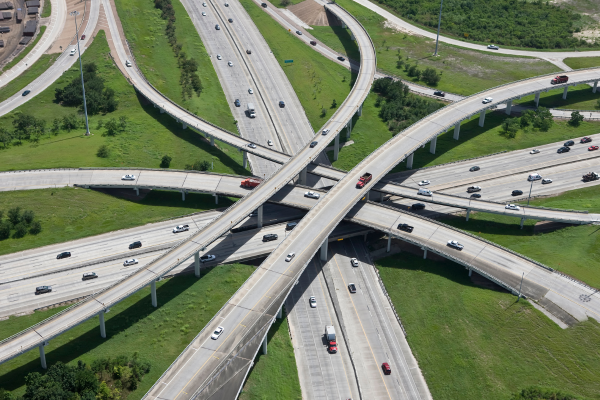
The Union Cabinet has cleared the extension of Pradhan Mantri Gram Sadak Yojana Phase III (PMGSY-III) with a revised financial outlay of INR 83,977 crore, compared to the earlier approved INR 80,250 crore. The extension provides additional time for completing ongoing rural road and bridge works, with deadlines now aligned up to 2028 for most road projects and 2029 for bridge works in hilly areas. Advertisement


The decision was taken at a Cabinet meeting chaired by the Prime Minister, where the government indicated that the extension is aimed at ensuring completion of sanctioned infrastructure rather than leaving partially executed works. Officials stated that projects approved earlier but not yet awarded will now be taken forward for tendering and execution under the revised timeline. This step addresses delays seen in some states due to land issues, cost revisions and execution challenges.
As part of the revised plan, approval has also been given for 161 long-span bridges with an estimated cost of around INR 961 crore. These bridges were part of earlier approved road alignments but had remained pending. Their inclusion is expected to improve connectivity in difficult terrains where road access alone is not sufficient.
The scheme continues to focus on strengthening through routes and key rural links that connect villages to Gramin Agricultural Markets, higher secondary schools and healthcare centres. This approach is intended to make rural connectivity more functional by linking habitations to essential services rather than just creating road networks. In many regions, such connectivity has already reduced travel time and improved access to basic services.
PMGSY, launched in 2000, has been one of the government’s largest rural infrastructure programmes. Over the years, it has evolved through multiple phases, including a special component introduced in 2016 for areas affected by left-wing extremism, and the third phase launched in 2019 to consolidate existing networks. The programme has already resulted in the construction of several lakh kilometres of rural roads and a large number of bridges across states.
Data from the government shows that improved rural roads have supported movement of agricultural produce and reduced logistics costs in many areas. Better connectivity has also helped increase access to schools and healthcare facilities, especially in remote villages where transport options were limited earlier.
The continuation of PMGSY-III is also expected to generate employment at the local level through construction activities and related services. Contractors, material suppliers and local labour are likely to benefit during the execution phase. At the same time, improved connectivity is expected to support small businesses and non-farm activities in rural regions.
The government has also approved subsequent phases of the programme, indicating that rural road development remains a priority area. The current extension focuses more on completing existing commitments efficiently rather than announcing large-scale new expansions.

5th Jun, 2025

25th May, 2023

11th May, 2023

27th Apr, 2023
Advertisement





 Facebook
 Whatsapp
