Advertisement










Private equity has played a significant role in shaping Indi...
In today’s real estate landscape, fitness is often treated...
In this episode of Prop Personalities, we sit down with Hars...
Luxury real estate is one of the most talked-about segments ...
Welcome to Prop Personalities by Prop News Time - a podcast ...
India’s oil and gas regulator, Petroleum and Natural Gas Regulatory Board, has initiated a nationwide push to develop liquefied petroleum gas (LPG) pipeline infrastructure aimed at reducing reliance on road-based transportation and improving supply efficiency. The plan includes nine identified pipeline projects, with bidding underway for four major routes spanning roughly 2,500 km. These projects are expected to attract investments of around INR 12,500 crore. The initiative seeks to enhance safety, reduce transit losses, and lower emissions by gradually replacing bulk LPG tanker movement. The regulator also indicated that pipeline-based transportation could play a key role in strengthening energy security, supporting India’s cleaner fuel transition, and improving connectivity between refineries, import terminals and bottling plants across regions.
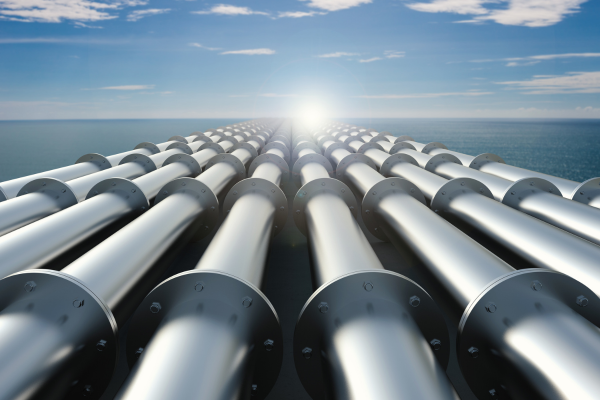
The Petroleum and Natural Gas Regulatory Board has initiated a large-scale infrastructure push to expand liquefied petroleum gas (LPG) pipeline networks across the country, with the objective of reducing dependence on road-based bulk transportation and improving overall supply chain efficiency. Advertisement


The move focuses on establishing direct pipeline connectivity between refineries, import terminals and LPG bottling plants, thereby replacing the current system that relies heavily on tanker-based movement. This transition is expected to enhance safety standards, reduce logistical inefficiencies and minimise transit losses.
As part of this initiative, the regulator has identified nine pipeline projects for development. Bidding processes are currently underway for four key routes — Cherlapally–Nagpur, Shikrapur–Hubli–Goa, Paradip–Raipur and Jhansi–Sitarganj — with a combined network length of approximately 2,500 km. The projects are estimated to attract investments of around INR 12,500 crore.
According to the regulator, the shift towards pipeline transportation is intended to gradually phase out bulk LPG movement by road, with a broader target of achieving this transition by 2030. The approach is expected to significantly mitigate accident risks associated with tanker transport while ensuring more reliable and consistent fuel delivery across regions.
The proposed pipeline network is designed to handle high-volume LPG movement with reduced transit time, while also acting as a buffer storage mechanism during periods of supply disruption. This is likely to improve supply security and resilience within the energy distribution system.
The regulator indicated that LPG consumption continues to play a critical role in both household cooking and commercial applications, making efficient distribution infrastructure essential. It noted that while pipelines remain the preferred mode of transport, a substantial portion of LPG is still moved through bulk tankers, highlighting the need for systemic transition.
Beyond logistics, the initiative is aligned with India’s broader energy transition strategy. By reducing dependence on road transport, the pipeline network is expected to lower greenhouse gas emissions and support cleaner fuel adoption. It also aims to facilitate improved access to LPG across underserved regions.
The development is expected to generate economic benefits through infrastructure investment, job creation and regional development. Additionally, it is likely to support the expansion of downstream networks and improve integration with the national energy grid.
The regulator maintained that the initiative reflects its continued focus on building a more efficient, resilient and future-ready energy infrastructure framework, while supporting the country’s long-term sustainability and energy security goals.
Source - Reuters

5th Jun, 2025

25th May, 2023

11th May, 2023

27th Apr, 2023
Advertisement





 Facebook
 Whatsapp
