Advertisement










In this episode of Prop Personalities, we sit down with Hars...
Luxury real estate is one of the most talked-about segments ...
Welcome to Prop Personalities by Prop News Time - a podcast ...
Airports play a much bigger role than just enabling travel -...
Why does the same hotel brand operate multiple properties in...
Noida International Airport (Jewar Airport) has installed over 6,000 low-emission, recyclable furniture units across its terminal and operational areas, marking one of the first large-scale deployments of such systems in India's airport infrastructure. Executed by AFC Furniture Solutions, the installation spans public seating, workstations and control desks across a 1,00,000 sq m facility. The furniture, designed with a 66% recyclability rate and lower carbon footprint, supports the airport's net-zero target. The project aligns with broader sustainability goals in airport design, where emissions reduction is being extended beyond core infrastructure to interior fit-outs and operational assets.
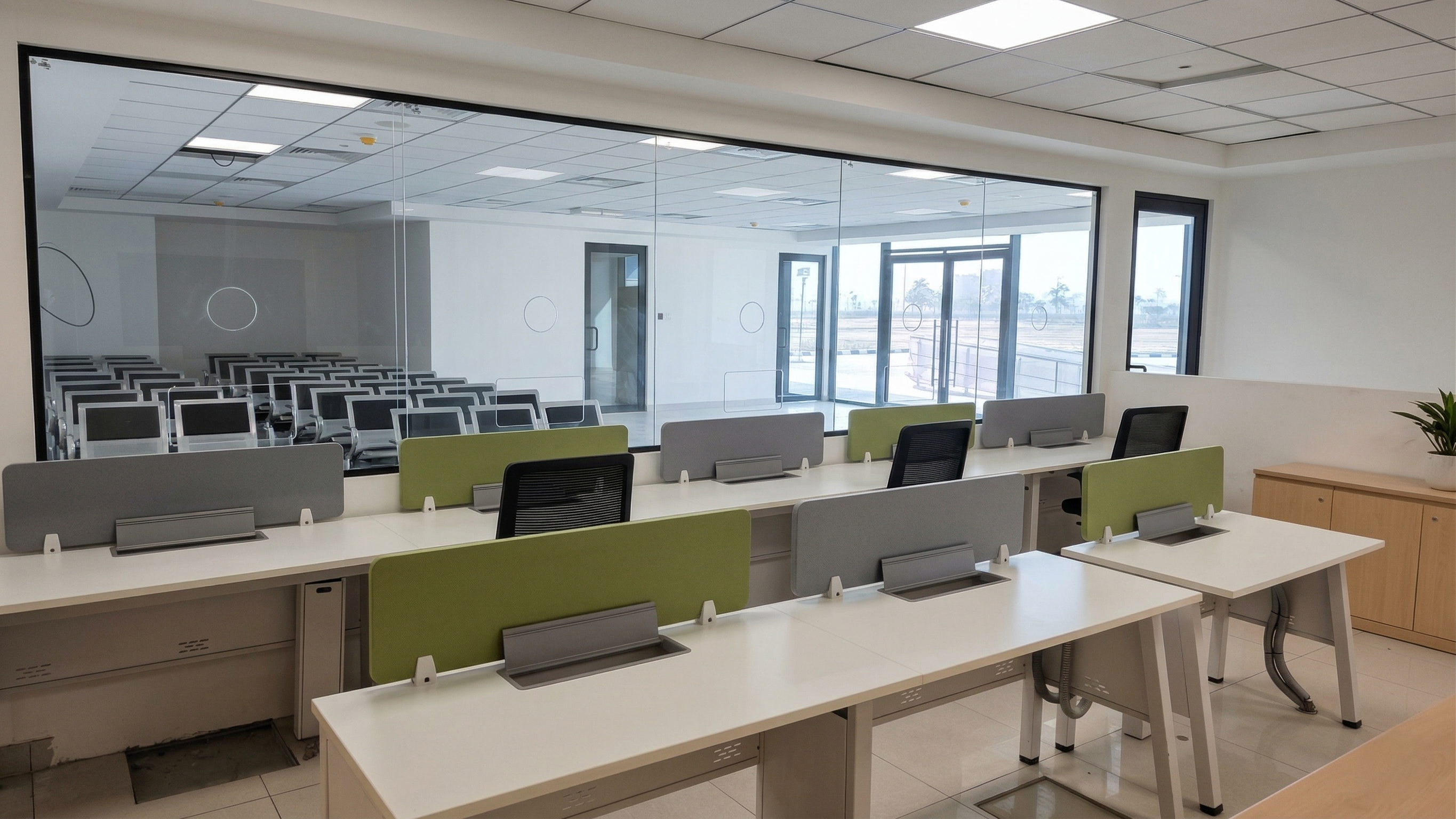
Noida International Airport at Jewar has implemented a large-scale deployment of low-emission furniture systems across its terminal and operational areas, with over 6,000 units installed as part of its sustainability-led infrastructure development, according to details shared in the past week. Advertisement


The installation, executed by AFC Furniture Solutions, covers approximately 1,00,000 sq m of terminal and back-end spaces, including passenger seating areas, lounges, control rooms and administrative workspaces. The deployment includes a range of furniture such as modular workstations, ergonomic control desks and specialised installations designed for high-frequency operational use.
The furniture systems have been manufactured using low-emission materials, with recyclability levels of up to 66% and a reported cradle-to-gate carbon footprint of 115.43 kg CO2e. These specifications are aligned with the airport's broader sustainability objective of achieving net-zero operations, with the design targeting reduced emissions from interior fit-outs in addition to core infrastructure.
The airport is expected to handle approximately 12 million passengers annually, necessitating infrastructure designed for durability, operational efficiency and environmental performance. The furniture deployed in passenger areas has been engineered to support rapid turnover and minimise downtime, while maintaining functional efficiency across waiting zones, transit areas and commercial spaces.
In operational zones such as control rooms and screening areas, the installation includes workstations and control desks designed for continuous use under high-intensity conditions. These systems incorporate ergonomic features aimed at supporting extended operational cycles while maintaining safety and efficiency standards.
The development reflects a shift in airport infrastructure planning, where sustainability considerations are being extended beyond construction materials and energy systems to include interior components and operational equipment. Industry participants indicated that conventional airport projects have typically focused sustainability efforts on building design, while fit-outs have remained largely standardised.
The Jewar project introduces a broader integration of environmental criteria across design and execution stages, with the fit-out completed in two phases without delays. The total installation spans around 5 lakh sq ft, involving coordinated manufacturing and deployment processes.
The airport's design has been developed by a consortium including Nordic, Grimshaw, Haptic and STUP, incorporating architectural elements inspired by regional features such as ghats and havelis. The project has already received certification as a green airport campus under the Indian Green Building Council (IGBC) framework.
The furniture used in the project has been manufactured in an IGBC Gold-rated facility, with emissions and lifecycle assessments verified through established environmental standards. The integration of such systems reflects increasing emphasis on lifecycle sustainability in large infrastructure projects.
The development highlights a growing trend in infrastructure execution, where sustainability metrics are being applied across all components of a project, including interiors, to meet evolving environmental compliance and operational efficiency requirements.

5th Jun, 2025

25th May, 2023

11th May, 2023

27th Apr, 2023
Advertisement





 Facebook
 Whatsapp
