Advertisement










In this episode of Prop Personalities, we sit down with Hars...
Luxury real estate is one of the most talked-about segments ...
Welcome to Prop Personalities by Prop News Time - a podcast ...
Airports play a much bigger role than just enabling travel -...
Why does the same hotel brand operate multiple properties in...
Industrial and warehousing demand across India's top eight cities reached 11 million sq ft in Q1 2026, reflecting a 22% year-on-year increase, according to Colliers. Third-party logistics (3PL) companies led activity, contributing around one-third of total leasing at approximately 3.5 million sq ft, with demand rising 1.8 times annually. Delhi NCR and Chennai together accounted for nearly half of overall absorption, while Bengaluru and Hyderabad recorded strong growth. New supply stood at 12.5 million sq ft, up 33% year-on-year, leading to a rise in vacancy levels to 16.7%. Despite near-term risks from global supply chain disruptions, long-term demand drivers remain supported by logistics expansion and policy-led manufacturing growth.
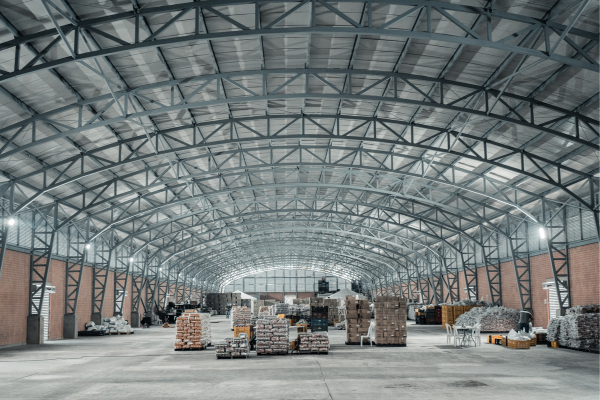
Industrial and warehousing leasing activity across India's top eight cities totalled 11 million sq ft in the first quarter of 2026, marking a 22% increase over the same period last year, according to data released by Colliers. The growth was primarily driven by third-party logistics (3PL), e-commerce, and automobile occupiers, reflecting continued diversification of demand across sectors. Advertisement


Delhi NCR emerged as the leading market during the quarter, accounting for 28% of total leasing activity, followed by Chennai with a 21% share. Bengaluru and Hyderabad also recorded significant traction, with Grade A space absorption in both cities increasing two to three times compared to the previous year. At a micro-market level, Hoskote-Narsapura in Bengaluru reported the highest leasing activity at 1.4 million sq ft, while Bhiwandi in the Mumbai region followed with approximately 1.1 million sq ft.
3PL operators remained the dominant occupiers, accounting for about one-third of total leasing at roughly 3.5 million sq ft during the quarter. Demand from the segment grew 1.8 times compared to Q1 2025, supported by network expansion, increased outsourcing of logistics functions, and improvements in multi-modal connectivity. E-commerce and automobile companies also recorded strong activity, together contributing approximately 32% of overall leasing, with each segment accounting for over 1.5 million sq ft.
Additional sectors, including fast-moving consumer goods (FMCG) and electronics, saw more than a twofold increase in leasing volumes on an annual basis, indicating a broadening occupier base. Large transactions exceeding 200,000 sq ft accounted for 48% of total leasing, or around 5.3 million sq ft. Within this category, e-commerce firms contributed 34% of demand, while 3PL and automobile players each accounted for 20-30%.
On the supply side, new completions across the top eight cities stood at 12.5 million sq ft during the quarter, representing a 33% year-on-year increase. Delhi NCR and Bengaluru together accounted for nearly half of the new supply additions. Notable growth in supply was also recorded in Hyderabad, where completions rose sharply on an annual basis.
With supply continuing to outpace absorption, vacancy levels increased by approximately 360 basis points to 16.7% at the end of the quarter. Despite this rise, rental levels remained largely stable across major markets, with select high-activity micro-markets witnessing annual increases.
A senior executive at Colliers India indicated that leasing momentum remained firm during the quarter, driven by sustained demand for Grade A facilities and increasing occupier diversification. However, developers are expected to adopt a cautious approach to new supply in the near term amid geopolitical uncertainties and ongoing global supply chain disruptions.
Industry stakeholders also highlighted that long-term fundamentals of the sector remain supported by policy measures aimed at strengthening domestic manufacturing and logistics infrastructure. At the same time, external risks, including continued geopolitical tensions in West Asia, are expected to remain a key factor influencing near-term market dynamics.

5th Jun, 2025

25th May, 2023

11th May, 2023

27th Apr, 2023
Advertisement





 Facebook
 Whatsapp
