Advertisement










When should a housing society in Mumbai start considering re...
From GST on JDAs to SEBI’s REIT reclassification and the S...
Stay ahead in the world of real estate with our daily podcas...
Stay ahead in the world of real estate with our daily podcas...
Post-pandemic interest in luxury holiday homes has soared, with fractional ownership becoming a favoured investment choice. Rental yields have jumped from pre-pandemic levels of 6-7% to a notable 9-10%. Industry experts attribute this to increased domestic travel and demand for premium accommodations. The market, currently valued between $1.5-2 billion, is projected to reach up to $10 billion in the coming years. Start-ups like YOURS and ALYF are poised for significant expansion, tapping into this lucrative trend. The shift emphasizes the evolving investment preferences away from traditional avenues.

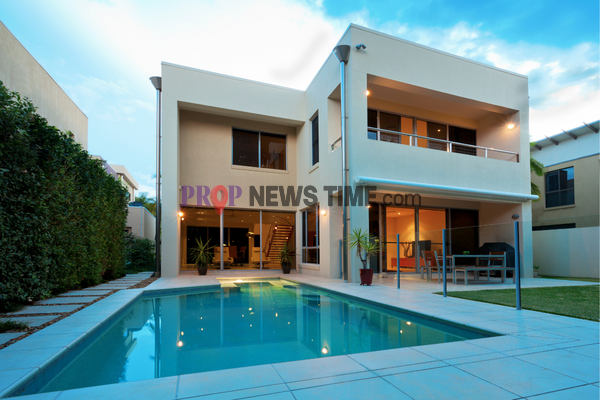

The allure of luxury holiday homes has seen a significant upswing in the aftermath of the pandemic, with fractional ownership emerging as the new magnet for investors. Fractional ownership, a model where multiple parties own a piece of a single property, has surged in popularity. This format allows individuals to either rent out their share or utilize it for personal stays for predefined durations each year.
Advertisement


According to Sangram Baviskar, managing director of TruBoard Partners, a tech-centric project management company, rental yields for these properties have escalated from a pre-pandemic figure of 6-7% to a striking 9-10% presently. This jump is attributed to a surge in domestic travel and an elevated demand for luxury accommodations. For context, traditional residential properties see rental yields in the ballpark of 3-4%. Baviskar believes a boom in domestic travel has directly influenced the rental appeal of holiday homes. Consequently, many start-ups find fractional ownership in these homes highly lucrative.
Current estimates place the premium holiday home market between $1.5-2 billion, but predictions suggest this could soar to a whopping $8-10 billion in the coming years. Remarkably, fractional ownership, which currently represents 1-2% of the holiday home market, is anticipated to burgeon to around 5% in a similar timeframe.
Start-ups have not remained bystanders in this growth trajectory. Major platforms in this niche have enjoyed a compounded annual growth rate (CAGR) of 30-40% in recent years and are optimistic about maintaining a robust 25-30% CAGR in the forthcoming years.
For instance, the relatively young start-up, YOURS, which currently manages assets worth Rs 75 crore, aims for a tenfold increase in the next three years, aiming for assets worth Rs 600 crore, as shared by its CEO, Shravan Gupta. Not to be left behind, another contender, ALYF, plans to catapult its current Rs 65 crore asset base to an ambitious Rs 1000 crore within two years, says its CEO, Saurabh Vohara.
Fractional holiday homes are quickly overshadowing the timeshare concept. Anand Narayanan, founder of Alt DRX, believes this shift is due to consumers perceiving timeshares as expenses, while fractional holiday homes represent genuine real estate investments with additional usage rights.
In conclusion, post-pandemic, rental yields for luxury holiday homes have spiked to 9-10%. The market for premium holiday homes is poised for exponential growth. Fractional ownership is rapidly becoming a preferred investment model, offering tangible assets and user rights. Start-ups are leveraging this trend, signalling promising growth and expansion in the sector.

5th Jun, 2025

25th May, 2023

11th May, 2023

27th Apr, 2023
Advertisement








 Facebook
 Whatsapp
