Advertisement










Private equity has played a significant role in shaping Indi...
In today’s real estate landscape, fitness is often treated...
In this episode of Prop Personalities, we sit down with Hars...
Luxury real estate is one of the most talked-about segments ...
Welcome to Prop Personalities by Prop News Time - a podcast ...
The Mumbai Metropolitan Region Development Authority has progressed work on Mumbai Metro Line 6 with the completion of a key engineering task involving a 42 metre steel composite span over the active Western Railway corridor near Jogeshwari. The project corridor spans 14.5 km with 13 stations and forms part of the Pink Line, with civil work currently about 87.7% complete. The execution included construction of a critical pier between live railway tracks and precision installation of a heavy steel structure using high-capacity cranes within a limited railway block, without affecting train operations.
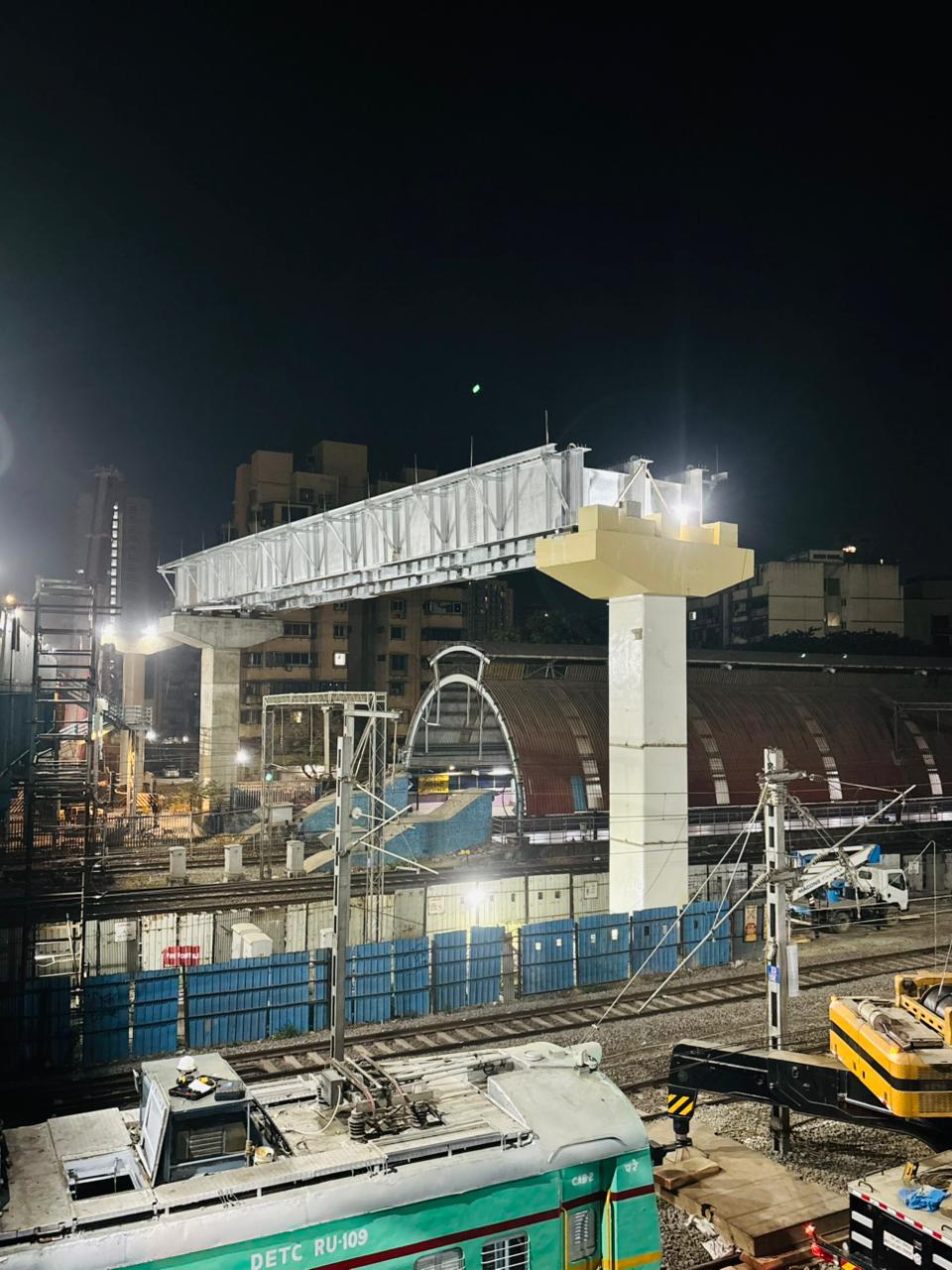
The Mumbai Metropolitan Region Development Authority has completed an important construction milestone on Mumbai Metro Line 6 by executing a complex engineering operation over an active Western Railway corridor near Jogeshwari. The project covers a 14.5 km fully elevated stretch with 13 stations and is part of the Pink Line network. The depot is located at Kanjurmarg over an area of 15.2 hectares. The corridor also includes a double-decker flyover on the Jogeshwari–Vikhroli Link Road, while overall civil work has reached approximately 87.7% completion. Advertisement


The recent execution involved the construction of Pier P124, which is uniquely positioned between the up and down suburban railway tracks in one of Mumbai’s busiest rail sections. The work was carried out in a highly restricted environment where train movement continued on both sides. Construction activities, including foundation work and pier cap development, were completed in line with railway safety standards and approved technical norms. Work was managed within limited night-time operational windows, requiring continuous monitoring and strict coordination.
Following completion of the pier, the authority installed a 42 metre steel composite girder span between Pier P123 and P124. The structure weighs approximately 168.96 metric tonnes and consists of main girders, cross girders, and bracing elements forming a composite system.
The installation was completed within a railway block of around 10 hours. High-capacity 500-ton and 600-ton hydraulic cranes were used in tandem for synchronized lifting operations. Due to space constraints, cranes were positioned between active railway tracks, and the span was installed at a height of around 10–12 metres above rail level while maintaining required safety clearances. The entire activity was completed without any disruption beyond the approved railway block.
This operation is considered one of the more complex crossings along Metro Line 6 and was completed through coordination with Western Railway authorities.
Metro Line 6, which connects Swami Samarth Nagar in Lokhandwala to Vikhroli, is designed to strengthen east–west connectivity in Mumbai. Once operational, it is expected to reduce travel time across key corridors, ease congestion on major roads including JVLR, and improve integration with other metro lines and suburban rail systems. The project is also expected to support a shift towards public transport, helping reduce traffic pressure and emissions in the city.
The corridor is integrated with multiple transport networks, including Metro Line 2A at Adarsh Nagar, Metro Line 7 at JVLR, Metro Line 3 at SEEPZ, Metro Line 4 at Kanjurmarg (West), and suburban railway connectivity at Jogeshwari and Kanjurmarg stations.
MMRDA officials noted that the execution demonstrates the authority’s ability to manage complex infrastructure work in dense urban conditions while maintaining safety and operational continuity. The Metropolitan Commissioner, Dr Sanjay Mukherjee, IAS, stated that the project is a long-awaited infrastructure link for commuters and that the authority is also assessing phased operationalisation options so that parts of the corridor can be made available for public use at the earliest.

5th Jun, 2025

25th May, 2023

11th May, 2023

27th Apr, 2023
Advertisement





 Facebook
 Whatsapp
