Advertisement










Private equity has played a significant role in shaping Indi...
In today’s real estate landscape, fitness is often treated...
In this episode of Prop Personalities, we sit down with Hars...
Luxury real estate is one of the most talked-about segments ...
Welcome to Prop Personalities by Prop News Time - a podcast ...
The Union government has generated over INR 4,000 crore from scrap disposal over the past five years, highlighting the economic potential of recycling within India’s circular economy framework. Speaking at a global symposium on resource efficiency, Minister Jitendra Singh stated that recycling is emerging as a key growth driver for startups and MSMEs, moving beyond large industrial players. Policy measures such as the Extended Producer Responsibility (EPR) framework and revised Solid Waste Management Rules, effective from earlier this month, are strengthening compliance and digital monitoring. With participation from around 75,000 producers and 5,000 recyclers, the circular economy is increasingly influencing sectors including infrastructure, manufacturing and energy, supported by industry collaborations and pilot projects across key material streams.
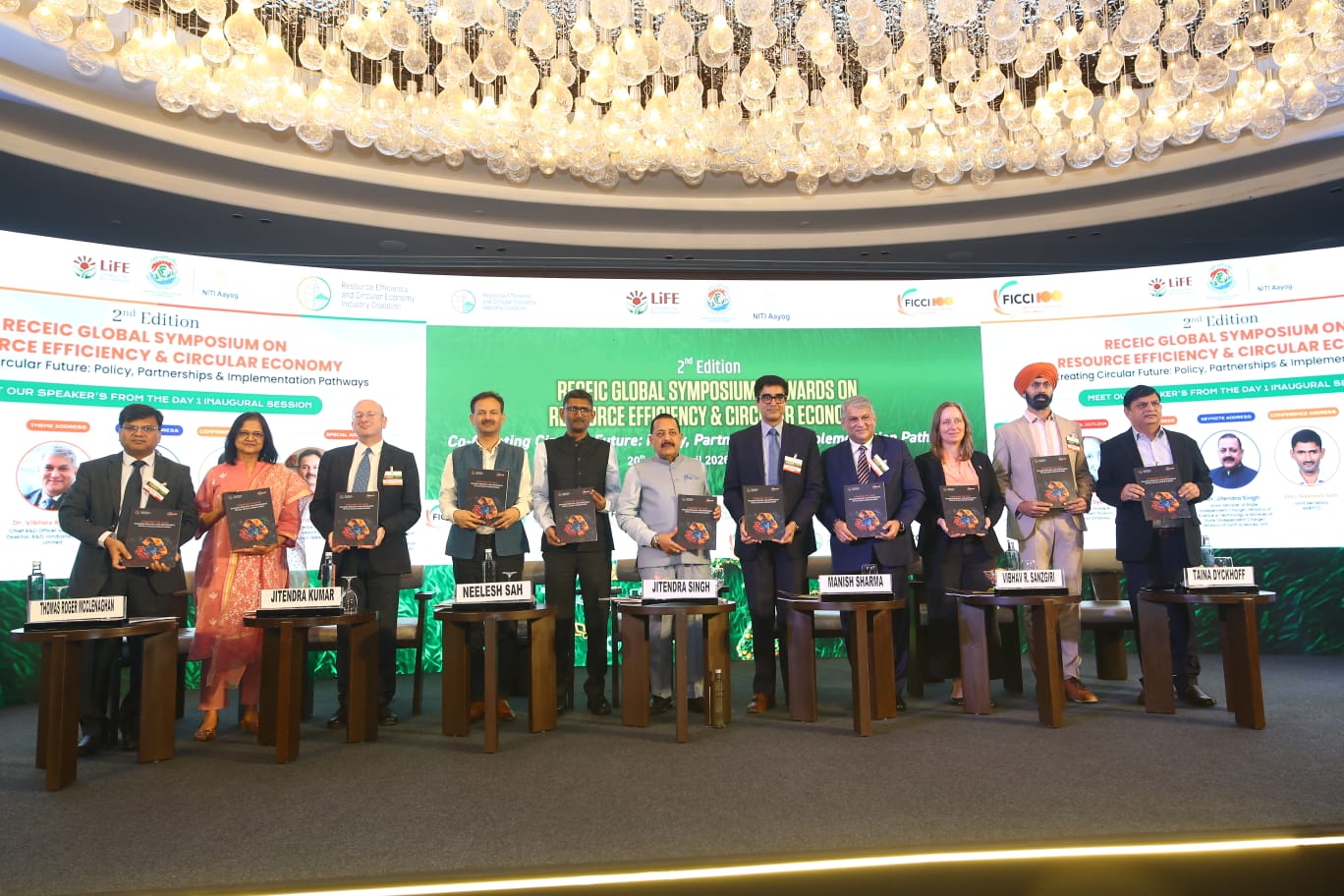
The Union government has generated over INR 4,000 crore through the disposal of scrap and e-waste over the past five years, as part of its cleanliness and resource efficiency initiatives, highlighting the economic potential of recycling within India’s circular economy framework. The development was outlined by Union Minister Jitendra Singh while addressing the RECEIC Global Symposium on resource efficiency and circular economy earlier this week in New Delhi. Advertisement


The Minister stated that recycling is increasingly emerging as an economic driver for startups and micro, small and medium enterprises (MSMEs), expanding beyond the domain of large industrial players. He indicated that circular economy practices present opportunities across the value chain, from grassroots-level enterprises to large-scale industries, and called for wider private sector participation in emerging sectors.
He further noted that the government has opened multiple sectors, including space and nuclear, to private participation, positioning itself as a facilitator for innovation-led growth. According to him, industries are expected to adopt a more proactive approach in leveraging opportunities within circular economy systems.
Highlighting the financial outcomes of waste management initiatives, the Minister pointed to the monetisation of scrap under a nationwide campaign launched in recent years. He stated that the results demonstrate the inherent economic value in waste streams, including e-waste, which can be processed and reintegrated into production cycles.
The discussion also covered the application of waste materials across infrastructure and energy sectors. Examples cited included the use of plastic and steel slag in road construction and the conversion of used cooking oil into biofuels, illustrating how waste streams can be repurposed into economically viable inputs.
Policy frameworks were highlighted as key enablers of this transition. Neelesh Sah, Joint Secretary at the Ministry of Environment, Forest and Climate Change, indicated that the Extended Producer Responsibility (EPR) framework, introduced in 2016 and digitised in recent years, has seen participation from nearly 75,000 producers, importers and brand owners, along with around 5,000 registered recyclers. He added that the revised Solid Waste Management Rules, notified earlier this year and now in effect, incorporate provisions for circularity and digital monitoring.
Industry and research stakeholders also pointed to the need for systemic changes. Jitendra Kumar, Managing Director of the Biotechnology Industry Research Assistance Council (BIRAC), emphasised the importance of integrating sustainability into development models and strengthening regulatory mechanisms such as the polluter pays principle. He also highlighted the role of biotechnology and carbon credit systems in supporting low-carbon and circular practices.
The symposium brought together industry representatives under the RECEIC platform, which operates through thematic working groups across sectors including packaging, textiles, used oil and batteries. Pilot projects are currently underway to enable implementation at scale.
The government’s push towards circular economy practices is increasingly influencing infrastructure development, industrial processes and waste management systems, with regulatory and institutional support shaping adoption across sectors.

5th Jun, 2025

25th May, 2023

11th May, 2023

27th Apr, 2023
Advertisement





 Facebook
 Whatsapp
