Advertisement










When should a housing society in Mumbai start considering re...
From GST on JDAs to SEBI’s REIT reclassification and the S...
Stay ahead in the world of real estate with our daily podcas...
Stay ahead in the world of real estate with our daily podcas...
The Chandigarh administration is assessing whether to adopt a land pooling model or proceed with outright land acquisition for developing nearly 1,500 acres across 22 peripheral villages. While land pooling has been advocated by farmers as a participatory approach, officials have identified planning constraints under the Chandigarh Master Plan-2031 and challenges in assembling contiguous land parcels. Internal estimates indicate that outright acquisition could generate significantly higher revenues, with potential earnings of around INR 66,000 crore after development and auctions. In contrast, land pooling could reduce auctionable land and result in revenue shortfalls of up to INR 28,500 crore. The proposal remains under evaluation amid competing priorities of fiscal considerations, urban planning compliance and stakeholder expectations.
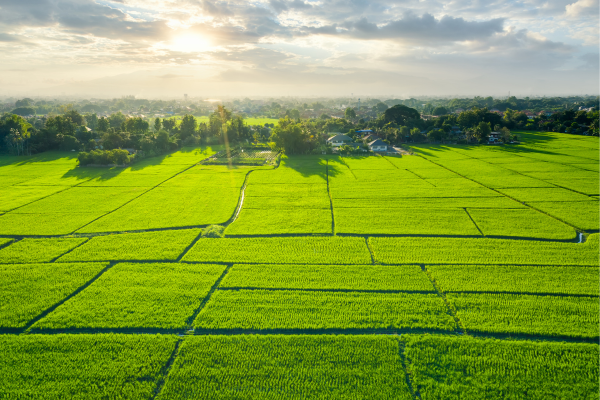
The Chandigarh administration is evaluating whether to implement a land pooling policy or pursue direct land acquisition for the planned development of peripheral villages, as it attempts to balance financial outcomes, planning constraints and stakeholder demands in the Union Territory. The assessment, underway in recent weeks, relates to approximately 1,500 acres of largely undeveloped land spread across 22 villages on the city's periphery. Advertisement


The administration is under pressure to optimise limited urban land while also addressing long-standing demands from farmers seeking a participatory development model. Land pooling, which allows landowners to contribute their land in exchange for a share of developed plots, had been explored earlier as an alternative to compulsory acquisition. However, officials have highlighted technical challenges, including fragmented landholdings and the absence of contiguous parcels required for integrated urban planning under the Chandigarh Master Plan-2031.
Financial assessments carried out by the administration indicate a clear advantage for outright acquisition. Based on current collector rates, acquiring around 1,500 acres is estimated to cost approximately INR 10,500 crore. After allocating nearly 50% of the land for infrastructure and public amenities, the remaining 750 acres could be auctioned, potentially generating revenue of about INR 78,000 crore and yielding an estimated surplus of INR 66,000 crore.
In comparison, the land pooling model would reduce the extent of land available for monetisation. Depending on the sharing ratio with landowners, the administration would retain only 375 to 450 acres for auction, with projected revenues ranging between INR 37,500 crore and INR 45,300 crore. This would translate into a potential revenue gap of approximately INR 20,700 crore to INR 28,500 crore when compared to direct acquisition.
The administration had initially initiated work on a land pooling framework in 2021, engaging external consultants to prepare a policy structure aligned with the Master Plan-2031. However, the approach was later deemed unfeasible in 2024 due to planning limitations. Although discussions briefly resurfaced in the early part of this year, senior officials have since indicated a preference for adhering strictly to existing planning norms, effectively limiting the scope for a pooling-based model.
Large-scale land acquisition within Chandigarh has remained limited in recent decades, with most acquisitions taking place during the city's initial development phases in the mid-20th century and subsequent sectoral expansion. The current deliberation, therefore, represents a significant policy decision concerning future urban expansion.
The ongoing evaluation reflects the administration's effort to reconcile fiscal considerations with planning requirements and local stakeholder expectations, particularly as farmers continue to advocate for a model that allows them to retain a stake in the developed land.

5th Jun, 2025

25th May, 2023

11th May, 2023

27th Apr, 2023
Advertisement








 Facebook
 Whatsapp
