Advertisement










When should a housing society in Mumbai start considering re...
From GST on JDAs to SEBI’s REIT reclassification and the S...
Stay ahead in the world of real estate with our daily podcas...
Stay ahead in the world of real estate with our daily podcas...
New Zealand's economy is facing renewed pressure as its long-standing reliance on a strong housing market to drive recovery is not working this time. Despite sharp interest rate cuts by the Reserve Bank of New Zealand, property prices remain significantly below their pandemic peak. Global uncertainties, including the ongoing Middle East conflict, have added to borrowing cost pressures. Weak demand, rising unemployment, and stalled construction activity are further slowing recovery. At the same time, migration outflows and halted real estate projects are worsening the imbalance, raising concerns about how the country will revive growth without support from its housing sector.
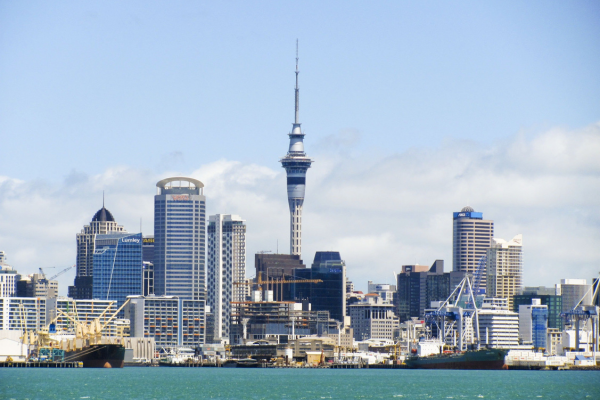
New Zealand's economic recovery is under strain as the housing market, which has historically supported growth during downturns, is yet to show signs of revival. Policymakers are now facing a difficult situation, especially with global uncertainties adding further pressure. Advertisement


The Reserve Bank of New Zealand has reduced its benchmark interest rate from 5.5% to 2.25% in an attempt to stimulate the economy. However, this has not translated into a housing recovery, with property prices still around 20% below their pandemic peak. This decline has weakened the so-called wealth effect that previously supported consumer spending and overall economic activity.
External factors are also contributing to the slowdown. The ongoing Middle East conflict has pushed up global oil prices, leading to higher borrowing costs. This may force the central bank to adopt a stricter policy stance despite the economy showing signs of stress. The situation is particularly challenging as the country faces its weakest economic conditions since the global financial crisis.
Market experts believe that global uncertainty has disrupted expectations of a housing rebound. Nick Goodall, head of research at Cotality NZ, indicated that earlier expectations of a gradual recovery this year have now become uncertain. He added that prolonged global instability could further delay any improvement in the housing sector.
The central bank has already indicated that house prices are unlikely to increase this year. At the same time, New Zealand's two-year swap rate, a key benchmark for mortgage rates, has risen sharply, reflecting broader global trends. This has increased borrowing costs for households, further dampening demand.
Economic indicators also point to weakness. Growth slowed in the final quarter of last year, with construction activity declining and consumer spending remaining subdued. The unemployment rate has risen to 5.4%, the highest level in a decade, highlighting stress in the labour market.
The rapid increase in interest rates after the pandemic has also played a role in the current situation. Higher debt-servicing costs and falling property values have pushed the economy into a recessionary phase. Government efforts to stimulate growth have been limited, even as national elections are scheduled for November 7, with economic concerns expected to be a key issue for voters.
The slowdown is clearly visible in the real estate sector, where several projects have stalled due to weak demand and excess supply. In Auckland, the proposed Seascape tower, planned as the country's tallest residential building, may not be completed after its developer entered receivership. In Wellington, the One Tasman apartment project, launched in 2021, has also seen delays, with demolition work yet to begin despite earlier timelines.
Industry experts note that many projects launched during the peak of the market in 2021 are now struggling to move forward. Tamba Carleton, director of residential research at CBRE, explained that developers are finding it difficult to proceed as market conditions shifted soon after project launches, forcing many to reconsider their plans.
Another key challenge is the rising number of people leaving the country. Data shows that around 40,000 New Zealand citizens moved abroad last year, with a majority heading to Australia. This trend has continued over the past few years, reducing housing demand and impacting local markets.
The impact is being felt at an individual level as well. Wellington-based retiree Brian Ellis said that increased migration has significantly altered the balance between supply and demand, forcing him to sell his apartment at a much lower price than expected, affecting his retirement plans.
Similarly, job losses have added to financial stress for households. Former project manager David Laing shared that despite applying for numerous roles after being laid off, he has received very few interview opportunities. He explained that his household has had to cut back on non-essential spending, and financially it feels like they are moving backwards.
Source Reuters

5th Jun, 2025

25th May, 2023

11th May, 2023

27th Apr, 2023
Advertisement








 Facebook
 Whatsapp
