Advertisement










When should a housing society in Mumbai start considering re...
From GST on JDAs to SEBI’s REIT reclassification and the S...
Stay ahead in the world of real estate with our daily podcas...
Stay ahead in the world of real estate with our daily podcas...
The central government has informed the Rajya Sabha that 10,000 air-conditioned electric buses will be deployed across 116 cities in 26 states and Union Territories by the end of 2027 under the PM e-Bus Sewa Scheme. The programme targets tier-2 and tier-3 cities with populations between 3 lakh and 40 lakh, aiming to improve urban mobility and reduce pollution. So far, tenders for 6,500 buses have been finalised and initial deliveries have commenced. The government has also indicated plans to introduce a second scheme to deploy an additional 35,000 e-buses, with revised guidelines under formulation. Implementation challenges remain in some states, including Bihar, where delays in setting up coordination committees have affected progress.
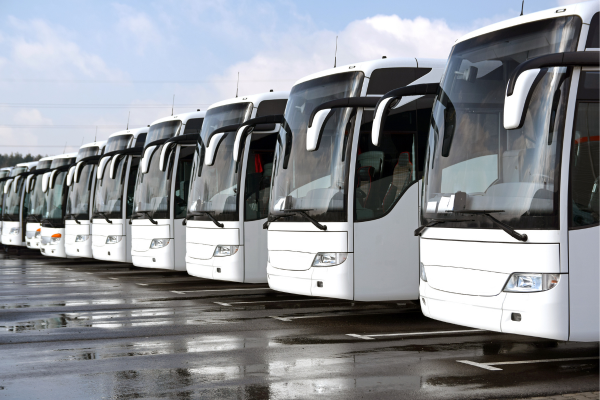
The central government has stated in the past week that it plans to deploy 10,000 air-conditioned electric buses across 116 cities in 26 states and Union Territories by the end of 2027 under the PM e-Bus Sewa Scheme, with a subsequent programme to introduce an additional 35,000 buses currently under consideration. The update was provided in the Rajya Sabha by Union Minister for Housing and Urban Affairs Manohar Lal during Question Hour. Advertisement


The scheme, announced in August 2023, has been designed to improve public transport infrastructure in tier-2 and tier-3 cities while addressing rising urban pollution. It targets cities with populations ranging from 3 lakh to 40 lakh, particularly those that face financial constraints in deploying electric mobility solutions independently. The buses are being rolled out under a Public Private Partnership (PPP) model, with participation linked to the PM-eBus Sewa Payment Security Mechanism.
Out of 178 eligible cities, 116 have participated in the scheme and have been allocated buses based on demand and recommendations of coordination committees. The allocation process included provisions to cluster nearby or twin cities to ensure eligibility where individual population thresholds were not met.
The minister informed the House that tenders have been finalised and agreements signed for approximately 6,500 buses, while initial deliveries have already commenced. A tranche of 225 buses was delivered in the past month, and further supplies are expected as states complete contractual formalities.
State-level implementation remains a critical factor in the pace of deployment. In Bihar, for instance, although 400 buses have been sanctioned across six cities Patna, Bhagalpur, Darbhanga, Gaya, Muzaffarpur and Purnea the rollout has been delayed due to the absence of coordination committees required for project execution. Of the total allocation, Patna has been assigned 150 buses, while the remaining cities have been allotted 50 buses each.
The government has also sanctioned INR 112.46 crore for associated infrastructure in Bihar, including behind-the-meter power systems and depot facilities, highlighting the integrated approach required for electric mobility deployment.
Looking ahead, the ministry is preparing a second phase of the programme, under which 35,000 additional e-buses are proposed to be deployed. While detailed guidelines and modalities for this phase are yet to be finalised, the minister indicated that learnings and reforms from the current scheme would be incorporated.
In addition to fleet expansion, the government is working on enhancing user experience through integrated mobility solutions. Plans include the introduction of a Sahaj ticketing system and a national common mobility card, enabling seamless travel across multiple transport modes, including e-buses.
The initiative reflects a broader push to strengthen urban transport systems in smaller cities, where infrastructure gaps remain significant. With urban transport being a state subject, the scheme relies on coordination between central and state governments to ensure timely implementation and effective utilisation of allocated resources.
Source - PTI

5th Jun, 2025

25th May, 2023

11th May, 2023

27th Apr, 2023
Advertisement








 Facebook
 Whatsapp
