Advertisement










In this episode of Prop Personalities, we sit down with Hars...
Luxury real estate is one of the most talked-about segments ...
Welcome to Prop Personalities by Prop News Time - a podcast ...
Airports play a much bigger role than just enabling travel -...
Why does the same hotel brand operate multiple properties in...
The Haryana government has amended its Affordable Housing Policy, 2013, introducing mandatory provision of one car parking space per dwelling unit across projects. The revision, notified in the past week, also increases allotment rates across cities including Gurugram, Faridabad and Sohna. Parking costs have been capped at 10% of the flat price, with developers required to demarcate spaces at the approval stage. The changes will apply to upcoming allotments and partially to ongoing projects, subject to buyer consent. Projects with occupation certificates remain exempt. The revision reflects a broader recalibration of policy norms to address infrastructure gaps in high-density housing while accommodating rising construction and land costs across the state's affordable housing segment.
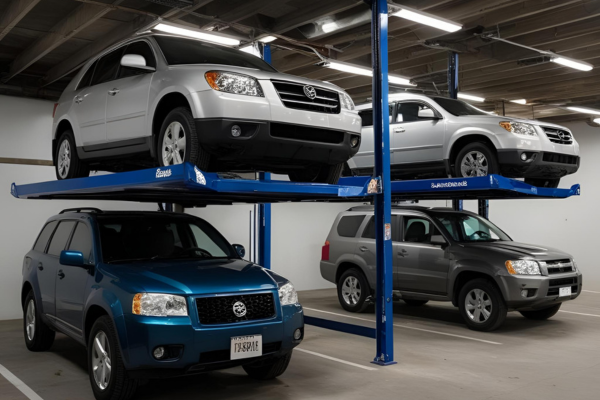
The Haryana government has amended its Affordable Housing Policy, 2013, mandating that developers provide one equivalent car space (ECS) per dwelling unit in affordable housing projects, with the revised norms notified in the past week to address infrastructure gaps in high-density developments across the state. Advertisement


Under the updated policy, each residential unit must be allocated a dedicated parking space, with the cost of such provision capped at 10% of the flat price. Developers are also required to clearly demarcate parking slots at the building plan approval stage to ensure transparency and avoid disputes among residents. Any surplus parking beyond the mandatory allocation may be designated for visitor parking or two-wheelers.
The amendment introduces a significant shift from earlier provisions, where parking allocation in affordable housing projects was largely left to developer discretion. Officials indicated that the change was prompted by repeated complaints from homebuyers regarding inadequate parking and congestion in high-density residential developments.
The revised framework will apply to projects where allotments are yet to be made. For ongoing developments that have already received licences and approved building plans without the mandatory parking provision, developers will be required to obtain consent from at least two-thirds of allottees before making modifications. Projects that have already secured occupation certificates for all residential towers are exempt from the revised requirement.
In addition to parking norms, the government has revised maximum allotment rates for affordable housing units across cities. In Gurugram, the cap has been increased to INR 5,575 per sq ft of carpet area, while Faridabad and Sohna have been set at INR 5,450 per sq ft. High- and medium-potential towns will have a cap of INR 5,050 per sq ft, and low-potential towns INR 4,250 per sq ft.
Developers will also be permitted to charge up to INR 1,300 per sq ft for balcony areas, subject to a maximum balcony size of 100 sq ft and an overall cap of INR 1.3 lakh per unit. These revised rates will apply to projects where allotments are pending, while in cases where applications have already been invited, developers may recover the differential amount from successful applicants, with an option for withdrawal and refund for those unwilling to proceed.
The policy revision follows earlier adjustments to allotment rates approved in recent months to account for rising land, material and labour costs, which had affected project viability.
The combined changes indicate a recalibration of Haryana's affordable housing framework, balancing regulatory standardisation with cost adjustments, while addressing long-standing concerns related to infrastructure provisioning in dense residential developments.

5th Jun, 2025

25th May, 2023

11th May, 2023

27th Apr, 2023
Advertisement





 Facebook
 Whatsapp
