Advertisement










In this episode of Prop Personalities, we sit down with Hars...
Luxury real estate is one of the most talked-about segments ...
Welcome to Prop Personalities by Prop News Time - a podcast ...
Airports play a much bigger role than just enabling travel -...
Why does the same hotel brand operate multiple properties in...
The Maharashtra government is advancing a slum cluster redevelopment scheme in Mumbai aimed at rehabilitating nearly seven lakh slum dwellers through integrated housing projects. The initiative, reviewed during a recent meeting of the Slum Rehabilitation Authority (SRA), seeks to address stalled and unviable redevelopment projects while improving living conditions in densely populated areas. Authorities are in the process of identifying eligible slum clusters for redevelopment under a structured framework aligned with the state housing policy. The scheme is designed to promote large-scale redevelopment by aggregating land parcels and enabling better infrastructure planning. Additional approvals, including funding allocations for select projects and administrative restructuring within the SRA, were also discussed as part of efforts to streamline implementation and accelerate execution.
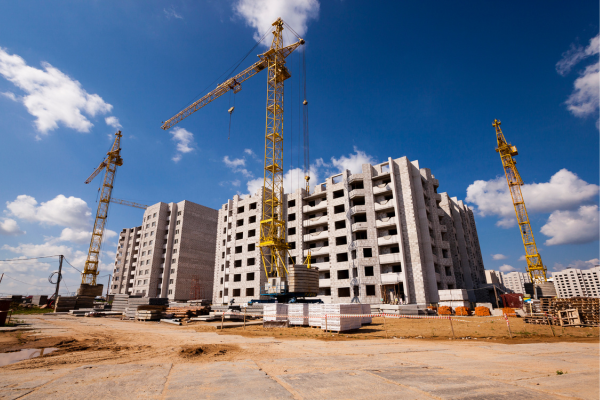
The Maharashtra government is progressing with a slum cluster redevelopment scheme aimed at rehabilitating approximately seven lakh residents in Mumbai, with the initiative reviewed in the past week during a meeting of the Slum Rehabilitation Authority (SRA), the state's nodal body for slum redevelopment. Advertisement


The update was presented to Chief Minister Devendra Fadnavis at the authority's 16th meeting, where officials outlined the scale and scope of the scheme, which focuses on redeveloping large slum clusters into integrated housing developments with supporting infrastructure. The approach is intended to address long-standing challenges associated with fragmented redevelopment and stalled projects across the city.
The scheme forms part of the broader state housing policy framework and seeks to consolidate smaller slum pockets into larger redevelopment clusters to improve project viability and planning efficiency. Officials indicated that the process of identifying eligible slum clusters is currently underway, with site selection expected to play a critical role in determining execution timelines.
Authorities noted that earlier redevelopment models, including joint venture arrangements, had received limited response and faced implementation challenges, leading to delays and incomplete projects. The cluster-based approach has been proposed as an alternative to overcome these constraints by enabling coordinated development over larger land parcels.
In addition to the cluster redevelopment framework, the meeting reviewed progress on specific projects and funding approvals. An additional allocation of INR 97 crore was approved for the redevelopment of Mata Ramabai Ambedkar Nagar and Kamaraj Nagar, taking the total funding for the project to INR 597 crore. The Mumbai Metropolitan Region Development Authority (MMRDA) has been identified as the executing agency for this project.
The administration also approved INR 333 crore for the development of the Lokshahir Annabhau Sathe International Memorial in Ghatkopar. As part of this project, directions were issued to provide housing under a rental housing scheme for ineligible slum dwellers affected by the development, ensuring that project execution proceeds without delays linked to rehabilitation concerns.
Administrative measures were also discussed to strengthen the functioning of the SRA. Officials indicated that engineers currently deputed from the Brihanmumbai Municipal Corporation (BMC) would be absorbed into the authority, along with contractual staff, to improve institutional capacity and continuity in project execution.
The cluster redevelopment scheme builds on earlier policy approvals that envisaged redevelopment of slum areas as integrated housing projects, with provisions for higher development potential and participation from private developers. The approach is expected to enable more efficient land use while facilitating the provision of formal housing and infrastructure for eligible residents.
The initiative reflects the state's ongoing efforts to address housing shortages and improve living conditions in Mumbai's informal settlements through structured redevelopment mechanisms, while attempting to resolve issues of project viability and delayed delivery that have affected previous schemes.

5th Jun, 2025

25th May, 2023

11th May, 2023

27th Apr, 2023
Advertisement





 Facebook
 Whatsapp
