Advertisement










In this episode of Prop Personalities, we sit down with Hars...
Luxury real estate is one of the most talked-about segments ...
Welcome to Prop Personalities by Prop News Time - a podcast ...
Airports play a much bigger role than just enabling travel -...
Why does the same hotel brand operate multiple properties in...
The Rajasthan government has proposed seven locations for developing industrial hubs under the Centre's BHAVYA (Bharat Audyogik Vikas Yojana) scheme, aimed at creating next-generation, plug-and-play industrial ecosystems. The proposal, submitted in the past week, aligns with the national plan to develop 100 industrial parks with modern infrastructure and integrated logistics. Most of the identified sites fall within the Delhi-Mumbai Industrial Corridor influence zone, offering connectivity advantages. Existing projects such as the Khushkhera-Bhiwadi-Neemrana Investment Region and Jodhpur-Pali-Marwar Industrial Area are already under development. The state has indicated readiness through available land parcels and an established Special Purpose Vehicle framework, which is expected to reduce project timelines and support investor participation across manufacturing and logistics sectors.
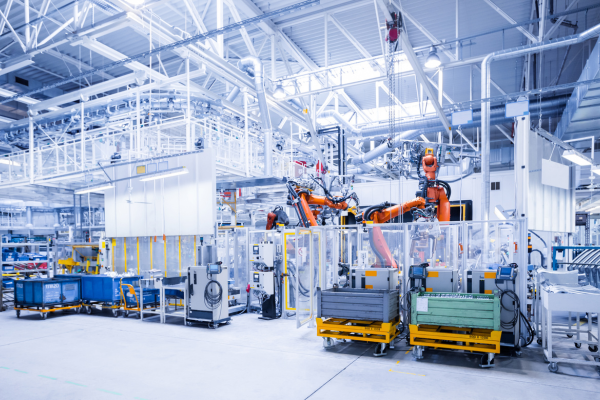
The Rajasthan government has proposed the development of seven industrial hubs under the Centre's BHAVYA scheme in the past week, seeking to establish integrated industrial ecosystems with plug-and-play infrastructure across strategically identified locations in the state. Advertisement


The proposal has been submitted under the Bharat Audyogik Vikas Yojana, a central initiative aimed at creating 100 industrial and urban growth nodes across India through investment-ready infrastructure and streamlined approvals. The state's plan focuses on developing these hubs with core utilities, multimodal connectivity and governance mechanisms through Special Purpose Vehicles to enable faster execution.
Most of the proposed sites are located within the influence zone of the Delhi-Mumbai Industrial Corridor, providing logistical advantages through established freight networks and industrial clustering. This positioning is expected to facilitate integration with existing supply chains and improve access to domestic and export markets.
Two major industrial nodes in Rajasthan the Khushkhera-Bhiwadi-Neemrana Investment Region and the Jodhpur-Pali-Marwar Industrial Area are already under various stages of development. Work has commenced on the ground at the Jodhpur-Pali-Marwar Industrial Area through a joint venture with the National Industrial Corridor Development Corporation Trust, indicating ongoing implementation of corridor-linked infrastructure projects.
Officials indicated that the state has identified substantial land parcels across the proposed sites, which is expected to reduce project gestation periods and enable quicker rollout once approvals are secured. The presence of an established Special Purpose Vehicle framework between the state government and the National Industrial Corridor Development Corporation is also expected to facilitate coordination and project execution.
The BHAVYA scheme, approved by the Union Cabinet with an outlay of approximately INR 33,660 crore, is designed to support the development of industrial parks with ready-built infrastructure, including internal roads, utilities, warehousing and social infrastructure. Financial assistance from the Centre includes support for core infrastructure and external connectivity, with project selection based on a competitive, proposal-driven process.
The Rajasthan government has indicated that investor interest in such developments has remained strong, particularly following recent investment summits where manufacturing, logistics and allied sectors showed participation. The proposed hubs are expected to build on this momentum by offering pre-planned industrial environments that reduce entry barriers for businesses.
The initiative forms part of broader efforts by states to align with central industrial corridor programmes and attract investments through cluster-based development. By leveraging existing infrastructure, land availability and institutional mechanisms, Rajasthan is positioning its proposed hubs to compete for early approval under the scheme.
Approval from the National Industrial Corridor Development Corporation will determine the next stage of implementation, including detailed planning, formation of project entities and phased infrastructure development across the identified sites.

5th Jun, 2025

25th May, 2023

11th May, 2023

27th Apr, 2023
Advertisement





 Facebook
 Whatsapp
