Advertisement










In this episode of Prop Personalities, we sit down with Hars...
Luxury real estate is one of the most talked-about segments ...
Welcome to Prop Personalities by Prop News Time - a podcast ...
Airports play a much bigger role than just enabling travel -...
Why does the same hotel brand operate multiple properties in...
Prime Minister Narendra Modi is set to inaugurate the Delhi-Dehradun Expressway on April 14, marking the completion of a 210-km access-controlled corridor connecting Delhi, Uttar Pradesh and Uttarakhand. Built at an estimated cost of around INR 12,000 crore, the project is designed to reduce travel time between Delhi and Dehradun from over six hours to about 2.5 hours. The expressway integrates advanced engineering features, including elevated wildlife corridors and multiple interchanges, and is expected to ease congestion on existing routes while strengthening connectivity to key economic and tourism zones.
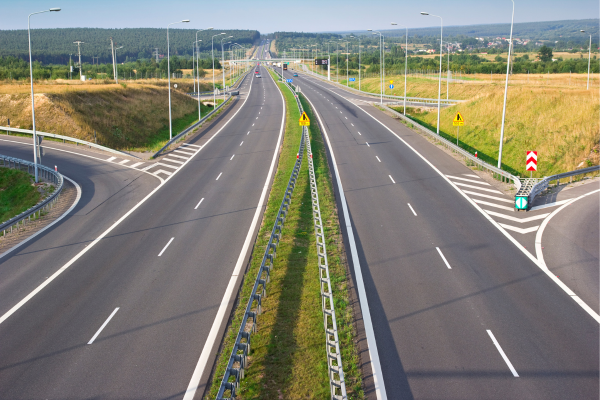
Prime Minister Narendra Modi is scheduled to inaugurate the Delhi-Dehradun Expressway on April 14, completing a major highway project that aims to improve connectivity between Delhi, Uttar Pradesh and Uttarakhand while significantly reducing travel time between the two cities. The expressway, developed at an estimated cost of around INR 12,000 crore, spans approximately 210 km and forms part of the broader national highway expansion programme. Advertisement


The project has been designed as a high-speed, access-controlled corridor linking Delhi to Dehradun via key towns such as Baghpat, Shamli and Saharanpur. Once operational, the expressway is expected to reduce travel time from over six hours to nearly 2.5 hours, improving mobility for both passenger and freight traffic.
The expressway has been developed in multiple phases, combining brownfield and greenfield stretches, with six lanes expandable to eight in certain sections. It includes 16 entry and exit points, railway overbridges, and a network of underpasses to facilitate uninterrupted traffic movement.
A key feature of the corridor is the integration of environmental safeguards, including an elevated wildlife corridor passing through the Rajaji National Park area. This structure is intended to allow safe animal movement while maintaining highway continuity. The project also includes a tunnel near the Dehradun end and several elevated stretches designed to address terrain constraints and improve safety.
The expressway connects with existing highway networks, including the Delhi-Meerut Expressway and the Eastern Peripheral Expressway, strengthening regional linkages and supporting movement across northern India. It is also expected to improve access to pilgrimage routes and tourism destinations in Uttarakhand, particularly during peak travel periods.
Construction of the project had experienced delays due to land acquisition challenges and execution complexities, pushing timelines beyond initial targets. However, with construction nearing completion and final works underway, the project is now ready for formal commissioning.
The Delhi-Dehradun Expressway forms part of a broader infrastructure push aimed at improving inter-city connectivity and reducing logistics time across key corridors. By enhancing road capacity and reducing congestion on existing routes, the project is expected to support economic activity in adjoining regions, particularly in western Uttar Pradesh and Uttarakhand.
Officials have indicated that such high-speed corridors are central to improving freight efficiency and enabling faster movement of goods and people. The expressway is also expected to influence development patterns along the corridor, with improved accessibility likely to support residential, commercial and tourism-related growth in connected regions.

5th Jun, 2025

25th May, 2023

11th May, 2023

27th Apr, 2023
Advertisement





 Facebook
 Whatsapp
