Advertisement










In this episode of Prop Personalities, we sit down with Hars...
Luxury real estate is one of the most talked-about segments ...
Welcome to Prop Personalities by Prop News Time - a podcast ...
Airports play a much bigger role than just enabling travel -...
Why does the same hotel brand operate multiple properties in...
The Jammu and Kashmir administration has begun reviving the historic Mohra Hydroelectric Power Project in Baramulla to boost local power generation and reduce dependence on external supply. Originally commissioned in 1905, the project once generated up to 10.5 MW before becoming defunct after flood damage in 1992. The restoration will include infrastructure upgrades while preserving key heritage features. This initiative aligns with the region's broader plan to expand hydropower capacity to 11,000 MW by 2035. Alongside major projects, the revival of Mohra highlights efforts to utilise existing assets, improve energy reliability and support long-term infrastructure development in the Union Territory.
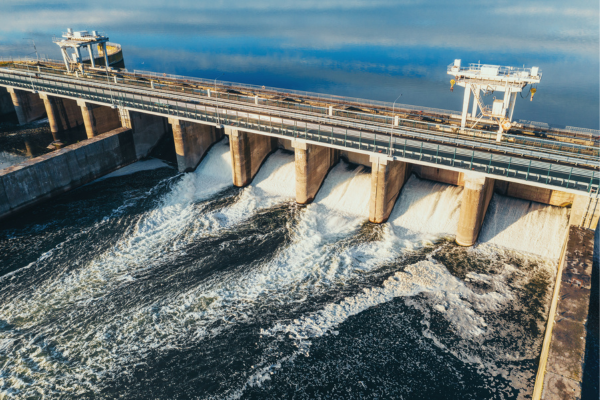
The Jammu and Kashmir administration has initiated the revival of the Mohra Hydroelectric Power Project, a 120-year-old facility located on the Jhelum River in the Uri sector of Baramulla district, in the past week as part of efforts to augment local power generation capacity and reduce reliance on external electricity supply. The project, which has remained defunct since the early 1990s due to flood damage, is being restored under a broader push to strengthen energy infrastructure across the Union Territory. Advertisement


Originally commissioned in 1905, the Mohra project is among the earliest hydroelectric facilities in the region and was designed as a run-of-the-river system. It initially generated around 5 MW of power and played a key role in early electrification efforts, including supplying electricity to Srinagar. Over time, its capacity was expanded, reaching approximately 10.5 MW before operations were halted following severe damage caused by floods in 1992.
The revival initiative is being positioned as part of a wider strategy to scale up hydropower generation in Jammu and Kashmir, where the government aims to increase installed capacity from around 3,540 MW to nearly 11,000 MW by 2035. The renewed focus on hydropower development has gained momentum amid changing policy priorities and a push for greater energy self-sufficiency within the region.
Officials have indicated that the restoration will involve modernisation of existing infrastructure while retaining key historical elements of the project. Technical assessments are expected to evaluate structural integrity, feasibility of installing updated turbines, and environmental considerations. Earlier proposals had suggested adopting a public-private partnership model to address funding and execution challenges, which have historically delayed restoration efforts.
Despite its relatively small generation capacity, the project holds significance beyond its output. The Mohra facility features distinctive engineering elements, including a wooden water channel extending over 10 km along mountainous terrain, which reflects early hydropower design practices in the region. Its revival is therefore also linked to preserving engineering heritage alongside functional infrastructure.
The initiative comes at a time when multiple hydropower projects in Jammu and Kashmir are being expedited to improve supply reliability and reduce power deficits. Larger projects under development, such as Pakal Dul and Kiru, are expected to contribute significantly to capacity expansion, while smaller projects like Mohra are being restored to maximise utilisation of existing assets.
The revival process will require coordination across departments, including power development authorities, technical consultants, and potential private partners, particularly in relation to funding, environmental approvals, and execution timelines.
As the administration advances its hydropower roadmap, the Mohra project represents both an infrastructural intervention and a restoration effort, reflecting a broader approach that combines capacity enhancement with the reuse of legacy assets within the region's energy sector.

5th Jun, 2025

25th May, 2023

11th May, 2023

27th Apr, 2023
Advertisement





 Facebook
 Whatsapp
