Advertisement










Private equity has played a significant role in shaping Indi...
In today’s real estate landscape, fitness is often treated...
In this episode of Prop Personalities, we sit down with Hars...
Luxury real estate is one of the most talked-about segments ...
Welcome to Prop Personalities by Prop News Time - a podcast ...
The Himachal Pradesh government has amended its Town and Country Planning Rules, 2026, making it compulsory to install electric vehicle (EV) charging stations in commercial, public and semi-public buildings as well as new real estate projects. The move aligns urban development norms with the state's clean energy goals. Developers must also comply with the Himachal Pradesh Energy Conservation Building Code and get designs audited by Bureau of Energy Efficiency-authorised auditors before occupancy certificates are issued. The rules also introduce structured Premium FAR charges for upcoming projects.
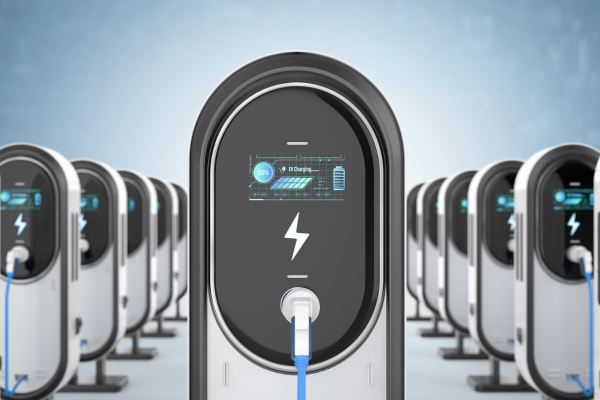
The Himachal Pradesh government has mandated the installation of electric vehicle (EV) charging stations in all commercial, public and semi-public buildings, along with new real estate developments, under the revised Town and Country Planning (17th Amendment) Rules, 2026. The change has been introduced to ensure that urban infrastructure keeps pace with the growing adoption of electric vehicles across the state. Advertisement


Town and Country Planning Minister Rajesh Dharmani stated that the government was working towards establishing Himachal Pradesh as a green energy state and had incorporated necessary changes in planning regulations to support this objective. He indicated that the revised building norms now require project proponents to include EV charging infrastructure at the design stage itself.
The amended provisions apply to commercial complexes, hospitality units, healthcare facilities, educational institutions, shopping malls and other large establishments falling under public and semi-public use categories. The integration of EV charging points will now form part of mandatory project approvals under local planning authorities.
In addition to the EV mandate, the government has reinforced compliance with the Himachal Pradesh Energy Conservation Building Code (HPECBC) and Energy Conservation Building Rules, 2018. Specialised buildings with a connected load of 100 kW or more, or a contract demand of 120 kVA or above, and having a built-up area of 750 square metres or more, must adhere strictly to prescribed energy efficiency standards.
Projects that meet these standards are eligible for an additional Floor Area Ratio (FAR) of up to 0.25 over the base FAR of 1.75. However, this benefit is subject to verification. Developers are required to appoint Energy Auditors authorised by the Bureau of Energy Efficiency (BEE) to review building designs and monitor compliance during construction. Occupancy certificates will be issued only after confirmation that the energy norms and related requirements have been fulfilled.
Separately, under the 18th Amendment Rules, 2026, the state has introduced a structured fee system for Premium FAR. The charges start from INR 3,000 per square metre for availing up to 0.25 additional FAR and increase to INR 7,000 per square metre for premium FAR exceeding 0.50. These charges will apply to new projects and new blocks in ongoing developments, while projects that have already received completion certificates will remain unaffected.
The government's approach links environmental compliance with development incentives, ensuring that additional construction rights are tied to measurable energy performance standards. Officials believe that integrating EV infrastructure at the planning stage will reduce future retrofitting costs and support the state's long-term electric mobility goals.
Source PTI
FAQ
1. What change has Himachal Pradesh introduced regarding EV charging stations?
The Himachal Pradesh government has amended its Town and Country Planning Rules, 2026, making it mandatory to install electric vehicle (EV) charging stations in all commercial, public and semi-public buildings, as well as new real estate projects. The requirement must be incorporated at the design and approval stage under local planning authorities.
2. Which types of buildings are covered under the new rule?
The amended provisions apply to commercial complexes, hotels, hospitals, educational institutions, shopping malls and other large public-use establishments. All new developments in these categories must provide EV charging infrastructure as part of project approvals.
3. What are the energy compliance requirements for developers?
Projects must comply with the Himachal Pradesh Energy Conservation Building Code and Energy Conservation Building Rules, 2018. Specialised buildings with a connected load of 100 kW or more, or contract demand of 120 kVA or above, and a built-up area of at least 750 square metres must meet prescribed energy efficiency standards. Developers are required to appoint auditors authorised by the Bureau of Energy Efficiency to verify compliance before occupancy certificates are issued.
4. Is there any incentive for meeting energy standards?
Yes. Projects that comply with the energy code are eligible for an additional Floor Area Ratio (FAR) of up to 0.25 over the base FAR of 1.75. However, this benefit is granted only after verification of compliance with energy efficiency norms and related requirements.
5. What are the Premium FAR charges introduced under the new rules?
Under the 18th Amendment Rules, 2026, the government has introduced structured Premium FAR charges. The fee starts at INR 3,000 per square metre for availing up to 0.25 additional FAR and goes up to INR 7,000 per square metre for premium FAR exceeding 0.50. These charges apply to new projects and new blocks in ongoing developments.
6. What is the objective behind linking EV infrastructure and energy norms with development rules?
The government aims to align urban development with its clean energy and electric mobility goals. By mandating EV charging stations and enforcing energy efficiency standards at the planning stage, the state seeks to reduce future retrofitting costs, promote sustainable construction practices and move towards its broader green energy objectives.

5th Jun, 2025

25th May, 2023

11th May, 2023

27th Apr, 2023
Advertisement





 Facebook
 Whatsapp
