Advertisement










Private equity has played a significant role in shaping Indi...
In today’s real estate landscape, fitness is often treated...
In this episode of Prop Personalities, we sit down with Hars...
Luxury real estate is one of the most talked-about segments ...
Welcome to Prop Personalities by Prop News Time - a podcast ...
The proposed master plans for Bhopal and Indore have been placed on hold as the Madhya Pradesh government moves to finalise broader metropolitan region planning under the newly enacted Madhya Pradesh Metropolitan Region Planning and Development Act, 2025, a senior minister informed the state assembly in the past week. Although draft master plans for both cities were completed about 18 months ago, they may be reworked to align with regional strategies envisaged for the two metropolitan clusters, which include surrounding districts such as Ujjain, Dewas and Dhar for Indore and Sehore, Raisen and Vidisha for Bhopal. The pause reflects a policy shift towards integrated regional planning and comes amid concerns that outdated or delayed planning frameworks have hindered urban development and investment confidence in the state's largest cities. Officials indicated that specialised metropolitan planning committees and authorities will now prepare cohesive, area-specific development plans.
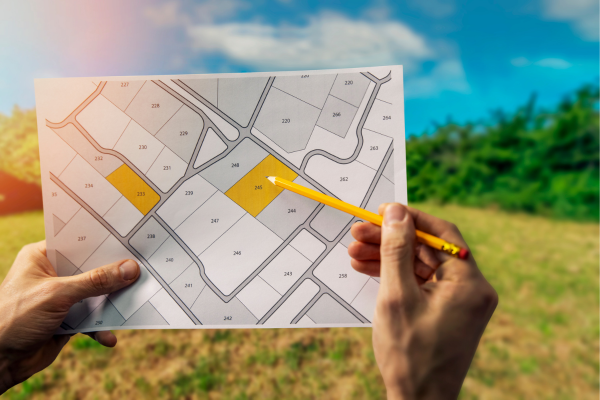
The Madhya Pradesh government has placed the urban master plans for two of its largest cities Bhopal and Indore on hold as authorities prepare to integrate them into larger metropolitan region planning frameworks, senior officials told the Madhya Pradesh Legislative Assembly in the past week. The move follows the state's approval of the Madhya Pradesh Metropolitan Region Planning and Development Act, 2025, which provides a statutory basis for metropolitan planning and the creation of development authorities for multi-district urban agglomerations centred on Bhopal and Indore. Advertisement


Urban development and housing minister Kailash Vijayvargiya said that although draft master plans for both cities were prepared about a year and a half ago, their implementation has been deferred pending finalisation of metropolitan region plans. Officials indicated that the metropolitan planning committees and newly constituted metropolitan region development authorities will now produce integrated, area-specific strategies that capture growth dynamics not only within city limits but across peripheral districts linked economically and socially to Bhopal and Indore.
Under the metropolitan legislation, the Indore metropolitan region is expected to encompass Indore, Ujjain, Dewas and Dhar, while the Bhopal metropolitan region will include Bhopal, Sehore, Raisen, Vidisha and Biaora. These clusters are anticipated to benefit from unified development frameworks designed to optimise infrastructure investment, land use and housing delivery across contiguous urban and peri-urban zones.
The delay in rolling out updated city master plans has drawn criticism from industry stakeholders and policy observers. In a separate development noted by market representatives, delays in updating urban plans have been cited as a deterrent to investment in key Tier-2 cities such as Indore and Bhopal, where planning constraints and dated regulatory frameworks have been seen as barriers to new development and infrastructure deployment.
Bhopal's last formally adopted master plan dates back to 2005, and a draft for Bhopal Development Plan-2031 was returned for revision more than a year ago, underscoring the need for contemporary planning instruments that reflect current demographic and economic realities.
By recontextualising city planning within larger metropolitan strategies, policymakers are aiming to better coordinate transport, housing, employment and environmental planning across these emerging urban corridors. The integrated metropolitan approach aligns with national urbanisation trends that favour region-wide planning frameworks over isolated city plans, potentially unlocking greater investment and infrastructure synergies in Madhya Pradesh's fastest-growing urban centres.

5th Jun, 2025

25th May, 2023

11th May, 2023

27th Apr, 2023
Advertisement





 Facebook
 Whatsapp
