Advertisement






When should a housing society in Mumbai start considering re...
From GST on JDAs to SEBI’s REIT reclassification and the S...
Stay ahead in the world of real estate with our daily podcas...
Stay ahead in the world of real estate with our daily podcas...
MMRDA has intensified planning for station areas along the Mumbai-Ahmedabad High-Speed Rail Corridor under Project-SMART. The corridor's four Maharashtra stations BKC, Thane, Virar, and Boisar are being developed with a focus on sustainable urban growth. Thane and Virar have been prioritized, with detailed development plans prepared in collaboration with JICA, adopting international best practices in Transit Oriented Development, land value capture, and multi-modal integration. MMRDA's leadership emphasizes replicating these frameworks at BKC and Boisar, aiming to transform these stations into strategic urban development hubs.
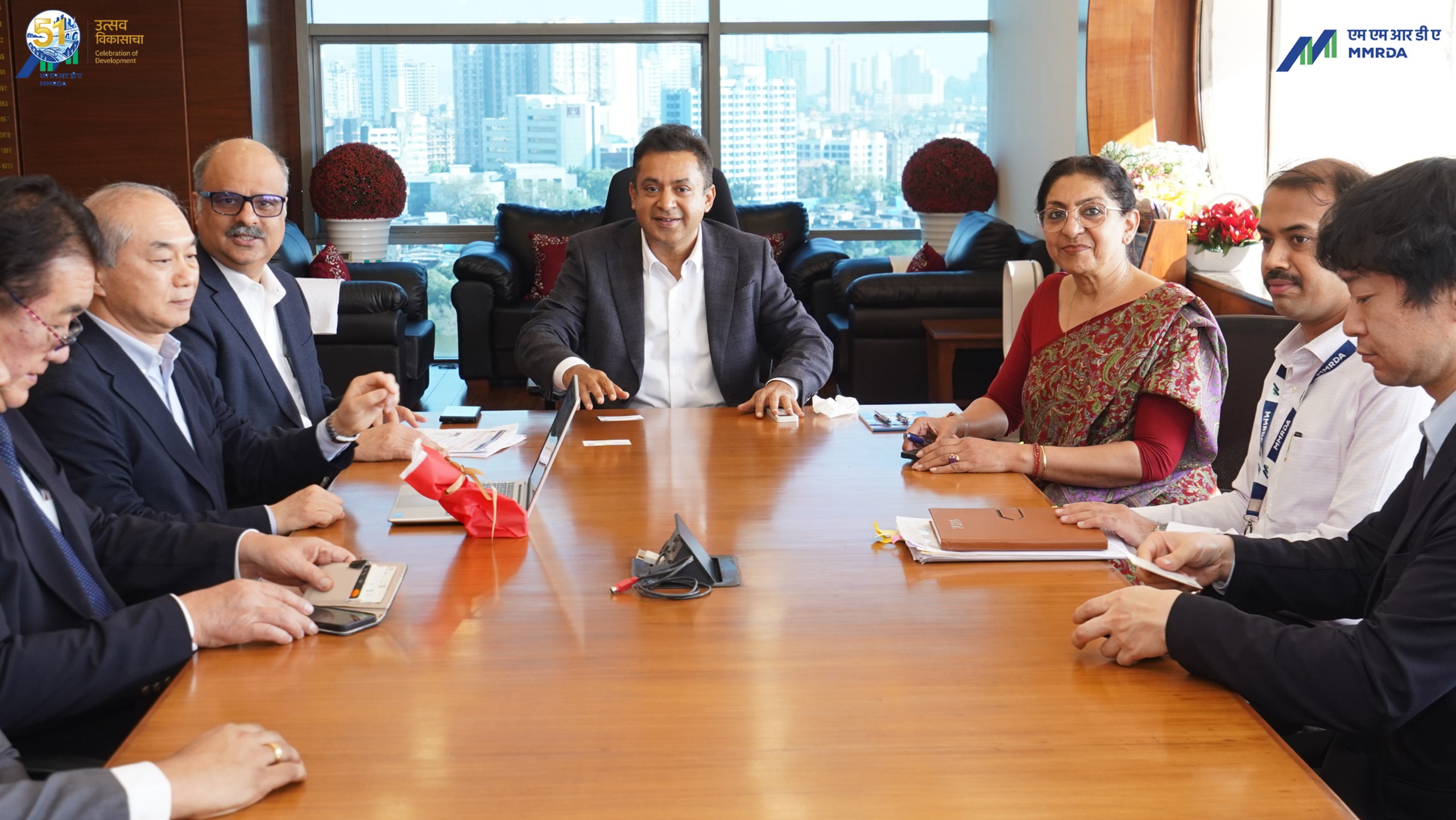
The Mumbai Metropolitan Region Development Authority (MMRDA) recently held a high-level workshop at its Bandra-Kurla Complex headquarters to accelerate Station Area Development under the Mumbai-Ahmedabad High-Speed Rail (MAHSR) Corridor, part of Project-SMART. The workshop focused on strengthening technical collaboration between the Ministry of Housing and Urban Affairs (MoHUA), Government of India, and the Japan International Cooperation Agency (JICA).
Advertisement


The MAHSR corridor includes 12 stations, with four BKC, Thane, Virar, and Boisar located in Maharashtra. Thane and Virar have been designated as priority stations under Project-SMART. Detailed development plans for these stations are being prepared to ensure that the high-speed rail infrastructure supports sustainable and planned urban growth in the region.
JICA experts shared international best practices from Japan, covering Transit Oriented Development, Land Value Capture, Integrated Transport Planning, Environmental Sustainability, Stakeholder Engagement, and Private Sector Participation in station area regeneration. MMRDA’s urban planning team collaborated closely with JICA experts to discuss the Thane and Virar Station Area Development Plans, reviewing the planning framework, implementation roadmap, and inter-institutional coordination for upcoming phases.
Following the workshop, Dr. Sanjay Mukherjee, IAS, Metropolitan Commissioner of MMRDA, held a detailed review meeting with officials from MMRDA, Thane, Virar, National High-Speed Rail Corporation Limited (NHSRCL), and JICA. He instructed the teams to prepare Integrated Station Area Development Plans aligned with High-Speed Rail Development Principles, emphasizing Transit Oriented Development norms, land value capture policies, and seamless multi-modal transport integration. He further directed that these planning experiences be extended to BKC and Boisar stations, aiming to transform them into major development hubs within the Mumbai Metropolitan Region.
The initiative reflects MMRDA’s continued commitment to developing the Mumbai Metropolitan Region as a global-standard, sustainable, and transport-centric urban hub.
FAQ
1. What is the focus of Project-SMART under the Mumbai-Ahmedabad High-Speed Rail corridor?
Project-SMART (Station Area Master Planning and Regional Transformation) is aimed at planning and developing urban areas around stations of the Mumbai-Ahmedabad High-Speed Rail (MAHSR) corridor. The focus is on sustainable urban growth, multi-modal connectivity, and creating strategic development hubs at station areas, ensuring the high-speed rail not only improves transport but also catalyzes regional development.
2. Which stations in Maharashtra are part of this initiative?
The corridor includes 12 stations, of which Bandra-Kurla Complex (BKC), Thane, Virar, and Boisar are located in Maharashtra. Thane and Virar have been prioritized for detailed development planning, while BKC and Boisar will adopt similar frameworks once the pilot station plans are refined.
3. How is international expertise being leveraged?
The Japan International Cooperation Agency (JICA) is collaborating with MMRDA to share international best practices in Transit Oriented Development (TOD), Land Value Capture, multi-modal transport integration, environmental sustainability, stakeholder engagement, and private sector participation. Their input guides station area design and urban development strategy.
4. What are the key principles guiding station area development?
The station area development plans emphasize:
5. What role does MMRDA play in this initiative?
The Mumbai Metropolitan Region Development Authority (MMRDA) leads the planning and coordination, engaging with NHSRCL, MoHUA, local authorities, and JICA. MMRDA’s team prepares Integrated Station Area Development Plans, sets implementation roadmaps, and ensures that planning for Thane and Virar is replicated at BKC and Boisar stations.
6. What is the expected impact of Project-SMART on the Mumbai Metropolitan Region?
By transforming station areas into modern, sustainable urban hubs, Project-SMART aims to:
Enhance regional connectivity and transport efficiency.
Promote planned urban growth and real estate development.
Attract private sector investment and stimulate economic activity.
Improve livability and sustainability, creating transit-centered, climate-resilient neighborhoods.

5th Jun, 2025

25th May, 2023

11th May, 2023

27th Apr, 2023
Advertisement








 Facebook
 Whatsapp
