Advertisement










Private equity has played a significant role in shaping Indi...
In today’s real estate landscape, fitness is often treated...
In this episode of Prop Personalities, we sit down with Hars...
Luxury real estate is one of the most talked-about segments ...
Welcome to Prop Personalities by Prop News Time - a podcast ...
Mumbai's property investment landscape in 2026 is being shaped by a combination of large-scale infrastructure delivery, expanding transit networks and a growing preference for lifestyle-oriented residential formats. Several micro-markets across the city and its periphery are emerging as key investment destinations, spanning established luxury corridors, evolving commercial-residential hubs and plotted development zones. Locations such as Chembur and Mulund are benefiting from improved regional connectivity, while Panvel's growth is being driven by airport-led infrastructure and integrated township development. Peripheral markets like Karjat are drawing interest for plotted and second-home formats, while western suburbs including Malad and Goregaon continue to see steady demand for premium housing. Together, these markets reflect a broader shift towards connectivity-led, long-term residential investment opportunities across the Mumbai Metropolitan Region.
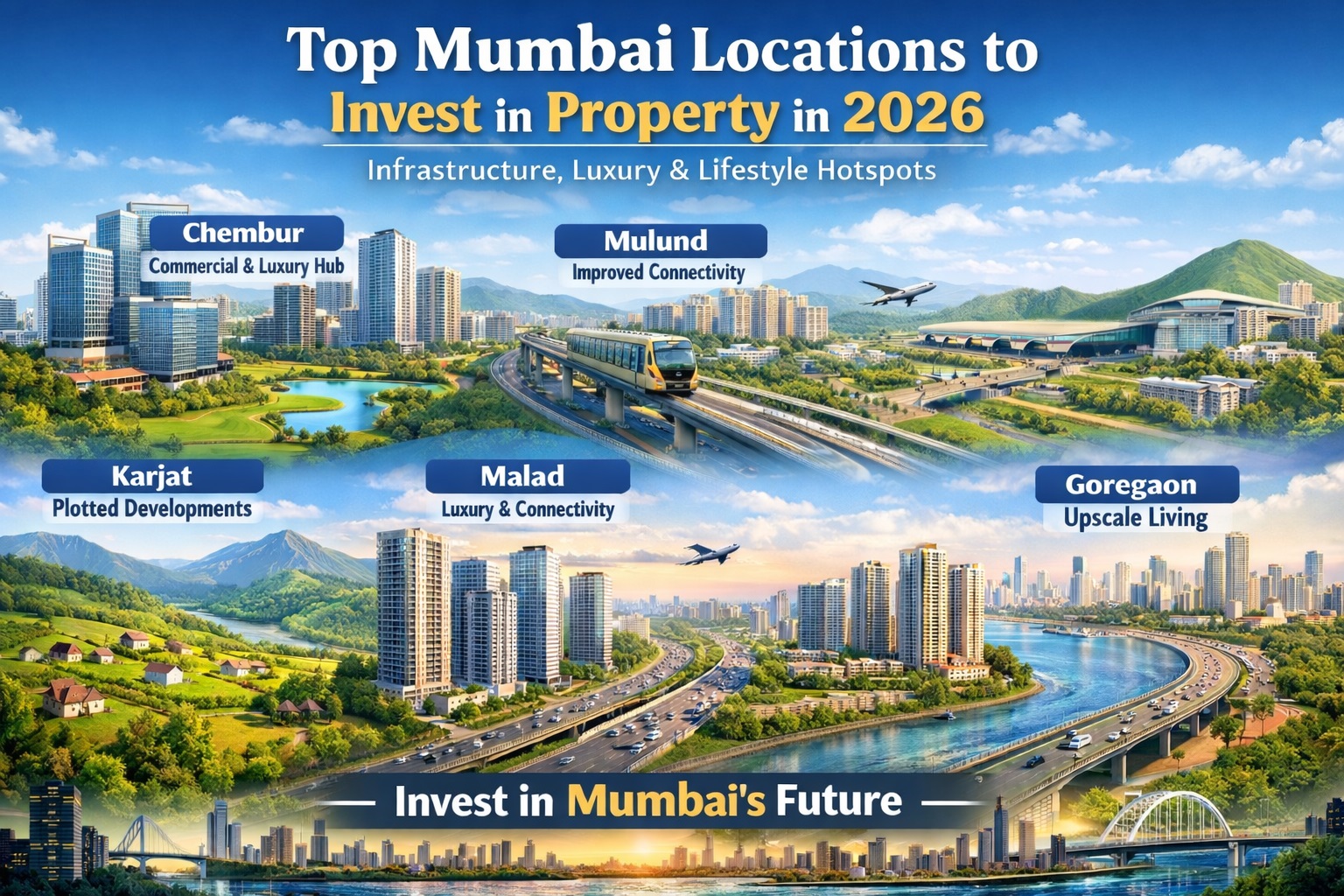
As Mumbai's real estate market enters 2026, infrastructure-led growth and changing lifestyle preferences are reshaping investment patterns across the city. Multiple micro-markets, spread across central, eastern, western and peripheral zones, are gaining prominence as investors increasingly prioritise connectivity, scale and long-term liveability over speculative appreciation. Advertisement


Chembur has emerged as one of the most closely watched locations, transitioning from a largely residential suburb into a mixed-use commercial and luxury housing corridor. Improved access via the Eastern Express Highway, Eastern Freeway, Navi Mumbai linkages and the Mumbai Trans Harbour Link has strengthened its positioning as an alternative to established business districts. Developers and consultants have indicated that the Chembur-Ghatkopar belt is attracting both corporate occupiers and high-end homebuyers, supported by premium residential developments offering rare open views and proximity to South Mumbai and Navi Mumbai.
Mulund is witnessing a parallel shift, driven by enhanced east-west connectivity. Infrastructure projects such as the Goregaon-Mulund Link Road and upcoming metro corridors are expected to reduce travel times and integrate Mulund more closely with western suburbs, Thane and Navi Mumbai. Industry participants have noted that this improved accessibility is elevating Mulund's investment appeal beyond its traditional residential base.
Further east, Panvel has consolidated its position as a major growth node. The commissioning of the Mumbai Trans Harbour Link and progress on the Navi Mumbai International Airport have repositioned the market from an emerging suburb to a self-sustained urban centre. Developers active in the region have pointed to large-format township developments, combined with upcoming metro connectivity, as key factors driving long-term residential demand and investor interest.
On Mumbai's periphery, Karjat is gaining traction for plotted developments and second-home formats. Market participants have highlighted increasing buyer preference for low-density, nature-oriented assets supported by improving road and rail connectivity, positioning Karjat as a lifestyle-led investment destination.
Within the western suburbs, Malad and Goregaon continue to attract premium housing demand. Strong metro connectivity, access to arterial roads and proximity to employment hubs have sustained both end-user and investor interest. With limited land availability and ongoing infrastructure upgrades, these locations are increasingly viewed as stable, long-term residential investment markets.
Collectively, these micro-markets reflect Mumbai's evolving real estate narrative for 2026, where infrastructure delivery and lifestyle depth are central to investment decision-making.

5th Jun, 2025

25th May, 2023

11th May, 2023

27th Apr, 2023
Advertisement





 Facebook
 Whatsapp
