Advertisement










When should a housing society in Mumbai start considering re...
From GST on JDAs to SEBI’s REIT reclassification and the S...
Stay ahead in the world of real estate with our daily podcas...
Stay ahead in the world of real estate with our daily podcas...
Kenya is set to restart a multi-billion-dollar extension of the Kenya Standard Gauge Railway that had remained stalled for more than six years after initial financing from China slowed down. The earlier phase connecting Mombasa to Nairobi was completed in 2017, but further expansion toward Rift Valley was delayed due to funding gaps. The new phase is being supported through securitisation of railway revenues and continued participation of Chinese firms, including the China Road and Bridge Corporation, reflecting a shift in financing strategy.
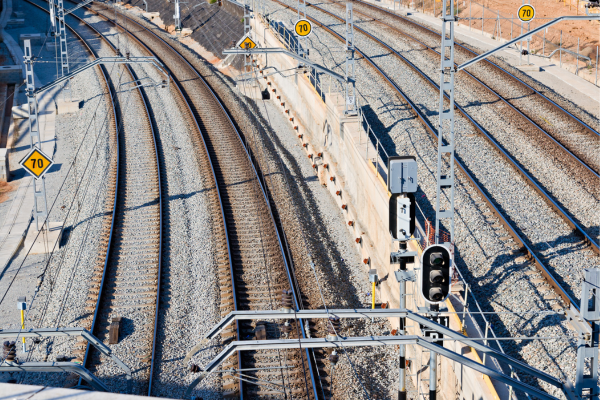
Kenya is set to restart a major extension of the Kenya Standard Gauge Railway on Thursday, marking progress on a project that had remained stalled for over six years due to funding constraints linked to reduced Chinese lending. Advertisement


The initial section of the railway, connecting Mombasa to Nairobi, was completed in 2017 with financing support from China. However, further expansion toward Naivasha in the Rift Valley region stalled after Beijing scaled back large-scale infrastructure lending under its Belt and Road Initiative.
The halted extension had left the project incomplete, falling more than 350 km short of the Ugandan border, which had been intended to improve regional trade and connectivity across East Africa. Over time, the incomplete railway became widely discussed in the context of concerns over China's overseas lending practices, often referred to as debt trap diplomacy. This characterization has been disputed by China.
In response to financial pressures, Kenya revised its approach to infrastructure financing. The government introduced a securitisation model that uses a portion of the railway development levy collected on cargo transported via the existing line. This levy, estimated at around 35 billion shillings (about USD 270.27 million), is being used as seed funding for the new phases of construction.
Although full financial details of the extension remain undisclosed, state-owned Kenya Railways confirmed that Chinese participation continues in the project. The China Road and Bridge Corporation remains involved as a contractor, indicating ongoing collaboration despite changes in funding structure.
Policy shifts by China in recent years have influenced infrastructure financing across Africa. After significant lending in the earlier phase of the Belt and Road Initiative, China reduced its lending exposure around 2019 due to concerns over debt sustainability. More recently, at a 2024 summit held in Beijing, discussions between African leaders and China led to a renewed emphasis on investment-led partnerships rather than debt-heavy financing models.
Under this updated framework, Kenya has also engaged in other infrastructure deals, including a highway expansion project valued at around USD 1.5 billion involving Chinese firms. These arrangements are part of a broader effort to continue infrastructure development while managing limited fiscal space.
Kenya's current administration, led by William Ruto, has increasingly relied on revenue-based financing methods due to constrained borrowing capacity and pressure on public finances. Rising debt repayments have taken up a significant portion of government revenue, and previous attempts to raise taxes faced public resistance.
Analysts, including Peter Kagwanja, have noted that the evolving financing approach reflects a broader shift toward investment-driven models following discussions between China and African partners. The involvement of international contractors and structured revenue mechanisms highlights an attempt to balance infrastructure growth with fiscal sustainability.
The restart of the railway extension is expected to be formally launched through a ceremony near Naivasha later on Thursday.
Source Reuters

5th Jun, 2025

25th May, 2023

11th May, 2023

27th Apr, 2023
Advertisement








 Facebook
 Whatsapp
