Advertisement










When should a housing society in Mumbai start considering re...
From GST on JDAs to SEBI’s REIT reclassification and the S...
Stay ahead in the world of real estate with our daily podcas...
Stay ahead in the world of real estate with our daily podcas...
The INR 24,000 crore PLI scheme for high-efficiency solar PV modules has yet to release any funds to manufacturers, as incentives are scheduled for one year after project commissioning. The scheme has awarded 48,337 MW of module manufacturing capacity, including 30 GW of modules, 10.5 GW of cells, and 2 GW of ingot-wafer capacity, with 4 GW commissioned last October. Slow progress in upstream components is due to limited domestic experience and global supply chain concentration. The government is promoting vertical integration and supporting ancillary manufacturing while developing a skilled workforce to reduce import dependence.
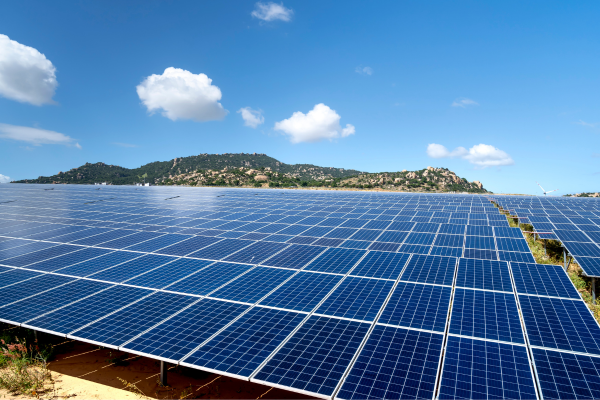
The Ministry of New and Renewable Energy (MNRE), Government of India, has informed Parliament that solar equipment manufacturers have not received any payments under the INR 24,000 crore production-linked incentive (PLI) scheme as of the end of February. The scheme, aimed at promoting high-efficiency solar PV module manufacturing, was launched to boost domestic production and strengthen India's renewable energy sector. Advertisement


Union Minister for New & Renewable Energy Pralhad Joshi explained that letters of award have been issued to establish a total of 48,337 MW of fully or partially integrated solar PV module manufacturing capacity. However, no funds have been disbursed yet, as the PLI scheme provides incentives to successful bidders only one year after the commissioning of their projects. So far, this one-year post-commissioning period has not been completed for any of the awarded projects.
Under the scheme, around 30 GW of solar PV module capacity, 10.5 GW of solar PV cell capacity, and 2 GW of ingot-wafer manufacturing capacity have been established. This includes 3.4 GW of fully integrated thin-film solar PV module capacity. Notably, 4 GW of integrated solar cell and module capacity were officially commissioned in October 2025.
The minister noted that the progress in upstream components, such as polysilicon and wafer manufacturing, has been slower. This is largely due to challenges in setting up the facilities, including limited domestic experience and technical expertise. Additionally, the global supply chain for these components is concentrated in a few countries, while the domestic ecosystem for upstream manufacturing remains at an early stage.
The government is aware of the dependence on imported raw materials, specialized manufacturing equipment, and technical know-how for these upstream segments. The PLI scheme encourages vertically integrated manufacturing from polysilicon and wafers to cells and modules with higher incentives for greater integration.
Domestic production of ancillary inputs used in solar modules, such as solar glass, aluminium frames, encapsulants, and tinned copper interconnects, is being supported through measures including customs duties, exemptions on certain inputs, and anti-dumping duties. The ministry has also launched capacity-building and skill-development initiatives to create a skilled workforce for various segments of the renewable energy sector. These steps aim to strengthen domestic manufacturing and gradually reduce reliance on imports.
Source PTI
FAQ
Q1: What is the current status of fund disbursement under the solar PLI scheme?
A1: As of the end of February 2026, no funds have been released to solar manufacturers under the INR 24,000 crore production-linked incentive (PLI) scheme. Payments under this scheme are structured to be made one year after project commissioning. Since most awarded projects have not yet completed this one-year post-commissioning period, the incentive disbursements are yet to begin.
Q2: How much manufacturing capacity has the scheme awarded so far?
A2: The PLI scheme has issued letters of award for a total of 48,337 MW of solar PV manufacturing capacity. This includes approximately 30 GW of solar PV modules, 10.5 GW of solar PV cells, and 2 GW of ingot-wafer manufacturing capacity. Of this, around 4 GW of integrated cell and module capacity was commissioned in October 2025.
Q3: Why has progress in upstream components been slow?
A3: Development of upstream components, such as polysilicon and wafer manufacturing, has been slow due to limited domestic technical expertise and experience. Additionally, global supply chains for these materials are concentrated in a few countries, making it challenging for Indian manufacturers to scale quickly. Establishing such facilities requires significant know-how, investment, and infrastructure.
Q4: What steps is the government taking to promote domestic solar manufacturing?
A4: The government is promoting vertical integration in solar PV production, offering higher incentives for fully integrated facilities covering ingot, wafer, cell, and module production. It is also supporting domestic ancillary manufacturing, including solar glass, aluminium frames, encapsulants, and tinned copper interconnects, through customs duties, exemptions, and anti-dumping measures to reduce import reliance.
Q5: How is the PLI scheme structured for incentives?
A5: Incentives are structured to reward manufacturers one year after their projects are commissioned, which encourages timely completion and operational readiness. This ensures that manufacturers deliver functional, fully operational facilities rather than simply receiving upfront subsidies, promoting sustainable and high-quality domestic solar production.
Q6: What initiatives are in place to build a skilled workforce?
A6: The Ministry of New and Renewable Energy (MNRE) has launched skill-development and capacity-building programs for the renewable energy sector. These initiatives aim to train engineers and technicians across solar manufacturing segments, including modules, cells, and upstream components, helping reduce dependence on imported expertise and supporting long-term domestic capability development.
Q7: How will this scheme impact India's solar energy ecosystem?
A7: Once fully implemented, the PLI scheme is expected to significantly expand domestic solar manufacturing, strengthen the supply chain, and reduce import dependence. By fostering integrated production and incentivising upstream capabilities, the scheme aims to enhance India's energy security, support renewable energy targets, and contribute to the growth of a competitive solar manufacturing ecosystem.

5th Jun, 2025

25th May, 2023

11th May, 2023

27th Apr, 2023
Advertisement








 Facebook
 Whatsapp
