Advertisement










When should a housing society in Mumbai start considering re...
From GST on JDAs to SEBI’s REIT reclassification and the S...
Stay ahead in the world of real estate with our daily podcas...
Stay ahead in the world of real estate with our daily podcas...
The central government has identified 28 water aerodromes under the UDAN 3 scheme to expand seaplane operations and improve regional connectivity. The plan focuses on linking remote, coastal, and island locations where traditional airport infrastructure is difficult to build. Seaplane services, first introduced under UDAN 3, had seen slow progress earlier due to operational and cost challenges. With this renewed push, the government aims to strengthen tourism circuits and reduce travel time. The move builds on earlier efforts where select water aerodromes and routes were already taken up but faced execution hurdles.
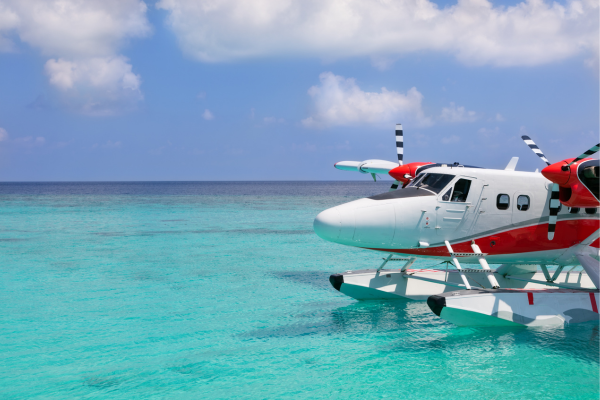
The government has identified 28 water aerodromes under the UDAN 3 scheme as part of its efforts to expand seaplane connectivity across India. The plan is aimed at improving access to regions where building conventional airports is not feasible, including coastal belts, island territories, and areas with large rivers and reservoirs. Advertisement


Seaplane operations were introduced in the third phase of the UDAN scheme to connect such locations using water bodies as landing surfaces. These aerodromes are being planned across different states and union territories and are expected to support both passenger movement and tourism-focused travel. The idea is to create a flexible aviation network without requiring full airport infrastructure, which helps reduce development time and cost.
In earlier phases, around 14 water aerodromes had already been identified and taken up for development. Some of these, including operations at the Sabarmati riverfront and near the Statue of Unity in Gujarat, had briefly become operational. However, services were later discontinued due to issues such as high operating costs, limited aircraft availability, and technical challenges linked to seaplane operations.
The latest identification of 28 additional sites reflects a renewed push by the Ministry of Civil Aviation to revive and scale up this segment. The government is looking at better planning of routes and locations to ensure that operations are commercially viable and aligned with demand, especially in tourism-heavy regions.
Earlier government data had also indicated that multiple seaplane routes were under consideration across states such as Gujarat, Assam, Andhra Pradesh, Telangana, and in island regions like Andaman & Nicobar and Lakshadweep. These locations are being seen as suitable due to their natural water bodies and tourism potential.
The UDAN scheme has been a key driver in improving regional air connectivity by supporting airlines through viability gap funding and policy support. Over time, it has led to the operationalisation of several underserved and unserved routes and increased the number of functional airports in the country. The addition of water aerodromes is being seen as an extension of this effort.
Officials have indicated that the development of these aerodromes will also require coordination with state governments and other agencies for clearances, safety norms, and infrastructure support such as terminals and passenger handling facilities. Regulatory frameworks for seaplane operations are also being refined to ensure smoother implementation.
The focus going forward is likely to remain on ensuring that the identified locations are not only developed but also operationalised in a sustainable manner, avoiding the challenges seen in earlier attempts.

5th Jun, 2025

25th May, 2023

11th May, 2023

27th Apr, 2023
Advertisement








 Facebook
 Whatsapp
