Advertisement










When should a housing society in Mumbai start considering re...
From GST on JDAs to SEBI’s REIT reclassification and the S...
Stay ahead in the world of real estate with our daily podcas...
Stay ahead in the world of real estate with our daily podcas...
Dubai's residential real estate market is undergoing a structural shift, with established prime districts such as Dubai Marina, Business Bay, and Palm Jumeirah witnessing stabilised rental yields and slower capital appreciation. Average gross rental returns across the city have ranged between 5% and 8% in recent years, though mature locations are increasingly viewed as income-generating rather than growth-led markets. Investor interest is gradually moving towards emerging master-planned communities including Dubai Hills Estate, District One, and Mohammed Bin Rashid City, where controlled supply and end-user demand are supporting stronger performance. The shift reflects a more segmented and supply-driven market environment between 2024 and 2026.
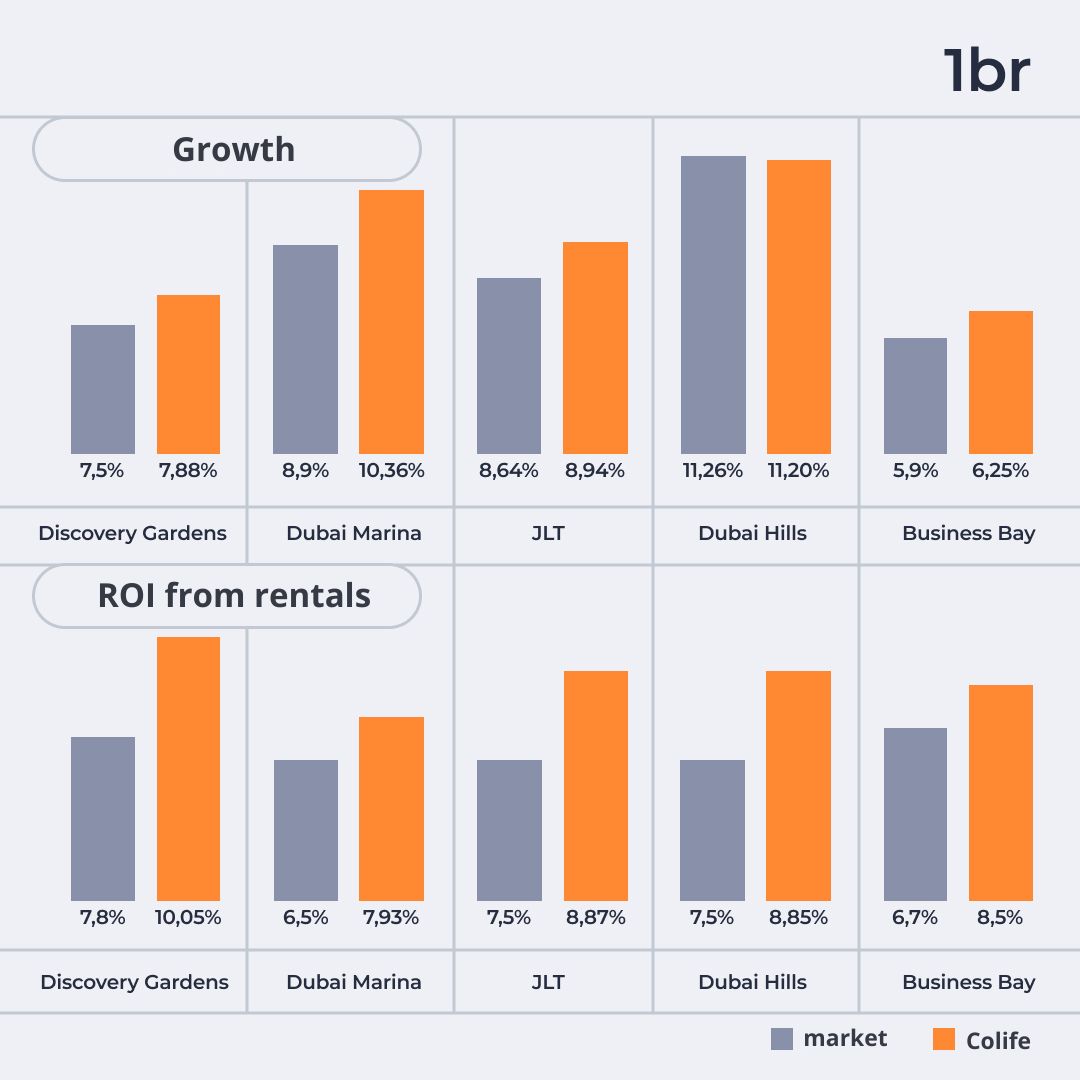
Dubai's residential property market is witnessing a transition in investor behaviour between 2024 and 2026, with returns in established prime districts moderating as supply increases and capital flows shift towards emerging residential clusters offering stronger growth potential. Advertisement


For several years, locations such as Dubai Marina, Business Bay, and Palm Jumeirah were considered key drivers of both rental income and capital appreciation. However, recent data indicates that while these areas continue to provide stable returns, their growth trajectory has slowed as new supply enters the market and pricing reaches maturity levels.
Gross residential rental yields across Dubai have remained in the range of 5% to 8%, depending on asset type and location. Within this, Dubai Marina typically delivers returns between 5.2% and 6.9%, while Business Bay averages between 4.1% and 6.7%. Select developments in Palm Jumeirah are reported to generate yields below 4.5%. These districts are increasingly functioning as stable, income-oriented markets rather than high-growth investment zones.
The shift in investor preference is being driven by the emergence of newer master-planned communities such as Dubai Hills Estate, District One, and Mohammed Bin Rashid City. These locations are characterised by controlled density, planned infrastructure, and a focus on lifestyle-driven demand. One-bedroom apartments in particular are showing consistent performance due to balanced supply and sustained tenant demand.
The broader supply pipeline has also influenced market dynamics. Dubai delivered over 39,000 residential units in 2023, with an additional 90,000 to 120,000 units expected between 2024 and 2026. High-supply areas such as Business Bay, Jumeirah Village Circle, Arjan, and Dubai Creek Harbour have experienced increased competition, not only between districts but also among individual projects.
In this environment, asset-level differentiation has become a key factor influencing returns. Market participants indicate that performance variation within a single district can range between 2 and 4 percentage points, depending on factors such as layout efficiency, building quality, and proximity to amenities.
Vyacheslav Kuznetsov stated that yields in established prime districts are becoming compressed due to supply and pricing maturity, requiring investors to be more selective in their approach. He indicated that emerging communities offer comparatively stronger growth potential, particularly in well-designed units with sustained tenant demand.
Investors are increasingly evaluating parameters beyond location, including micro-location within a district, density levels, future supply pipeline, and property management standards. Functional layouts, especially one-bedroom units, are performing better than oversupplied configurations such as smaller studio apartments.
The evolving market structure indicates that investment decisions in Dubai are becoming more nuanced, with greater emphasis on product quality and timing rather than address alone. As supply continues to expand and the market matures, return profiles are expected to remain differentiated across micro-markets, reflecting the underlying shift from location-driven to asset-driven investment strategies.

5th Jun, 2025

25th May, 2023

11th May, 2023

27th Apr, 2023
Advertisement








 Facebook
 Whatsapp
