Advertisement










When should a housing society in Mumbai start considering re...
From GST on JDAs to SEBI’s REIT reclassification and the S...
Stay ahead in the world of real estate with our daily podcas...
Stay ahead in the world of real estate with our daily podcas...
Prime Minister Narendra Modi recently inaugurated the fully mechanised Haldia Bulk Terminal developed by Adani Ports and Special Economic Zone in West Bengal. The terminal, with a capacity of around 4 million tonnes per annum, is India's first fully automated dry bulk facility. It is expected to improve cargo handling speed, reduce turnaround time and support key industries such as steel, cement and power. The project strengthens logistics infrastructure at the Haldia Dock Complex and improves connectivity for eastern and northeastern regions.
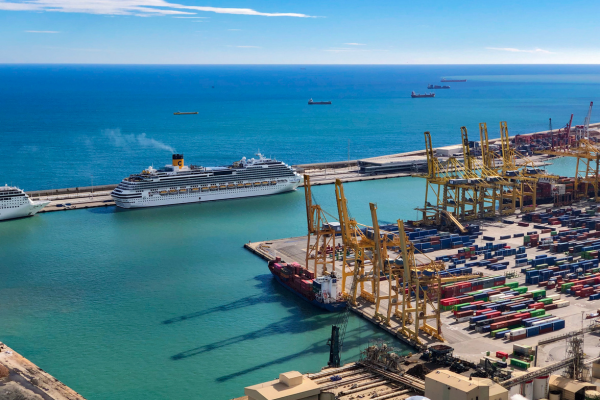
Prime Minister Narendra Modi inaugurated the Haldia Bulk Terminal in West Bengal in the past week, marking the start of operations at a fully mechanised dry bulk cargo facility developed by Adani Ports and Special Economic Zone. The terminal has been dedicated to the nation and is expected to improve cargo handling capacity at the Haldia Dock Complex. Advertisement


The facility is designed as India's first fully automated dry bulk terminal, with advanced mechanised systems that reduce manual handling of cargo. This is expected to lower loading and unloading time, improve turnaround efficiency for vessels and ensure more consistent operations. The use of automation is also likely to reduce cargo loss and improve overall operational safety at the port.
The terminal has an annual handling capacity of around 4 million tonnes and will cater to bulk commodities such as coal, limestone and other raw materials required by industries. Sectors such as steel, cement and power generation are expected to benefit from faster and more reliable cargo movement, especially in eastern India where industrial demand continues to grow.
Haldia Dock Complex plays a key role in serving a large hinterland that includes West Bengal, Bihar, Jharkhand, Uttar Pradesh and the northeastern states, along with neighbouring countries like Nepal and Bhutan. With the addition of this terminal, cargo congestion is expected to reduce, and movement of goods from port to inland destinations is likely to become smoother.
The project has been developed as part of a concession to modernise and mechanise existing berths at Haldia. It reflects the broader approach of increasing private sector participation in port infrastructure to improve efficiency and capacity. Over the past few years, similar efforts have been undertaken at major ports across India to upgrade cargo handling systems and introduce automation.
Officials associated with the development indicated that the terminal sets a new standard for bulk cargo handling in terms of efficiency and environmental management. Mechanised handling is expected to reduce dust emissions and improve compliance with environmental norms, which has been a key concern at bulk cargo ports.
The terminal also adds to ongoing infrastructure improvements at the Syama Prasad Mookerjee Port, under which Haldia operates. Earlier initiatives in the region have focused on increasing draft levels, improving connectivity and attracting industrial investments linked to port-led development.

5th Jun, 2025

25th May, 2023

11th May, 2023

27th Apr, 2023
Advertisement








 Facebook
 Whatsapp
