Advertisement








When should a housing society in Mumbai start considering re...
From GST on JDAs to SEBI’s REIT reclassification and the S...
Stay ahead in the world of real estate with our daily podcas...
Stay ahead in the world of real estate with our daily podcas...
India's first high speed rail service on the Mumbai-Ahmedabad corridor will start operations in phases, with the initial services using the domestically manufactured B28 bullet train. Developed in Bengaluru, the train will initially run at around 250 kmph, with potential upgrades to 320-350 kmph in the future. The first operational section will cover approximately 100 km between Surat and Vapi. The full 508 km corridor is planned for completion by 2029. This project marks a major milestone in India's high speed rail programme, enhancing connectivity between Gujarat and Maharashtra.
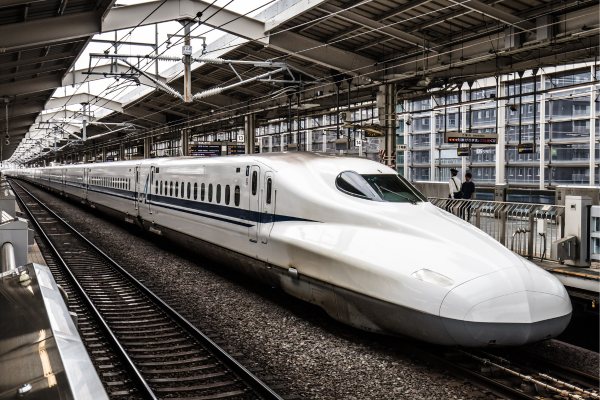
India is preparing to launch its first high speed rail service on the Mumbai-Ahmedabad corridor using a domestically manufactured bullet train. The B28 trainset, being developed in Bengaluru, will operate on the initial stretch when passenger services begin in August 2027. Officials have confirmed that this train will mark the first phase of operations, covering around 100 km between Surat and Vapi in Gujarat. Advertisement


The entire corridor stretches approximately 508 km, connecting Ahmedabad's Sabarmati station with Mumbai. Multiple stations, viaducts, and tunnels are currently under construction along the route, and the project continues to progress in phases. While the first section will use the Indian-built B28 trainsets, Japanese high-speed trains are expected to join operations in later phases once procurement and deployment are completed.
The B28 trains are designed to run at a speed of 250 kmph initially, with plans to upgrade them for higher speeds of 320-350 kmph in the future. Two trainsets are under development, and authorities are also finalizing infrastructure to support these operations. The high-speed rail system will use the ETCS Level 2 signalling system, designed for speeds up to 280 kmph. The tender for this signalling system has been awarded, and installation work is underway along the corridor.
Challenges in importing rolling stock from Japan were cited as a reason for deploying an indigenous train during the first phase. This decision allows operations to commence on schedule while the full set of Japanese trains is readied for later stages. The National High Speed Rail Corporation Limited (NHSRCL) is implementing the project, which is considered one of India's largest infrastructure initiatives.
Once fully operational, the Mumbai-Ahmedabad high-speed rail corridor is expected to significantly reduce travel time between the two cities, strengthen regional connectivity, and support economic growth in Gujarat and Maharashtra. The phased approach ensures that passenger services can begin while construction on the remaining sections continues.
Officials have confirmed that the first phase will start by 15 August 2027, and the full corridor is expected to be operational by around 2029. This project represents a significant step in introducing high-speed rail in India and demonstrates the country's growing capabilities in indigenous rail technology.

5th Jun, 2025

25th May, 2023

11th May, 2023

27th Apr, 2023
Advertisement








 Facebook
 Whatsapp
