Advertisement








When should a housing society in Mumbai start considering re...
From GST on JDAs to SEBI’s REIT reclassification and the S...
Stay ahead in the world of real estate with our daily podcas...
Stay ahead in the world of real estate with our daily podcas...
The Union Cabinet has approved two railway multitracking projects in West Bengal and Jharkhand with a combined investment of INR 4,474 crore to increase capacity on key rail corridors in eastern India. The projects involve constructing fourth railway lines on the Sainthia Pakur and Santragachi Kharagpur sections and are expected to add approximately 192 km to the Indian Railways network. Covering five districts across the two states, the upgrades aim to reduce congestion on busy routes used by both passenger and freight trains. The corridors are important for transporting commodities such as coal, stone, cement, iron and steel, foodgrains and petroleum products. Planned under the PM Gati Shakti National Master Plan, the projects are intended to improve multimodal connectivity, enhance freight movement efficiency, and strengthen logistics infrastructure in the region.
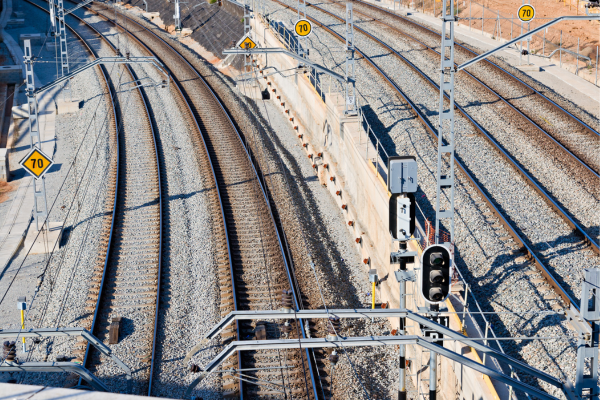
The Cabinet Committee on Economic Affairs (CCEA), chaired by Prime Minister Narendra Modi, has approved two railway multitracking projects in West Bengal and Jharkhand with a total estimated cost of INR 4,474 crore to increase rail capacity and improve operational efficiency along key freight and passenger corridors in eastern India. Advertisement


The projects involve the construction of fourth railway lines on two sections Sainthia Pakur and Santragachi Kharagpur covering multiple districts across the two states. Together, the proposed works will expand the Indian Railways network by approximately 192 km and are expected to be completed by the 2030-31 financial year.
According to the government, the additional railway lines are intended to address capacity constraints on existing tracks that currently handle both passenger and freight traffic. The expansion will allow more trains to operate on these routes, improving operational reliability and reducing congestion on corridors that form part of the eastern railway network.
The projects will pass through five districts across West Bengal and Jharkhand and are expected to strengthen connectivity across the region. Improved rail infrastructure is anticipated to support mobility for passengers while also enhancing the efficiency of freight transportation along these routes.
These railway corridors play an important role in transporting bulk commodities including coal, stone, dolomite, cement, slag, gypsum, iron and steel, foodgrains and petroleum products. Increasing track capacity along these routes is expected to enable the movement of additional freight traffic and improve logistics efficiency for industries dependent on rail transportation in eastern India.
Government officials indicated that the multitracking projects have been planned under the PM Gati Shakti National Master Plan, which focuses on integrated infrastructure planning to improve multimodal connectivity across the country. The framework aims to align transport infrastructure projects with logistics networks, industrial corridors and economic clusters to facilitate more efficient movement of goods and services.
The enhanced rail capacity is expected to support increased freight movement and contribute to lower logistics costs for industries operating across the region. By improving connectivity between key railway junctions and industrial areas, the projects are also expected to strengthen the broader transport network linking eastern India with other parts of the country.
Officials noted that once completed, the additional railway lines will allow smoother train operations and better utilisation of the existing rail infrastructure while accommodating growing traffic demand. The expansion forms part of ongoing efforts by the Ministry of Railways to increase line capacity across busy corridors and support the continued growth of passenger and freight rail transport in India.

5th Jun, 2025

25th May, 2023

11th May, 2023

27th Apr, 2023
Advertisement








 Facebook
 Whatsapp
