Advertisement










Private equity has played a significant role in shaping Indi...
In today’s real estate landscape, fitness is often treated...
In this episode of Prop Personalities, we sit down with Hars...
Luxury real estate is one of the most talked-about segments ...
Welcome to Prop Personalities by Prop News Time - a podcast ...
Haryana is focusing on strengthening its rural economy through innovation, technology, and institutional support. Chief Minister Shri Nayab Singh Saini highlighted challenges such as declining groundwater, deteriorating soil, shrinking landholdings, and rising production costs, emphasizing the need for modern practices and financial assistance. NABARD's State Focus Paper for 2026-27 values the priority sector credit potential at over INR 3.67 lakh crore, with allocations for agriculture and MSMEs. Initiatives like Smart Agriculture Zones, crop diversification, PACS strengthening, and improved market linkages aim to enhance rural income and overall prosperity.
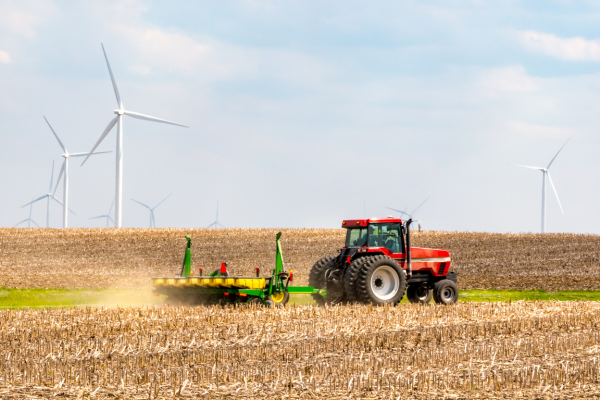
Haryana's Chief Minister Shri Nayab Singh Saini highlighted that the emerging challenges in agriculture and the rural economy need to be addressed through innovation, technology, and strong institutional support. He noted that the state has played a key role in ensuring the country's food security over the years. Advertisement


With shifting times, agriculture faces multiple challenges such as declining groundwater levels, deteriorating soil health, shrinking landholdings, climate change, and rising production costs, Saini pointed out. He stressed that conventional methods alone cannot resolve these issues, and a combination of modern practices, financial support, and technology is essential.
Saini was speaking at a state-level credit seminar organized by NABARD, during which he released the NABARD State Focus Paper for 2026-27. The document estimated Haryana's priority sector credit potential at over INR 3.67 lakh crore, showing a 17 per cent increase compared to the previous year. Out of this, INR 1.32 lakh crore is earmarked for agriculture, while INR 2.11 lakh crore is directed toward Micro, Small and Medium Enterprises (MSMEs).
The Chief Minister emphasized that rural prosperity is linked to making agriculture profitable. He recommended adopting the principle of more production with less land and implementing per drop more crop practices. He also noted that infrastructure such as irrigation, storage, warehousing, rural roads, electricity, and digital connectivity is equally crucial for development.
Special attention will be given to Smart Agriculture Zones in the upcoming state budget, with clusters being developed for horticultural crops including kinnow, guava, strawberry, and litchi. Saini encouraged farmers to diversify into sugarcane cultivation and other crops to enhance income. The government is also strengthening the linkages from soil to machine and farm to market to ensure farmers gain better market access and fair prices.
The Chief Minister urged banks to ensure timely, simple, and transparent credit facilities reach all eligible farmers. He acknowledged NABARD's continuous support in developing agricultural and rural infrastructure and highlighted the role of MSMEs, self-help groups, women entrepreneurs, and cooperative institutions in reinforcing the rural economy.
Haryana currently has 710 primary agricultural credit societies (PACS), and cooperative banks have been computerized. While farmers have traditionally trusted PACS, concerns over their recent functioning have emerged. Saini emphasized the need to restore this trust as PACS play a vital role in rural development.
He also noted that the state is taking steps to realize Prime Minister Narendra Modi's vision of Sahkar se Samriddhi (prosperity through cooperation). NABARD Chief General Manager Nivedita Tiwari reinforced that the state government is working closely with banking and financial institutions to empower farmers, entrepreneurs, and the rural economy in line with the vision of Viksit Haryana Viksit Bharat. NABARD is also prioritizing women empowerment initiatives.
Under the Rural Infrastructure Development Fund (RIDF), NABARD has sanctioned INR 18,393 crore for rural infrastructure in Haryana, of which INR 14,066 crore has been released. These funds are being used in areas such as roads, irrigation, renewable energy, grain storage, drinking water, sanitation, and electricity. The State Focus Paper for 2026-27 highlights crop diversification, water conservation, micro-irrigation, horticulture, value addition, climate-resilient agriculture, strengthening Farmer Producer Organizations (FPOs), promotion of rural MSMEs, renewable energy, and social infrastructure as key priorities.
Source PTI
FAQ
Q1. What is Haryana's main approach to strengthening its rural economy?
Haryana is focusing on innovation, technology, and strong institutional support to enhance rural income and prosperity. Chief Minister Nayab Singh Saini emphasized addressing challenges like declining groundwater, deteriorating soil health, shrinking landholdings, rising production costs, and climate change through modern agricultural practices, financial assistance, and smart interventions.
Q2. What financial resources are being mobilized for agriculture and rural development?
NABARD's State Focus Paper 2026-27 estimates Haryana's priority sector credit potential at over INR 3.67 lakh crore, a 17% increase from the previous year. Of this, INR 1.32 lakh crore is earmarked for agriculture, while INR 2.11 lakh crore is allocated to Micro, Small and Medium Enterprises (MSMEs). The Rural Infrastructure Development Fund (RIDF) has sanctioned INR 18,393 crore for rural infrastructure, with INR 14,066 crore already released.
Q3. What initiatives are being implemented to modernize agriculture?
The state is promoting Smart Agriculture Zones for horticultural crops such as kinnow, guava, strawberry, and litchi, along with crop diversification including sugarcane and other high-value crops. Practices like more production with less land and per drop more crop are being encouraged. Water conservation, micro-irrigation, soil health improvement, and climate-resilient agriculture are also key focus areas.
Q4. How is market access and profitability for farmers being improved?
Haryana is strengthening farm-to-market linkages to ensure better prices and market access for farmers. Infrastructure such as rural roads, irrigation, storage, warehousing, electricity, and digital connectivity is being developed. Farmer Producer Organizations (FPOs) and cooperative societies are being empowered to support efficient distribution and sales.
Q5. What role do banks and financial institutions play in this plan?
Banks are encouraged to provide timely, transparent, and simple credit facilities to eligible farmers. NABARD is collaborating with state authorities to empower farmers, MSMEs, women entrepreneurs, and self-help groups, ensuring that financial support reaches the grassroots level. Primary agricultural credit societies (PACS) have been computerized, with an emphasis on restoring trust in their functioning.
Q6. What broader vision do these initiatives support?
The initiatives align with Prime Minister Narendra Modi's vision of Sahkar se Samriddhi (prosperity through cooperation) and the state's goal of Viksit Haryana Viksit Bharat. NABARD and the state government are working together to promote sustainable rural development, enhance agricultural productivity, empower women, and strengthen MSMEs for overall rural prosperity.

5th Jun, 2025

25th May, 2023

11th May, 2023

27th Apr, 2023
Advertisement





 Facebook
 Whatsapp
