Advertisement






When should a housing society in Mumbai start considering re...
From GST on JDAs to SEBI’s REIT reclassification and the S...
Stay ahead in the world of real estate with our daily podcas...
Stay ahead in the world of real estate with our daily podcas...
Dubai's residential real estate market is entering a defining phase in 2026 as developers face rising project completions and increasing pressure on profitability. According to fm Properties CEO Firas Al Msaddi, high land prices and slower sales momentum are prompting a slowdown in new project launches. While buyer protections remain strong, developers are becoming more selective as cash flows tighten. The market is now at a crossroads, with either land prices needing to soften or off-plan prices rising to maintain viability. With 40,000-50,000 home handovers expected in 2026, the focus is shifting to longer sales cycles, stable prices and tighter margins amid a large construction pipeline.
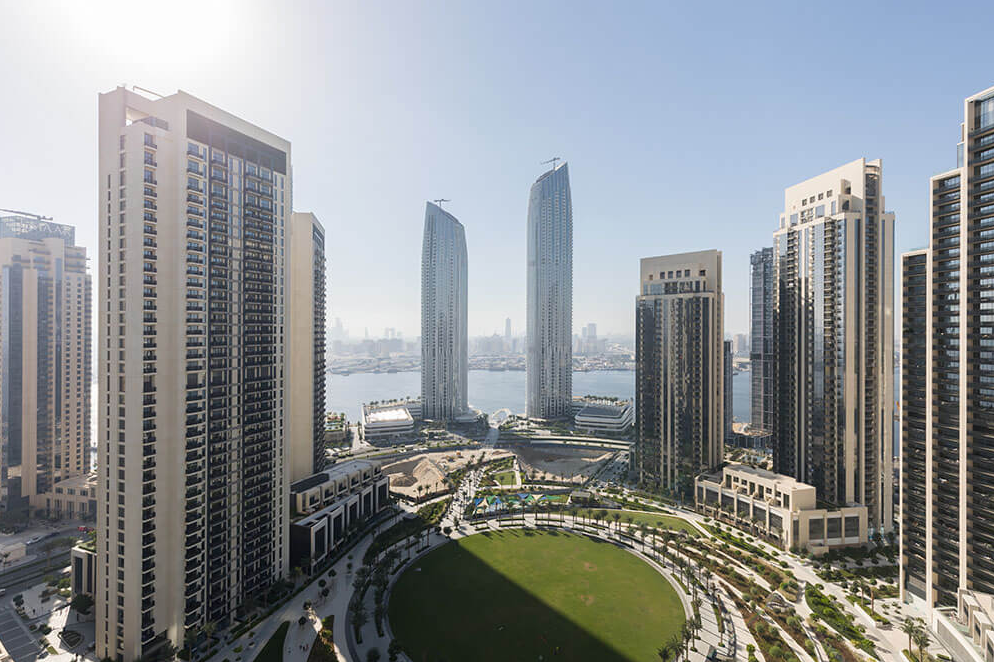
Dubai's residential real estate market is entering a pivotal phase in 2026, as developers navigate rising project completions alongside growing pressure on profitability, according to Firas Al Msaddi, Chief Executive Officer of brokerage firm fm Properties. Advertisement


Al Msaddi said the market is witnessing a gradual slowdown in new project launches as developer economics come under strain from historically high land prices and moderating sales velocity. While headline margins remain a key consideration, he noted that the speed at which units are sold has become a more critical constraint, directly influencing cash flows and launch feasibility.
He explained that although escrow regulations continue to protect homebuyers, they do not shield developers from financial pressure when sales slow. As a result, developers are becoming increasingly selective, particularly when evaluating projects at current land acquisition costs.
According to Al Msaddi, 2026 presents a clear structural question for the market. Either land prices adjust to restore commercial viability at prevailing off-plan prices, or off-plan prices rise further to align with elevated land values. A correction in land pricing would improve feasibility, stabilise end prices and gradually restore transaction volumes. If land prices remain firm, higher off-plan prices would place greater emphasis on location quality, product differentiation and the financial strength of developers.
Dubai has historically absorbed approximately 35,000 completed homes annually under balanced market conditions. However, handovers in 2026 are expected to increase to between 40,000 and 50,000 units as projects already under construction reach completion. Al Msaddi clarified that this increase is unlikely to trigger a price correction, but is more likely to result in longer selling timelines, flatter prices and tighter margins for developers.
Launch activity has already softened compared to the previous year, reflecting feasibility challenges rather than weakening demand. Dubai currently has close to one million freehold ready homes, most of which are occupied and trading within a stable resale environment.
The greater pressure, Al Msaddi said, lies in the unprecedented construction pipeline of around 500,000 homes. While most of this supply is already sold, the timing and manner in which investors exit these assets will be a key determinant of market dynamics through 2026.

5th Jun, 2025

25th May, 2023

11th May, 2023

27th Apr, 2023
Advertisement








 Facebook
 Whatsapp
