Advertisement










Private equity has played a significant role in shaping Indi...
In today’s real estate landscape, fitness is often treated...
In this episode of Prop Personalities, we sit down with Hars...
Luxury real estate is one of the most talked-about segments ...
Welcome to Prop Personalities by Prop News Time - a podcast ...
A new foot overbridge has been inaugurated in Ghaziabad, providing a seamless connection between the Regional Rapid Transit System (RRTS) station and the Shaheed Sthal New Bus Adda metro station on the Delhi Metro's Red Line, officials said. The bridge allows commuters to switch between the high-speed regional rail service and the metro without leaving station premises, significantly reducing transfer times and easing congestion in one of the region's busiest transport corridors. At around 300 metres long and 6.5 metres wide, the structure links the Namo Bharat RRTS station directly with the metro concourse, improving last-mile connectivity for daily travellers. The Ghaziabad RRTS station is also expected to serve as a key transit hub for future rapid rail connections to the upcoming Noida International Airport.
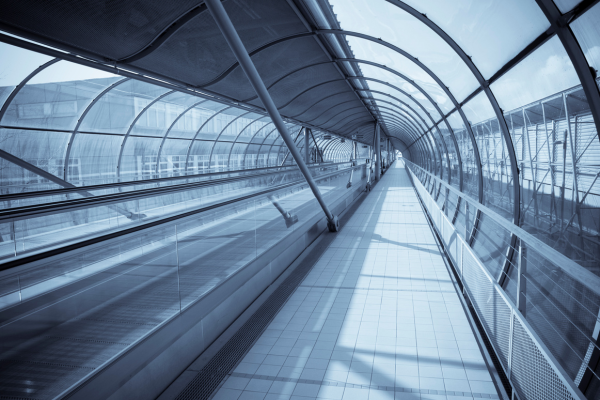
A foot overbridge connecting the Ghaziabad Regional Rapid Transit System (RRTS) station with the Shaheed Sthal New Bus Adda metro station on the Delhi Metro's Red Line was opened this week, providing commuters with a direct interchange and supporting smoother, more integrated travel between transit modes. The link, inaugurated by the National Capital Region Transport Corporation (NCRTC), is expected to reduce transfer times and improve commuter convenience in the rapidly growing National Capital Region transport network. Advertisement


The overbridge, approximately 300 metres in length and 6.5 metres in width, connects the lower concourse of the Ghaziabad RRTS station with the metro station's concourse area, allowing passengers to switch between the two services without exiting station gates or crossing congested external roadways. Prior to the bridge's completion, commuters had to rely on e-rickshaws, autos or on-road transfers to move between the RRTS and metro, adding to travel times and congestion at the nearby Meerut trisection.
Officials said that the integrated footbridge is expected to encourage greater use of public transport by improving last-mile connectivity and reducing barriers to multi-modal journeys. The Ghaziabad station, part of the Delhi-Ghaziabad-Meerut Namo Bharat RRTS corridor, is emerging as a key transit node within the broader regional rail network. Enhanced integration with the Delhi Metro's Red Line supports smoother commuter flows between local and regional rail services, catering to residents, daily commuters and visitors alike.
The footbridge was constructed as part of the priority section of the RRTS corridor, which has already been commissioned for public use and represents a landmark in India's development of semi-high-speed regional rail services. NCRTC officials said that future upgrades could include the installation of travelators on the overbridge to further enhance commuter comfort and accessibility, particularly for those with mobility needs or heavy luggage.
In addition to the interchange at Ghaziabad, planning is underway for similar multi-modal connections at other stations along the RRTS corridor, including links between the RRTS and bus depots or metro lines at locations such as Sahibabad and New Ashok Nagar. This reflects broader efforts to strengthen multi-modal integration as part of India's urban and regional transport development strategy.
The Ghaziabad RRTS station itself is expected to gain further strategic importance with proposed rapid rail links to the upcoming Noida International Airport and Greater Noida West, as part of future expansions of the regional transit network. Plans under discussion include extensions of rapid rail services that would interconnect metro networks, regional rail and other public transport options, reinforcing Ghaziabad's role as a major hub within the National Capital Region's integrated mobility framework.
Transport experts have said that such connectivity improvements can significantly enhance the appeal of public transport, reduce dependency on private vehicles and address congestion challenges in rapidly urbanising regions. By facilitating easier transfers between high-speed regional rail and local metro services, the new footbridge is expected to support more efficient and sustainable commuting patterns for thousands of daily users in the Ghaziabad-Delhi-Meerut corridor.
FAQ
Q1. What is the new infrastructure development at Ghaziabad RRTS station?
A new foot overbridge has been inaugurated connecting the Ghaziabad Regional Rapid Transit System (RRTS) station with the Shaheed Sthal New Bus Adda metro station on Delhi Metro’s Red Line. The bridge provides commuters with a direct interchange, allowing seamless travel between the RRTS and metro without exiting station gates or crossing congested external roads.
Q2. What are the specifications of the foot overbridge?
The overbridge measures approximately 300 metres in length and 6.5 metres in width. It links the lower concourse of the Ghaziabad RRTS station to the metro concourse area, enabling passengers to switch between services efficiently and safely. NCRTC officials have indicated that future enhancements, such as travelators, may be added to improve accessibility for elderly passengers, people with mobility challenges, and those carrying heavy luggage.
Q3. How will the overbridge benefit commuters?
The integrated footbridge is expected to reduce transfer times, improve last-mile connectivity, and encourage greater use of public transport by removing barriers to multi-modal journeys. Before its construction, commuters had to rely on e-rickshaws, autos, or on-road transfers to move between the RRTS and metro, which increased travel times and congestion, particularly near the Meerut trisection.
Q4. What is the strategic significance of the Ghaziabad RRTS station?
The Ghaziabad RRTS station is part of the Delhi-Ghaziabad-Meerut Namo Bharat corridor and is emerging as a key regional transit node. The station’s integration with the Delhi Metro enhances commuter flows between local and regional rail services, catering to daily passengers, residents, and visitors. It is also expected to play a central role in future rapid rail links to Noida International Airport and Greater Noida West.
Q5. Are there plans for similar connectivity improvements at other stations?
Yes, planning is underway to establish additional multi-modal links along the RRTS corridor. Proposed connections include integration with metro lines and bus depots at stations such as Sahibabad and New Ashok Nagar. These developments are part of a broader strategy to strengthen India’s multi-modal transport framework and support urban and regional mobility.
Q6. What are the broader impacts of this infrastructure on commuting patterns?
Transport experts suggest that such connectivity improvements can make public transport more attractive, reduce reliance on private vehicles, and alleviate traffic congestion in fast-growing urban areas. By facilitating smooth transfers between high-speed regional rail and metro services, the new footbridge is expected to support efficient, sustainable commuting for thousands of daily users in the Ghaziabad-Delhi-Meerut corridor.

5th Jun, 2025

25th May, 2023

11th May, 2023

27th Apr, 2023
Advertisement





 Facebook
 Whatsapp
