Advertisement






When should a housing society in Mumbai start considering re...
From GST on JDAs to SEBI’s REIT reclassification and the S...
Stay ahead in the world of real estate with our daily podcas...
Stay ahead in the world of real estate with our daily podcas...
The V.O. Chidambaranar Port Authority has opened a Maritime Heritage Museum in Tuticorin to showcase the city's long history as a trade hub, dating back to 123 AD. The museum highlights trade links, the evolution of shipping, and the legacy of freedom fighter V.O. Chidambaranar, who opposed British shipping and established the Swadeshi Steam Navigation Company. Tuticorin has historically traded pearls and spices with Rome, China, and Southeast Asia. Today, it handles a variety of cargo, with recent growth in container and overall cargo volumes, and forms part of INR 1,500 crore development projects in the region.
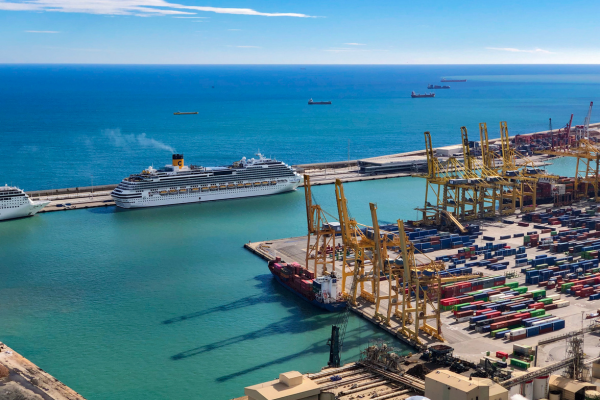
The V.O. Chidambaranar Port Authority has inaugurated a Maritime Heritage Museum in Tuticorin, aimed at highlighting the port city's historical significance as a trade hub, promoting tourism, and preserving India's rich maritime heritage, a senior port official said. Advertisement


The museum will trace Tuticorin port's trade connections with countries as far back as 123 AD and illustrate the evolution of sea-based shipping during both the pre- and post-British periods, V.O. Chidambaranar Port Authority Chairman Susanta Kumar Purohit explained. He noted that the museum is dedicated to freedom fighter V.O. Chidambaranar and will also help strengthen community engagement in the region.
Purohit highlighted that Tuticorin has a longstanding maritime history. The port was actively involved in trading pearls and spices with Rome, China, and Southeast Asian countries. Tuticorin was declared a minor anchorage port in 1868 and has historically served as a centre for pearl fisheries.
The museum also shares the story of V.O. Chidambaranar's efforts against British colonial shipping. He boycotted British vessels operating between Tuticorin and Colombo and launched the Swadeshi Steam Navigation Company in 1906, operating two ships on this route. After India's independence, the port handled cargo for neighbouring countries like Sri Lanka and Maldives, as well as for coastal regions within India. Today, the port imports and exports products such as wind blades, coal, iron ore, and agricultural goods.
The port underwent renaming milestones: initially known as Tuticorin Port Trust, it was renamed V.O. Chidambaranar Port Trust in 2011 and later became V.O. Chidambaranar Port Authority in January 2022. Currently, it is considered one of India's major ports. Recent figures indicate a 6 per cent increase in cargo handling to 35.97 million tonnes from April 2025 to January 2026, while container volumes rose 9.4 per cent to over 7.16 lakh TEUs during the same period.
The museum was inaugurated as part of a larger initiative involving projects worth INR 1,500 crore, launched by the Union Minister for Ports, Shipping and Waterways Sarbananda Sonowal in Tuticorin.
Source PTI
FAQ
1. What is the new development at Tuticorin Port?
The V.O. Chidambaranar Port Authority has inaugurated a Maritime Heritage Museum in Tuticorin to showcase the port city's long-standing maritime history, preserve India's shipping heritage, and promote tourism in the region.
2. What historical periods and events does the museum cover?
The museum traces Tuticorin's trade links dating back to 123 AD, illustrating the evolution of sea-based shipping before and after the British colonial period. It highlights local trade in pearls, spices, and other commodities with Rome, China, and Southeast Asia.
3. Who is V.O. Chidambaranar, and how is he represented?
The museum is dedicated to freedom fighter V.O. Chidambaranar, who opposed British shipping, boycotted their vessels between Tuticorin and Colombo, and founded the Swadeshi Steam Navigation Company in 1906. His legacy emphasizes local enterprise and the Swadeshi movement.
4. What is the port's current significance?
Today, Tuticorin handles diverse cargo, including coal, iron ore, wind blades, and agricultural products. From April 2025 to January 2026, cargo handling increased 6% to 35.97 million tonnes, while container volumes grew 9.4% to over 7.16 lakh TEUs.
5. How does this museum fit into broader development plans?
The museum is part of INR 1,500 crore development initiatives launched at the port, aimed at modernising facilities, boosting tourism, and promoting community engagement in the region.
6. What is the port's historical timeline?
Tuticorin became a minor anchorage port in 1868, handled regional and international cargo post-independence, and underwent renaming milestones: Tuticorin Port Trust V.O. Chidambaranar Port Trust (2011) - V.O. Chidambaranar Port Authority (2022). Today, it is one of India's major ports.
7. How does the museum contribute to tourism and education?
By displaying historical trade practices, shipping evolution, and the life of V.O. Chidambaranar, the museum serves as a learning hub for students, historians, and tourists, promoting cultural awareness and strengthening Tuticorin's identity as a historic maritime centre.

5th Jun, 2025

25th May, 2023

11th May, 2023

27th Apr, 2023
Advertisement








 Facebook
 Whatsapp
