Advertisement






When should a housing society in Mumbai start considering re...
From GST on JDAs to SEBI’s REIT reclassification and the S...
Stay ahead in the world of real estate with our daily podcas...
Stay ahead in the world of real estate with our daily podcas...
The Maharashtra government has approved a metro rail project connecting Chhatrapati Shivaji Maharaj International Airport in Mumbai with Navi Mumbai International Airport. The 34.9 km corridor will have 20 stations, combining 14 elevated and six underground sections, and will operate under a public-private partnership with 40 per cent viability gap funding. The project involves significant private investment and is designed to reduce travel time and congestion between the two cities. Construction is set to start in June next year, with advanced planning for operations, depots, and rehabilitation of affected people.
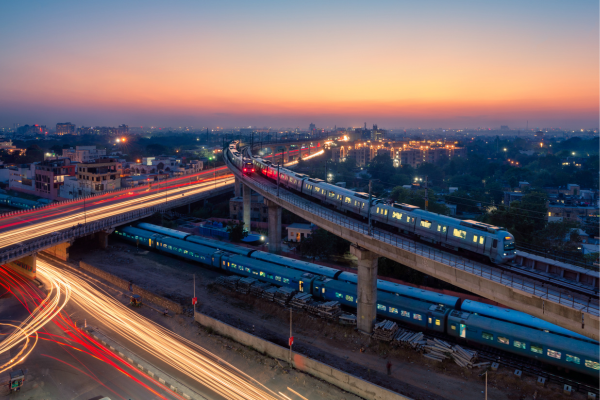
The state government has officially approved the construction of a metro line linking Mumbai's Chhatrapati Shivaji Maharaj International Airport with the Navi Mumbai International Airport, a project designed to improve connectivity in the Mumbai Metropolitan Region. The metro line, known as Metro Line 8, will cover a total length of 34.9 km and include 20 stations. Of these, 14 stations will be elevated and six underground, with around 25.09 km of the route elevated and 9.8 km underground, ensuring efficient transit through dense urban areas. Advertisement


The project will be developed under the Design, Build, Finance, Operate and Transfer (DBFOT) model. The total estimated investment is INR 22,862.07 crore, with 40 percent of the cost provided as viability gap funding, shared equally by the central and state governments. The private partner is expected to invest around 56.72 percent (INR 9,773 crore), while the Navi Mumbai International Airport Authority will contribute about INR 564 crore. No sovereign guarantees will be provided for loans.
The corridor aims to reduce travel times and alleviate congestion along busy routes like the Sion-Panvel highway and the Atal Setu sea link. Officials highlighted that the line will enhance connectivity for passengers traveling between the two airports and ease the growing transportation demands after the opening of Navi Mumbai International Airport last year.
The metro will feature a 27.2-hectare car depot at Mandale for train operations and maintenance. Trains are expected to run at an interval of approximately 5.32 minutes initially, improving to around 3.02 minutes by 2061 as passenger demand rises. Daily ridership is projected at nearly 9,82,000 passengers by 2031, with fares starting at INR 15 for short trips and INR 125 for the full journey of over 42 km.
Construction is planned to begin in June next year, with a targeted completion date of May 2031. Authorities have established a high-power committee, led by the chief secretary, to monitor progress, ensure timely execution, and supervise land acquisition and rehabilitation. People affected by land acquisition will receive either housing assistance or one-time financial compensation as part of rehabilitation measures.
Officials noted that the project is part of the broader vision to improve urban mobility, integrate transport networks, and support economic growth in the region. Earlier, feasibility studies and public consultations were conducted to finalize the alignment, station locations, and integration with other metro lines in Mumbai. The corridor is also expected to serve as a backbone for future expansions connecting Mumbai and Navi Mumbai.

5th Jun, 2025

25th May, 2023

11th May, 2023

27th Apr, 2023
Advertisement








 Facebook
 Whatsapp
