Advertisement










Private equity has played a significant role in shaping Indi...
In today’s real estate landscape, fitness is often treated...
In this episode of Prop Personalities, we sit down with Hars...
Luxury real estate is one of the most talked-about segments ...
Welcome to Prop Personalities by Prop News Time - a podcast ...
Air India has outlined a series of frequency increases and cabin upgrades across international routes under its 2026 Northern Summer Schedule. Key changes include higher frequencies on Delhi-Toronto, Delhi-Seoul, and Delhi-Shanghai routes, along with premium economy and first-class introductions on several sectors. The airline is deploying new and retrofitted wide-body aircraft on routes to London, Tokyo, Melbourne, and North America. These steps form part of a broader fleet modernisation plan that includes aircraft retrofitting and fresh wide-body deliveries in 2026.
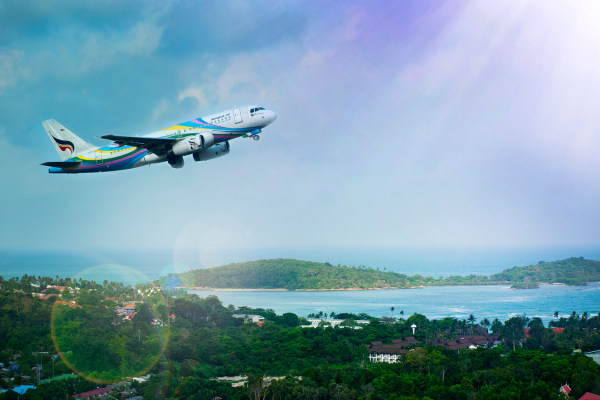
Air India has announced higher flight frequencies and wider deployment of aircraft with upgraded cabin interiors across several international routes under its 2026 Northern Summer Schedule. The move is part of the airline's ongoing fleet modernisation and network strengthening plan. Advertisement


Under the revised schedule, the carrier will raise weekly services on the Delhi-Toronto route from seven to 10 flights starting March 1. From March 29, flights between Delhi and Seoul (Incheon) will increase from five to six per week, while the recently launched Delhi-Shanghai service will rise to five weekly flights from four. Together, these changes will add 2,048 seats per route every month.
The airline has also upgraded the Delhi-Tokyo (Haneda) service. From mid-February, flights on this route have been operating with Boeing 787-9 aircraft featuring a three-class layout, with the addition of premium economy. This change adds 2,408 seats per month on the Delhi-Tokyo corridor.
Further capacity and cabin upgrades are planned from July 1. Mumbai-London (Heathrow) flights will shift to a mix of newly delivered Boeing 787-9 aircraft and retrofitted Boeing 787-8 planes, both fitted with new cabin interiors. These aircraft will replace the Boeing 777-300ER currently operating on the route. On the same date, daily Delhi-Melbourne flights will continue with Boeing 777-300ER aircraft featuring upgraded interiors, introducing first class on the route. The aircraft offers eight first-class suites, 40 fully flat business-class beds, and 280 economy seats, adding close to 4,000 seats each month between the two cities.
From August 1, Bengaluru-London (Heathrow) flights will be operated using retrofitted Boeing 787-8 aircraft, bringing premium economy to the route. With this change, all Air India services to and from London (Heathrow) will be operated by aircraft with new cabin interiors.
On North American routes, seven of the 10 weekly Delhi-Toronto flights will shift to new Boeing 787-9 aircraft with three-class cabins, including premium economy, from August 1. The remaining three weekly flights will continue with Boeing 777-300ER aircraft. As a result, over half of the airline's North America operations will use aircraft with new or upgraded interiors.
The airline also plans to deploy Boeing 777-300ER aircraft on flights to Birmingham from Amritsar and Delhi, and to London (Gatwick) from Ahmedabad and Amritsar. These services will replace Boeing 787-8 aircraft and introduce first class on these routes.
Air India began retrofitting its legacy Boeing 787-8 fleet last year, covering 26 aircraft. The programme includes brand-new cabin interiors tailored for the airline and a repainting into its new livery. The first two retrofitted aircraft are expected to return to service in the coming weeks, with additional aircraft to follow through 2026. The airline also expects delivery of three new Boeing 787-9 and two Airbus A350-1000 aircraft during 2026.
Source PTI
FAQ
1. What has Air India announced under its 2026 Northern Summer Schedule?
Air India has announced higher international flight frequencies and expanded use of aircraft with upgraded cabin interiors across key global routes. The changes are part of a wider fleet modernisation and network strengthening plan aimed at improving capacity, product consistency, and passenger experience on long-haul services.
2. Which international routes will see an increase in flight frequencies?
Flight frequencies will rise on several routes, including Delhi-Toronto (from seven to 10 weekly flights), Delhi-Seoul (from five to six), and Delhi-Shanghai (from four to five). These additions will together add over 2,000 seats per route each month, improving availability and scheduling flexibility for travellers.
3. What cabin upgrades are being introduced on Asian routes?
The Delhi-Tokyo (Haneda) route has been upgraded to Boeing 787-9 aircraft featuring a three-class configuration, including premium economy. This enhancement increases monthly seat capacity and provides passengers with more comfort options on long-duration flights to East Asia.
4. How are Air India's London services being upgraded?
From mid-2026, Air India's Mumbai-London and Bengaluru-London (Heathrow) services will be operated using new and retrofitted Boeing 787 aircraft with modernised cabin interiors. With this rollout, all Air India flights to London Heathrow will feature upgraded cabins, including premium economy on select routes.
5. On which routes is first class being introduced or expanded?
First-class cabins will be introduced on the Delhi-Melbourne route and on select services to Birmingham and London (Gatwick) from cities such as Amritsar and Ahmedabad. These routes will be operated using Boeing 777-300ER aircraft with upgraded interiors, offering enhanced premium travel options.
6. What is the broader objective behind these fleet and network changes?
The upgrades aim to strengthen Air India's long-haul competitiveness by combining higher capacity with modern aircraft and consistent onboard products. Along with new aircraft deliveries and an ongoing retrofitting programme, the strategy supports improved passenger experience, operational efficiency, and global connectivity.

5th Jun, 2025

25th May, 2023

11th May, 2023

27th Apr, 2023
Advertisement





 Facebook
 Whatsapp
