Advertisement






When should a housing society in Mumbai start considering re...
From GST on JDAs to SEBI’s REIT reclassification and the S...
Stay ahead in the world of real estate with our daily podcas...
Stay ahead in the world of real estate with our daily podcas...
The Magenta Line of the Delhi Metro is set to become the longest corridor in the network after planned extensions under Phase IV and Phase V (A). Once completed, the corridor will span about 89 kilometres with 65 stations, including 21 interchange points, the highest for any single line. Four interchange stations are currently operational, while the remaining will be added as new sections open. The fully driverless corridor is expected to significantly improve cross-city connectivity and balance passenger movement across multiple metro lines.
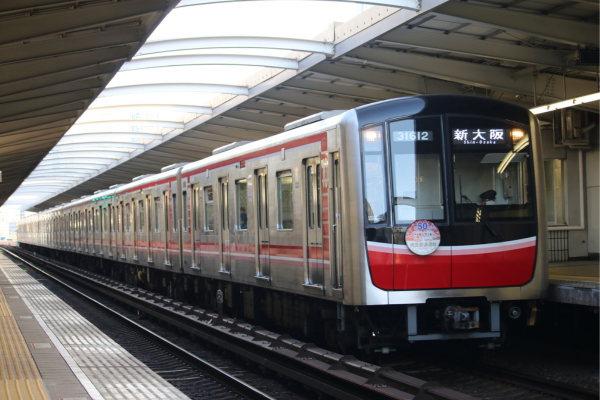
The Delhi Metro Rail Corporation has outlined plans that will make the Magenta Line the longest corridor in the metro network once ongoing and approved extensions are completed. At present, the line operates between Botanical Garden and Janakpuri West, but it is being extended on both ends through projects under Phase IV and Phase V (A) of the metro expansion. Advertisement


One of the key additions is the extension from Ramakrishna Ashram Marg to Indraprastha via the Central Vista corridor, planned under Phase V (A). In parallel, the Indraprastha-Inderlok stretch, currently part of Phase IV, is being integrated into the Magenta Line. After these sections are commissioned, the corridor will run continuously from Botanical Garden to Inderlok, covering a total length of about 89 kilometres.
The expanded Magenta Line will have 65 stations, of which 40 will be underground. This will make it one of the most underground-heavy corridors in the Delhi Metro system. The line will also operate entirely as a driverless corridor, continuing the automation model already in use on existing Magenta Line sections.
A major feature of the extended corridor will be its 21 interchange stations, the highest number on any single metro line. Currently, four interchange stations Botanical Garden, Janakpuri West, Hauz Khas and Kalkaji Mandir are operational. The remaining 17 interchange stations will become active as new sections open. These include Terminal 1 IGI Airport, Chirag Delhi, Kalindi Kunj, Peeragarhi, Pitampura (Madhuban Chowk), Haiderpur Badli Mor, Majlis Park, Azadpur, Pulbangash, Nabi Karim, Ramakrishna Ashram Marg, Shivaji Stadium, Central Secretariat, Indraprastha, Delhi Gate, New Delhi and Inderlok.
Among these, Central Secretariat, Azadpur, New Delhi and Inderlok will function as triple interchange stations, allowing passengers to switch between three metro lines at a single location. This is expected to reduce travel time on several routes and ease pressure on heavily used interchange points elsewhere in the network.
From an engineering perspective, the corridor will also include notable stations. Haiderpur Badli Mor will become the highest elevated station in the Delhi Metro system, with a rail level height of about 28.36 metres. Hauz Khas will continue to be the deepest underground station, located roughly 29 metres below ground level.
The Delhi Metro has indicated that the expanded Magenta Line is designed to improve east-west and north-south connectivity, redistribute passenger loads across the network and provide more direct travel options across key parts of the city and the National Capital Region.

5th Jun, 2025

25th May, 2023

11th May, 2023

27th Apr, 2023
Advertisement








 Facebook
 Whatsapp
