Advertisement










Private equity has played a significant role in shaping Indi...
In today’s real estate landscape, fitness is often treated...
In this episode of Prop Personalities, we sit down with Hars...
Luxury real estate is one of the most talked-about segments ...
Welcome to Prop Personalities by Prop News Time - a podcast ...
India's Economic Survey 2025-26 has identified wastewater treatment as a potentially transformative economic opportunity, estimating that systematic investment in the sector could unlock a market worth approximately INR 3.2 lakh crore by 2047. The survey highlights that enhanced wastewater processing — across municipal and industrial streams — can generate significant economic value through job creation, technology deployment and recycled water supply for agriculture and industry. It also emphasises the environmental and public health benefits of improved water reuse systems amid growing urbanisation and water scarcity. Policy focus on incentives, public-private partnerships and scalability of treatment infrastructure is seen as key to realising this potential. The survey's findings underline the importance of wastewater management not only as an environmental imperative, but also as a strategic growth engine for the economy over the long term.
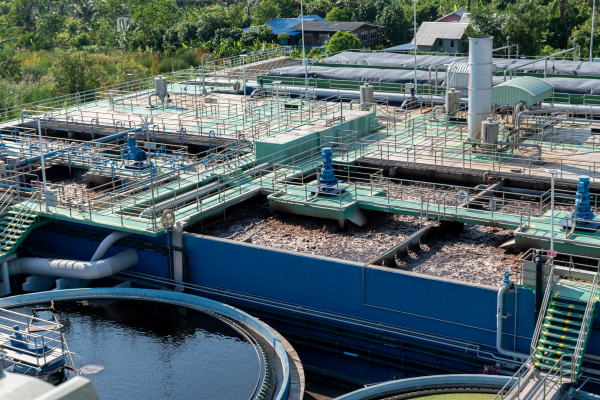
India's Economic Survey 2025-26 has underscored wastewater treatment as a major untapped economic opportunity, projecting that focused investment in the sector could unlock a cumulative market worth roughly INR 3.2 lakh crore by 2047. The assessment, published in late January, connects the development of wastewater infrastructure to broader goals of water sustainability, economic growth and job creation. Advertisement


The survey points out that India's rapid urbanisation and industrial expansion have increased the volume of wastewater generated in both municipal and industrial domains. While significant strides have been made in sewage collection and treatment capacity, a substantial gap remains between wastewater generation and effective treatment, resulting in environmental degradation and under-utilised water resources.
According to the Economic Survey, treating and reusing wastewater offers multiple economic and environmental dividends. Recycled water can reduce pressure on freshwater supplies in agriculture and industry, enhance water security for urban areas, and support emerging segments such as water technology, equipment manufacturing and specialised services. The aggregated value opportunity — estimated at around INR 3.2 lakh crore over the next two decades — reflects the expected growth in demand for wastewater infrastructure, technologies and ongoing operations if India scales treatment capacity in a systematic manner.
The report suggests that policy interventions could significantly accelerate sector development. Incentivising public-private partnerships, fostering competitive financing mechanisms, and integrating wastewater treatment with urban infrastructure planning are identified as mechanisms to attract private capital and technology-driven solutions. In addition, expanding decentralised treatment systems in smaller towns and peri-urban areas could drive local employment while improving sanitation and public health outcomes.
Environmental experts quoted in the survey note that treating wastewater not only conserves precious freshwater resources but also reduces pollution loads on rivers and ecosystems, which are central to India's broader environmental management goals. The reuse of treated effluent in agriculture, construction and industrial cooling systems can lower costs for end users and reduce the energy footprint associated with conventional water sourcing.
While the Economic Survey frames the sector's potential in monetary terms, it also emphasises that realising this value will require coordinated governance, sustained investment and technological innovation in treatment processes. If these elements coalesce, wastewater management could evolve into a key infrastructure growth driver, aligning environmental sustainability with economic opportunity as India adapts to the demands of a rapidly urbanising population.

5th Jun, 2025

25th May, 2023

11th May, 2023

27th Apr, 2023
Advertisement





 Facebook
 Whatsapp
